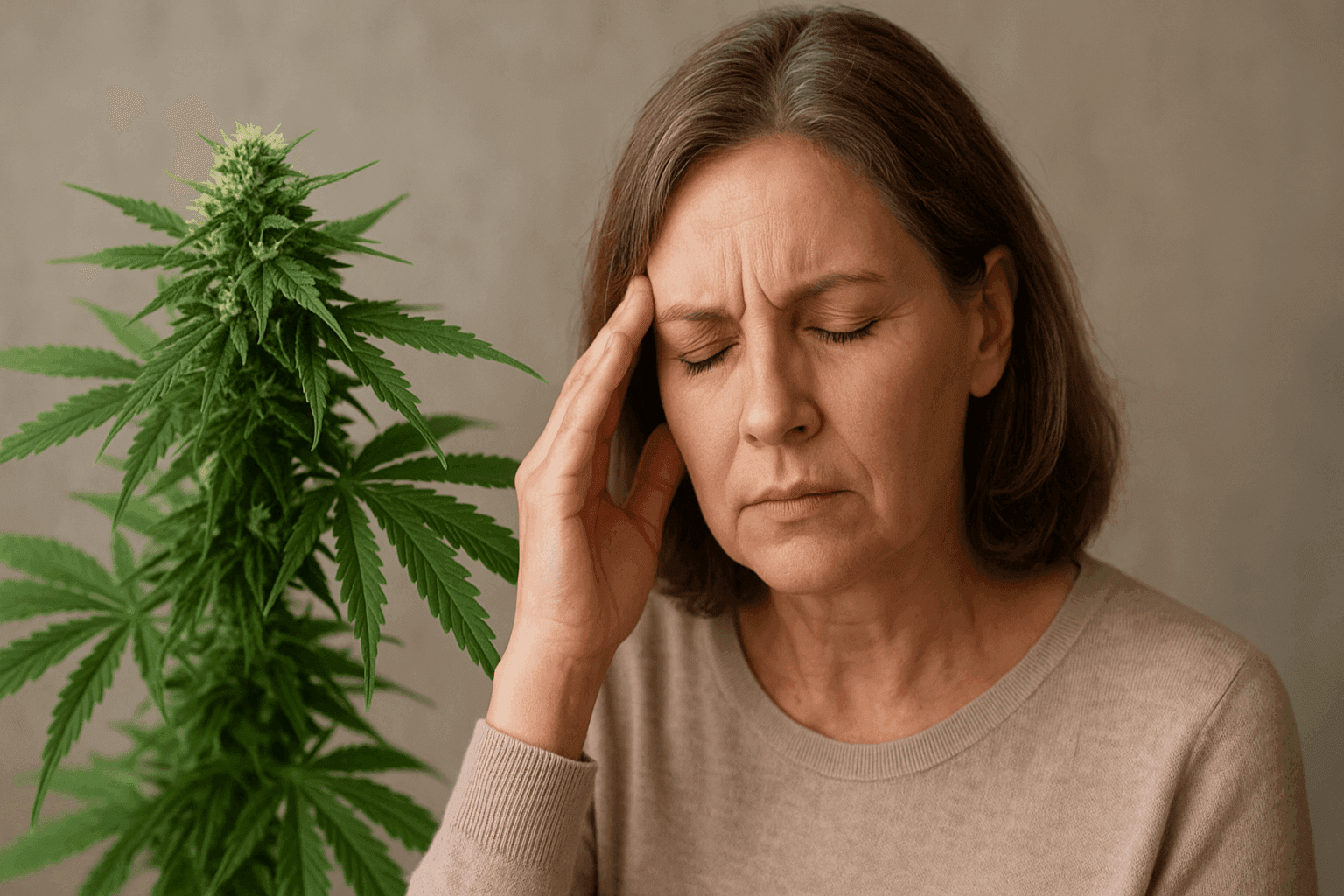
Cannabis and Women's Health: What Science Reveals About Menopause and Climacteric
What does the endocannabinoid system have to do with climacteric?
Published at 08/24/2025
The increase in life expectancy causes women to spend about a third of their lives in the postmenopausal period. This phase, marked by a drop in estrogen and hormonal fluctuations, can bring symptoms that affect sleep, mood, sexuality, energy, and bone health. Among the complementary approaches being studied for this audience is the modulation of the endocannabinoid system (ECS) through cannabis derivatives.
What does the endocannabinoid system have to do with climacteric?
The ECS is a complex of receptors, signaling molecules, and enzymes that acts as an “orchestrator” of homeostasis — the body's internal balance. It influences sleep, appetite, pain, mood, memory, and immune response. During climacteric and menopause, hormonal changes also alter the functioning of the ECS, contributing to increased pain sensitivity, worsened sleep quality, and emotional changes.
How cannabis can help
Still early but growing research suggests that compounds like cannabidiol (CBD) and tetrahydrocannabinol (THC) may help manage some symptoms:
- Sleep disorders – By modulating receptors linked to the sleep-wake cycle and reducing anxiety, cannabis can promote more restful nights.
- Mood changes and anxiety – CBD interacts with serotonin receptors, potentially contributing to emotional stabilization.
- Hot flashes and night sweats – By acting on the hypothalamus' thermoregulatory center, cannabinoids can alleviate vasomotor symptoms.
- Joint and muscle pain – Anti-inflammatory and analgesic effects help reduce common discomfort during this period.
- Intimate health – Topical formulations based on CBD and other phytocannabinoids can improve lubrication, reduce pain during intercourse, and promote the health of genitourinary tissues.
Forms of use and safety
- Oral: oils, capsules, or edibles, more suitable for anxiety, insomnia, and diffuse pain.
- Topical: creams, gels, or suppositories, useful for localized pain and intimate health.
It is always essential to start with low and progressive doses (“start low, go slow”), choose products with quality control, and maintain medical supervision, especially for women using other medications.
What we still need to know
Despite positive reports and promising studies, robust clinical trials are lacking to define dosages, ideal cannabinoid combinations, and safety in prolonged use. It is also essential for research to include women of different ages, ethnicities, and health contexts.
Cannabis is not a “cure” for climacteric or menopause, but it can be an ally in improving quality of life when used judiciously and integrated with other therapeutic strategies.
References
- Bilkei-Gorzo, A. (2012). Philosophical Transactions of the Royal Society B, 367(1607), 3326–3341.
- Bilkei-Gorzo, A. (2012). The endocannabinoid system in normal and pathological brain ageing. Philosophical Transactions of the Royal Society B: Biological Sciences, 367(1607), 3326–3341. https://doi.org/10.1098/rstb.2011.0388
- Filev, R., Jayanthi, S., & Bitzer, J. (2022). Maturitas, 158, 1–7.
- https://agenciadenoticias.ibge.gov.br/agencia-noticias/2012-agencia-de-noticias/noticias/41984-em-2023-expectativa-de-vida-chega-aos-76-4-anos-e-supera-patamar-pre-pandemia#:~:text=%E2%80%9CA%20eleva%C3%A7%C3%A3o%20do%20n%C3%BAmero%20de,4%20anos%20para%20as%20mulheres
- https://wecann.academy/cannabis-medicinal-terceira-idade/
- M Kathryn Dahlgren, Celine El-Abboud, Ashley M Lambros, Kelly A Sagar, Rosemary T Smith, Staci A Gruber. A survey of medical cannabis use during perimenopause and postmenopause. Menopause 2022 Aug 2. doi: 10.1097/GME.0000000000002018. Online ahead of print.
- Palmisano, G., & Innamorati, M. (2021). International Journal of Molecular Sciences, 22(4), 1901.
- Russo, E. B. (2016). Trends in Pharmacological Sciences, 37(7), 594–605.
Priscila Gava Mazzola*, is a professor at the Faculty of Pharmaceutical Sciences of the State University of Campinas (FCF/Unicamp). Graduated from USP/SP, with a Ph.D. in pharmaceutical biochemistry technology and enhanced skills at MIT. Dr. Priscila is also a specialist in topical and transdermal medications, using natural (including residues) and synthetic actives in her work. She is currently exploring the therapeutic powers of medicinal cannabis, developing new medications to expand the national therapeutic arsenal.