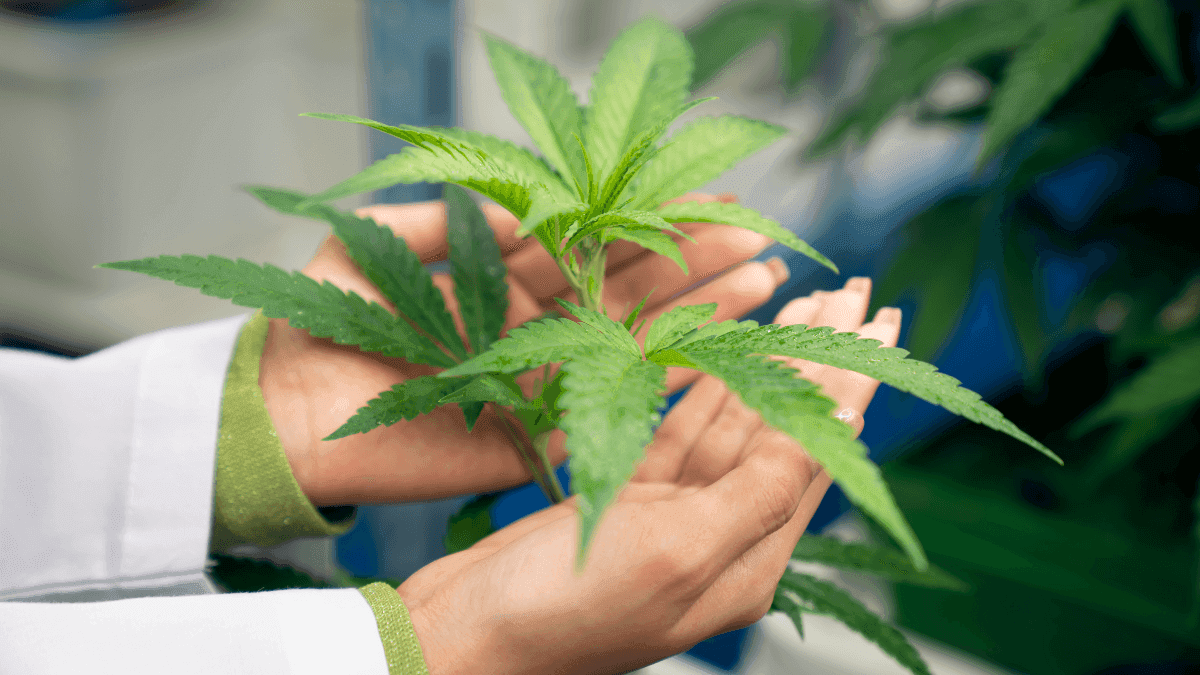
New non-abusable cannabichromene derivative effectively reduces pain in mice
New cannabichromene derivative shows efficacy in pain relief without psychoactive effects or risk of abuse | CanvaPro
Published at 09/14/2025
Introduction
Pain is the leading cause of disability in the United States, and there has been a growing interest in the development of cannabinoid-based therapies for pain treatment. While many studies have identified beneficial effects of Δ9-tetrahydrocannabinol (Δ9-THC) against pain, the therapeutic potential of Δ9-THC is limited due to its psychoactive effects and abuse potential. Therefore, a cannabinoid without these limitations would be a better therapeutic candidate.
Cannabichromene (CBC) has non-psychoactive and anti-inflammatory effects, leading our team to develop new derivatives of CBC that could enhance bioavailability and therapeutic potential. The present study evaluates the efficacy of a new derivative of CBC, CBC-Val-HS.
Methods
To assess the bioavailability of these two compounds, a pharmacokinetic study (10 mg/kg, i.v., po) was conducted, and blood concentrations were measured at different time points (e.g., 30 min, 60 min, 2 hours).
To evaluate the efficacy of CBC-Val-HS compared to CBC against inflammatory pain, an abdominal writhing assay was performed. Male and female mice received escalating doses of CBC or CBC-Val-HS (0.1 mg/kg-50 mg/kg, i.p.) 30 minutes prior to the administration of 0.7% acetic acid. The number of abdominal writhes associated with inflammatory pain was measured for 30 minutes.
The efficacy of CBC-Val-HS against cisplatin-induced neuropathic pain was also assessed using the Von Frey electronic test. The psychoactive potential of CBC-Val-HS and abuse liability were evaluated in the classic tetrad assay and the conditioned place preference test.
Results
CBC-Val-HS showed higher bioavailability than CBC, both in IV and oral administration. Administration of CBC and CBC-Val-HS decreased the number of abdominal writhes in a dose-dependent manner, with 10 mg/kg or more completely blocking inflammatory writhes. Similar to CBC, 10 mg/kg of CBC-Val-HS alleviated cisplatin-induced neuropathic pain and reduced tail flick and hot plate latencies in the tetrad assay, without affecting locomotion or decreasing central body temperature. No abuse liability was detected in the place preference test.
Conclusions
Collectively, these data indicate that CBC-Val-HS can attenuate inflammatory, chemotherapy-induced, and thermal pain as effectively as CBC. Importantly, CBC-Val-HS has higher bioavailability than CBC and does not exhibit psychoactive effects, suggesting greater therapeutic and commercialization potential.
Miguel A. De Leon1*, Rebecca E. Ozborn1, Hannah M. Harris2, Iram Shahzadi3, Waseem Gul3, Mahmoud ElSohly3, Nicole M. Ashpole1 1Department of Biomolecular Sciences, University of Mississippi, Oxford, MS 2Department of Psychiatry, Columbia University, New York, NY 3ElSohly Laboratories Incorporated, Oxford, MS
Jimmy Fardin is an orthopedic surgeon and traumatologist, specialized in knee surgery and arthroscopy, sports medicine specialist, and cannabis medicine specialist. He has already participated in the Olympics and Paralympics as a doctor. Experienced in treating chronic pain, low back pain, tendinitis, osteoarthritis, degenerative diseases. "My goal is to take care of you as a human being, not just your pathology."