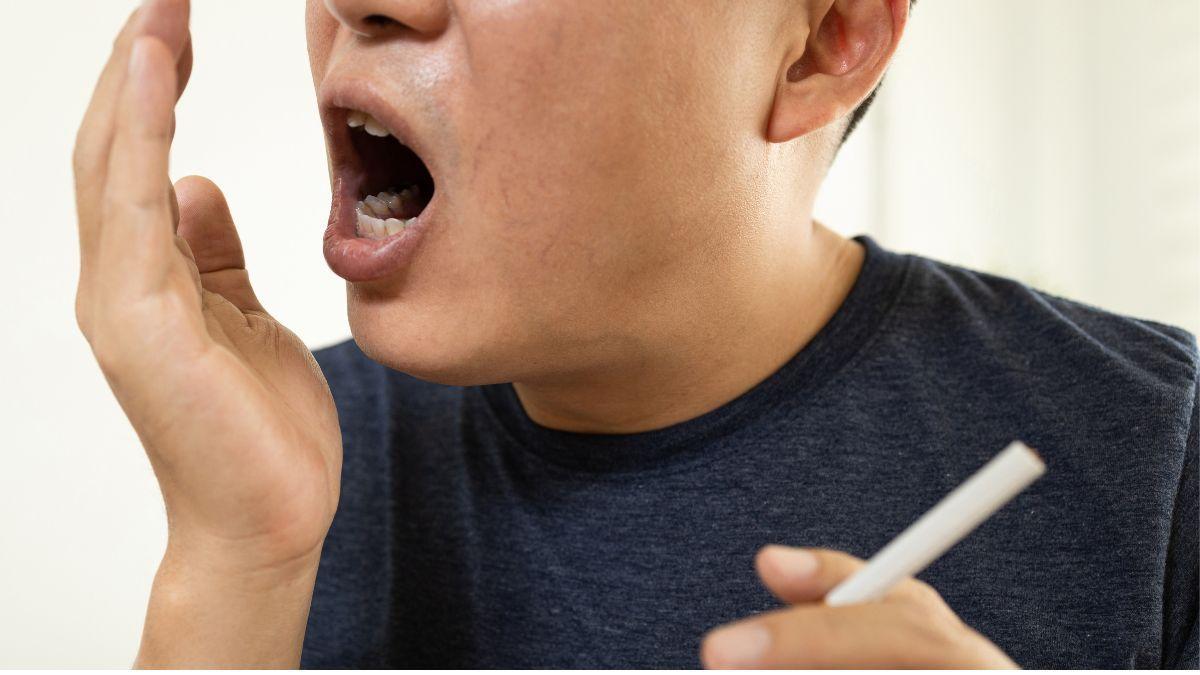
Smoking Control with Cannabinoids: Between Neuroregulation and the Rescue of Autonomy
With a clinical and sensitive perspective, Rafaela da Rosa explores the paths between oral health, well-being, and innovation in her new column.
Published at 06/08/2025Brazil was once a global reference in smoking control, with robust public policies that significantly reduced the number of adult smokers between 2006 and 2022.
But this curve has started to rise again. In 2024, the country recorded a 25% increase in the number of smokers — the first rise since 2007. Among men, the prevalence rose from 11.7% to 13.8%; among women, from 7.2% to 9.8% [1].
Electronic Cigarettes Advance Among the Young
At the same time, a silent phenomenon has gained strength among the younger population: electronic cigarettes. Despite being banned in Brazil since 2009, use among adolescents and young adults has been growing alarmingly. According to the Vigitel Survey, 6.1% of young people aged 18 to 24 already regularly use these devices. Even more concerning: almost one in four young Brazilians has tried nicotine vape — 23.9%, according to recent data from Fiocruz and the Ministry of Health. Among adolescents aged 13 to 17, 16.8% reported having used these devices at least once [2].
Growing Demand for Support in the SUS
This context is not just a statistical challenge. It is a clinical scenario of masked suffering. In 2023, more than 420,000 people sought the SUS for support to quit smoking — almost double the previous year [3]. Many, however, do not fit into traditional cessation models. Between relapses, withdrawal symptoms, and adherence difficulties, care still needs to expand.
An Addiction Beyond Chemistry
Tobacco remains one of the most consumed psychoactive substances worldwide, and its impact on public health is vast, persistent, and challenging [4]. More than a chemical dependency, smoking represents behavior conditioned by deeply rooted emotional, social, and neurological patterns — making its cessation more complex than simply "quitting smoking."
Cannabidiol (CBD) as an Ally in Quitting Smoking
The therapeutic use of cannabidiol (CBD) emerges as a promising resource in the integrated approach to smoking. This is not only due to its anxiolytic action and modulation of the endocannabinoid system (ECS) but also because of how it interferes with the dopaminergic system and behavioral responses associated with the smoking habit. Recent studies show that CBD can act on multiple fronts: reducing craving, modulating stress response, decreasing reactivity to environmental cues, and even altering nicotine metabolism [5,6].
Clinical Study Shows Reduction in Consumption with CBD
In a clinical trial with 56 smokers who wanted to quit, the use of oral CBD (400 to 800 mg/day) for just three days resulted in a significant reduction in the number of cigarettes consumed, especially in the higher dose group. Additionally, participants reported less craving and anxiety in real-life contexts, measured by ecological momentary assessment (EMA) technology [5].
This rapid and safe effect reinforces the hypothesis that CBD can aid in the transition between active dependence and quitting, while also easing withdrawal symptoms.
CBD and Nicotine Metabolism
This potential expands when we observe CBD's ability to interfere with nicotine metabolism. An in vitro study identified that the compound and its metabolite 7-OH-CBD inhibit the hepatic enzymes CYP2A6 and CYP2B6, responsible for converting nicotine to cotinine [6].
In practice, this can prolong the presence of nicotine in the body and reduce the frequency of the need for replacement, representing a complementary strategy to physiological deconditioning.
Action on the Reward System and Relapse Prevention
In addition to peripheral and metabolic effects, CBD plays a central role in the neurochemical balance of the reward system. Studies in cellular models show that it acts as a partial agonist of dopaminergic D2 receptors and a negative allosteric modulator of CB1 [7]. This means that CBD can reconfigure the dopaminergic tone without blocking pleasure but weakening the excessive reinforcement generated by nicotine. This softening of the reinforcement circuit is considered essential in preventing relapses.
From a synaptic perspective, there is evidence that cannabinoids modulate dopamine release in key regions such as the nucleus accumbens and the prefrontal cortex [8]. This regulation interferes with habit formation, decision-making, and the maintenance of motivated behaviors. In people with dependence, the ECS tends to function in a deregulated manner, promoting hypersensitivity to emotional and environmental triggers.
The presence of CBD — without the euphoric effects of THC — can help restore this balance and allow the individual to regain control over their impulses and choices.
The Symbolic Value of the Act of Smoking
There is also an often-overlooked aspect in smoking treatment: the gesture. Smoking is a learned behavior that involves the act of bringing something to the mouth, inhaling, and exhaling smoke. This symbolic and sensory dimension of the habit has strength on its own, regardless of nicotine. In this sense, the use of CBD in inhaled formulations (such as vaporizers with full-spectrum extract without nicotine) can play a valuable role in behavioral transition.
It is a device that preserves the gesture without feeding the addiction, modulating anxiety, tension, and craving without reinforcing dopaminergic dependence.
Evidence Expands to Other Dependencies
The evidence on the use of cannabinoids in managing dependence is not limited to tobacco. Clinical trials with alcohol and crack users show that CBD is safe, well-tolerated, and, in some cases, superior to conventional medications in reducing use and associated symptoms [9,10,11]. These findings reinforce the idea that cannabidiol acts as a self-regulation agent rather than a chemical substitute.
A More Regulating, Less Medicalizing Care
In a scenario where conventional interventions often fail to address the subjective complexity of addiction, cannabinoids offer a new path: more regulating, less medicalizing. A care approach that does not limit itself to combating the substance but invites the individual to build new meanings for their gestures, voids, and choices.
References:
1. 2. 3. 4. Instituto de Estudos para Políticas de Saúde (IEPS). Boletim Vigitel 2023: uso de cigarros
convencionais e eletrônicos no Brasil. São Paulo: IEPS; 2024. Available at: https://
ieps.org.br/publicacoes/boletim-vigitel-2023
Fundação Oswaldo Cruz (Fiocruz).
Pesquisa Nacional de Saúde do Escolar – PeNSE 2023.
Ministério da Saúde; 2024. Available at: https://www.gov.br/saude/pt-br/assuntos/
noticias/2024/maio/uso-de-cigarro-eletronico-por-adolescentes-aumenta-aponta-pense
Ministério da Saúde (Brasil). Programa Nacional de Controle do Tabagismo: Relatório
Anual 2023. Brasília: MS; 2024. Available at: https://www.inca.gov.br/sites/
ufu.sti.inca.local/files//media/document//relatorio-tabaco-2023.pdf
Organização Mundial da Saúde (OMS). Relatório global sobre tendências no uso do tabaco
2000–2025. Geneva: WHO; 2021. Available at: https://www.who.int/publications/i/item/
97892400393225. 6. 7. 8. 9. 10. 11. Hindocha C, Freeman TP, Grabski M, Stroud JB, Crudgington H, Davies AC, et al.
Cannabidiol reverses attentional bias to cigarette cues in a human experimental model of
tobacco withdrawal. Addiction. 2018;113(9):1696–705.
Nasrin N, Pillai A, Jin J, et al. Inhibition of nicotine metabolism by cannabidiol (CBD) and
7-hydroxycannabidiol (7-OH-CBD): in vitro and in silico studies. Sci Rep.
2023;13(1):16037.
Fernández-Ruiz J, Sagredo O, Pazos MR, et al. Cannabidiol for neurodegenerative
disorders: important new clinical applications for this phytocannabinoid? Br J Clin
Pharmacol. 2013;75(2):323–33.
Kucerova J, Tabiova K, Drago F, Micale V. Therapeutic potential of cannabinoids in
schizophrenia. Recent Pat CNS Drug Discov. 2014;9(1):13–25.
Prud’homme M, Cata R, Jutras-Aswad D. Cannabidiol as an intervention for addictive
behaviors: A systematic review of the evidence. Subst Abuse. 2015;9:33–8.
Batalla A, Janssen H, Gangadin SS, Bossong MG. The potential of cannabidiol as a
treatment for psychosis and addiction: who benefits most? A systematic review. J Clin Med.
2019;8(7):1058.
Freeman TP, Hindocha C, Green SF, Bloomfield MAP. Medicinal use of cannabis based
products and cannabinoids. BMJ. 2019;365:l1141
Graduated in Dentistry (UFSC/2009). Specialist in Implantology (UFSC/2011). Specialist in Dental Prosthesis (UFSC/2013). Specialist in Aesthetic and Restorative Dentistry (Zenith - Avantis/2015). Specialized in Medicinal Cannabis (INSPIRALLI/2021). Master's student in TMD and Orofacial Pain (Mandic/2023-2025). Professor in the Extension Course "Endocannabinology for Health Professionals" - UFSC. Technical coordinator in the Postgraduate Course "Medicinal Cannabis in Dentistry" - Unyleya. Author of the book "Cannabis & Health: Unveiling the Therapeutic Potential" - Way editora. Founder of OdontoCann Courses and Mentoring. Member of SBOCANN (Brazilian Society of Cannabinoid Dentistry). Member of the Dentistry core of APMC (Pan-American Association of Cannabinoid Medicine).