Any financing solution for the cannabis industry goes through good compliance
Difficulties in accessing credit in the cannabis sector require strict compliance with financial regulations


Financing problems are not exclusive to any industry, but in the case of cannabis, they represent serious challenges. In Colombia, for example, although there are financial and non-financial solutions to support the agricultural sector, not all of them are within reach of cannabis companies.
It is not a matter of resource availability, but rather compliance.
Within the spectrum of financing possibilities are the alternatives offered by entities linked to the Ministry of Agriculture and Rural Development. For example, through the Fund for the Financing of the Agricultural Sector (FINAGRO), it is possible to access lines of credit for productive projects that are technically, financially, and environmentally viable. Credits for the production of short-cycle crops, such as cannabis, require companies to have the necessary licenses and comply with the regulations applicable to the medicinal and industrial cannabis industries.
Through FINAGRO, it is possible to finance up to 100% of project costs for all agricultural and rural activities. However, being a development bank, potential beneficiaries must apply for credit through financial institutions (including those in the solidarity economy sector), which receive resources under development conditions from FINAGRO.
This particularity reinforces that access to traditional financing necessarily goes through the financial system. It is widely known that the difficulty lies not in the economic activity itself, but in the risks associated with the cannabis industry — such as the federal prohibition of the plant in the United States, the scarcity of European banks in Colombia that intermediate resources from American or European investors, or the fact that the cannabis industry can be associated with crimes such as drug trafficking.
Although there are alternative financing mechanisms, such as factoring, crowdfunding, and digital credit, these activities are under the supervision of the Superintendence of Companies and the Financial Superintendence of Colombia, and inevitably go through the traditional financial system.
The possibility of financing through virtual assets has also been discussed, but the topic is still unclear in Colombia.
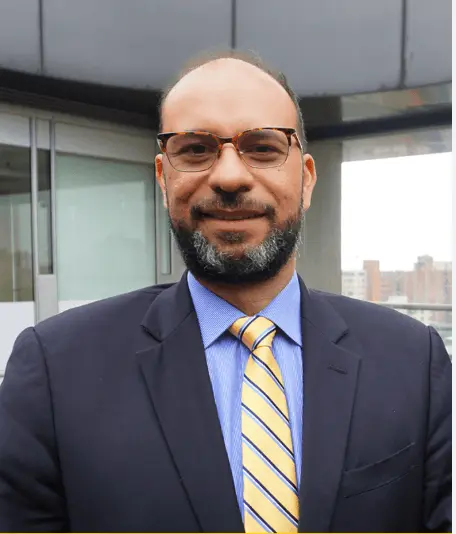
Nelson Lammoglia, professor at the University of the Andes, who has served as Manager of Science, Technology, and Innovation at the District Agency for Higher Education, Science, and Technology in Bogotá, as well as Chief Revenue Officer at Kravata, a Colombian company specializing in on/off ramp solutions and local payments, states that virtual assets, being infinitely divisible and easy to use, are revolutionizing global transactions, but operate in many gray areas in Colombia.
“Through smart contracts, projects are already being financed not only in the real estate sector, but also in energy transition and carbon credit markets. However, since virtual assets are intangible and not financial assets, they do not constitute currency or a means of payment,” explains Lammoglia.
In fact, according to Colombian regulations, only money fulfills the functions of a means of payment (together with savings accounts, checking accounts, low-value deposits, and ordinary deposits), store of value, and unit of account. Virtual assets, such as cryptocurrencies, do not guarantee the right to money or other financial assets. Therefore, any information provided in this regard should alert stakeholders to the challenge of monetizing their investment in the currency necessary for their operations.
Nelson also highlights that countries in the Arabian Peninsula and, especially, in Europe, are the most advanced in alternative financing topics. According to the report by Hanway Associates, in partnership with DLA Piper, Enexis, and Hannam & Partners, on the investment ecosystem in the cannabis industry, 42.1% of activities are carried out through venture capital, followed by angel investors or high-net-worth individuals (33.6%), accelerators (7.5%), and private equity (6.5%).
Although there are even cryptocurrencies for the cannabis industry in other countries, the risks of monetization and traceability of resources are evident. “In the world of digital assets, one is on their own. It is not possible to trace the owner of wallets, which generates great exposure and associated risks,” emphasizes Lammoglia. Nevertheless, he believes that with proper due diligence processes and procedures, it is possible to mitigate and reduce operational risks.
Just as in traditional financing, good compliance on the part of applying companies can favor access to the financial system. Professor Lammoglia recommends that companies voluntarily adopt a preventive approach, similar to that required for medium or high-risk sectors by the Self-Control and Risk Management System for Money Laundering, Terrorism Financing, and Proliferation Financing (SAGRILAFT).
In summary, it is highly recommended that companies seeking financing through virtual assets implement and maintain a robust compliance system. The challenges and controls of the banking system are not exclusive to Colombian regulations, nor to the cannabis industry. However, the sector needs to work to build trust, which is only possible by understanding the business's specificities and mitigating emerging risks throughout the chain.