Driving and Cannabis: Essential Rules in Brazilian Traffic
Understand the rules and penalties for drivers using psychoactive substances

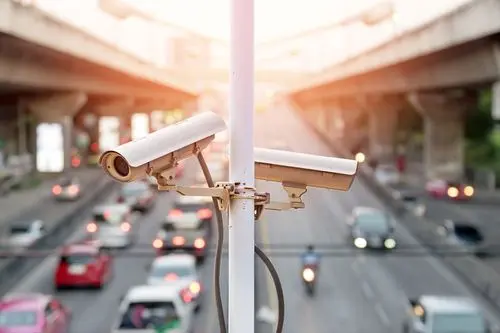
The recent decision by the Supreme Federal Court (STF) regarding the decriminalization of marijuana possession for personal use has brought new parameters, such as the maximum allowed amount of 40 grams or 6 female plants to be considered a user and not a dealer. However, this change does not alter the prohibition of driving under the influence of marijuana, governed by the Brazilian Traffic Code (CTB). Check below some traffic violations and their respective penalties for drivers using cannabis.
1. Driving under the influence of psychoactive substances
Article 165 of the CTB defines that driving under the influence of alcohol or any psychoactive substance that causes dependence, such as marijuana, is a serious violation. The penalty includes a fine, suspension of the right to drive for 12 months, confiscation of the driver's license, and vehicle retention. This aims to ensure that drivers with altered psychomotor capacity do not pose a risk on the roads.
2. Compromised psychophysical capacity
According to Article 306 of the CTB, driving a vehicle with altered psychophysical capacity due to the influence of psychoactive substances can lead to detention from 6 months to 3 years, a fine, and suspension or prohibition of obtaining a driver's license. The use of marijuana, for example, can reduce reaction time and the driver's attention, significantly increasing the risk of accidents.
3. Refusal to undergo detection tests
Article 165-A of the CTB establishes that refusal to submit to tests, clinical examinations, or assessments to detect the influence of alcohol or psychoactive substances also constitutes a serious violation, leaving it to the discretion of the police authority to determine whether the driver should be taken to a police station. The penalties are equivalent to those applied for driving under the influence, including fines and suspension of the driver's license. This reinforces the importance of drivers cooperating with traffic enforcement.
4. Smoking while driving
In addition to driving under the influence, the act of smoking while driving, whether marijuana or any other type of cigarette, can be classified as a violation. The CTB provides penalties for drivers who drive with only one hand, except in specific situations such as shifting gears or operating vehicle equipment. “Smoking can distract the driver and compromise traffic safety,” emphasizes the regulation.
The use of marijuana can compromise the skills necessary for safe driving, such as reaction time, attention, and judgment. Brazilian legislation is strict regarding driving under the influence of psychoactive substances, imposing severe penalties to ensure safety on the roads. Therefore, it is essential that drivers are aware of these rules and avoid using cannabis before driving.