Entrepreneurs discuss how changes in the US may open new windows in the medical cannabis market
New US rule restricts hemp derivatives and opens opportunity for South American countries to meet part of the Brazilian demand

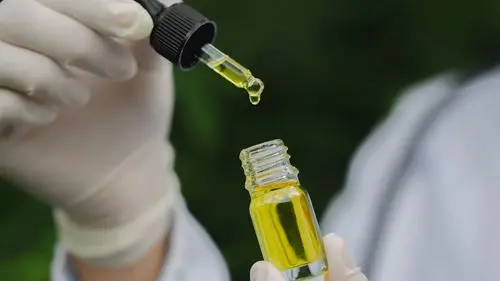
The new legislation signed by President Donald Trump, which redefines the concept of hemp and restricts the circulation of derivatives in the United States, opens up new market opportunities. Scheduled to come into effect by the end of 2026, the adoption of the calculation of total THC — which now includes THCA, delta-8, and other isomers — and the establishment of a limit of 0.4 mg per package, a large portion of American flowers and extracts may face commercial restrictions. The transition, under FDA supervision, could reshape supply routes for markets like Brazil.
In this new scenario, Uruguay is one of the South American countries seeking to strengthen commercial relations with Brazil, according to industry executives.
The co-founder of Extracto Del Sur, Claudio Valenti, states that the country is ready to expand commercial relations with the Brazilian market. “Uruguay is well positioned to take advantage and have the opportunity to meet this demand,” he said. He highlights that the country can quickly adapt its agricultural system: “Uruguay focused at one point on agricultural production exclusively for CBD flowers for Europe. This has higher costs. But, for the biomass needed for the hemp industry, there is a real possibility to change the production system and offer biomass at a good price. It is prepared.”
The quality of Uruguayan products is also highlighted by Juan Sader, director of Cannabeezy. He believes that the restriction on full spectrum products in the US will have a direct impact on Brazilian RDC 660. “Uruguay, Paraguay, and Colombia are in a position to replace these products with even better traceability,” he says. He emphasizes the rigor of Uruguayan laboratories: “The requirements are very demanding. We need an analysis certificate even for the glass.” With this, Sader assesses that neighboring countries can replace “up to 40%” of the products currently imported from the US.
The Technical Note No. 58/2025, released by Anvisa in September, updated the landscape of cannabis products individually imported via RDC 660. According to the document, the Brazilian market currently has about 600 products from over 500 international companies.
The United States appears as the main supplier, leading with the highest quantity of items available to Brazilian patients. Next, Canada maintains a relevant presence, followed by Colombia, which is expanding its participation with the offer of oils and extracts. Uruguay also stands out due to its geographical proximity and the expansion of its production, while Netherlands and Spain complete the list of countries with significant presence in imports.
Brazil reached 873,111 patients undergoing medical cannabis treatment in 2025, a 30% increase from the previous year, according to Kaya Mind. Of this total, 354,000 accessed products through imports, 293,000 through pharmacies, and 226,000 through associations. Medical cannabis has already reached 85% of Brazilian municipalities, indicating widespread access expansion throughout the country.
The scenario shows that Brazil remains dependent on international supply.
Market Opportunities
This perception is reinforced by Alex Cameron, general manager of Flextem Biopharma Brazil. According to him, Uruguay has a long curve of technical development: “Due to the forefront, the development of products, processes, seeds, mother plants, and the validation chain, the country is already prepared.” Cameron highlights that the products have a Pharmagrade standard — a central requirement for consumers and Brazilian regulatory agencies. “The Brazilian market, like the Uruguayan market, benefits from this movement in the United States.”
For the consultant and co-founder of The Green Hub, Marcelo Grecco, the moment requires Brazil to look “to new places and new horizons.” He argues that global change makes Uruguay a natural partner: “Start looking at Uruguay with affection, much more than I would look at Europe, with a very high euro.” Grecco emphasizes that the neighboring country combines an ideal climate, quality, and efficient logistics. “What do we need to do to increase this demand and really make Uruguay appear on the map as the largest exporter?” he questions.
The combination of geographical proximity, technical rigor, agricultural adaptation capacity, and pharmaceutical quality can open up new opportunities for Uruguay.
Watch the Sechat News debate: