“I can't accept the pain that can be relieved”: Brazilian veterinarian launches research on medicinal cannabis in Portugal
Between science and sensitivity, the researcher seeks to prove that the use of cannabis can transform veterinary care and alleviate animal suffering

Published on 10/17/2025
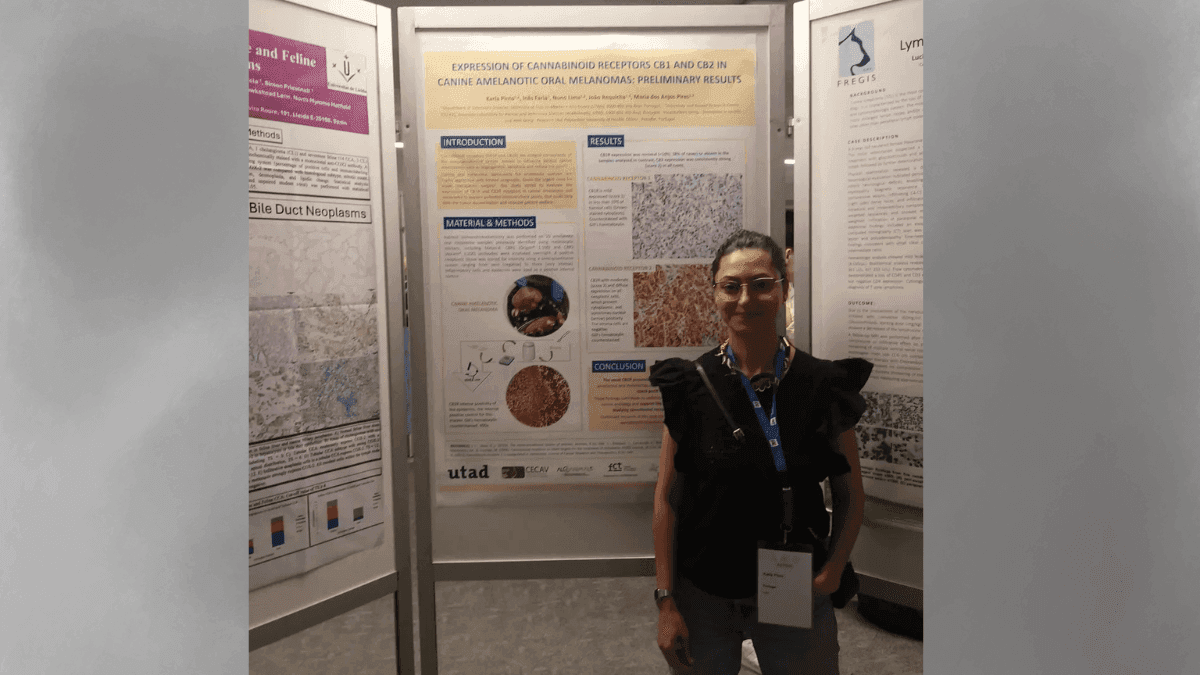
Brazilian veterinarian Karla Pinto researches in Portugal the benefits of medicinal cannabis in dogs and cats, seeking treatments that bring more comfort, health, and quality of life to animals | Photo: Personal Archive
It was seeing her mother suffer from chronic pain caused by fibromyalgia that Brazilian veterinarian Karla Pinto decided she would no longer accept suffering, whether human or animal, as inevitable. This personal experience shaped her career and led her to dedicate the last ten years of her professional journey to researching medicinal cannabis in Portugal, where she now seeks new ways to alleviate pain and restore quality of life to dogs and cats.
From pain to discovery: the path of compassion
With 25 years of experience in veterinary medicine, Karla Pinto made pain her main field of study, and compassion her greatest tool. “Pain has always been a central challenge in the veterinary clinic that I have committed to combating intensely,” she says. “Living closely with my mother's chronic suffering created in me an unwavering intolerance to animal suffering. I can't accept the pain that can be relieved,” she confesses.
In Portugal, where she has lived for over two decades, Karla found fertile ground to advance her research. The country allows the use and study of Cannabis sativa for medicinal purposes, which paved the way for broader experiments. “Here we can use human medications with different levels of THC in animals, under the so-called ‘Cascade Law’. This allows us to progress faster than in countries with restrictive legislation, such as Brazil,” she explains.
For her, phytocannabinoids represent a promising therapeutic frontier. “Dedicating my research to finding effective solutions for our animal companions is my way of giving meaning to life and relieving suffering,” she states.
The science behind empathy
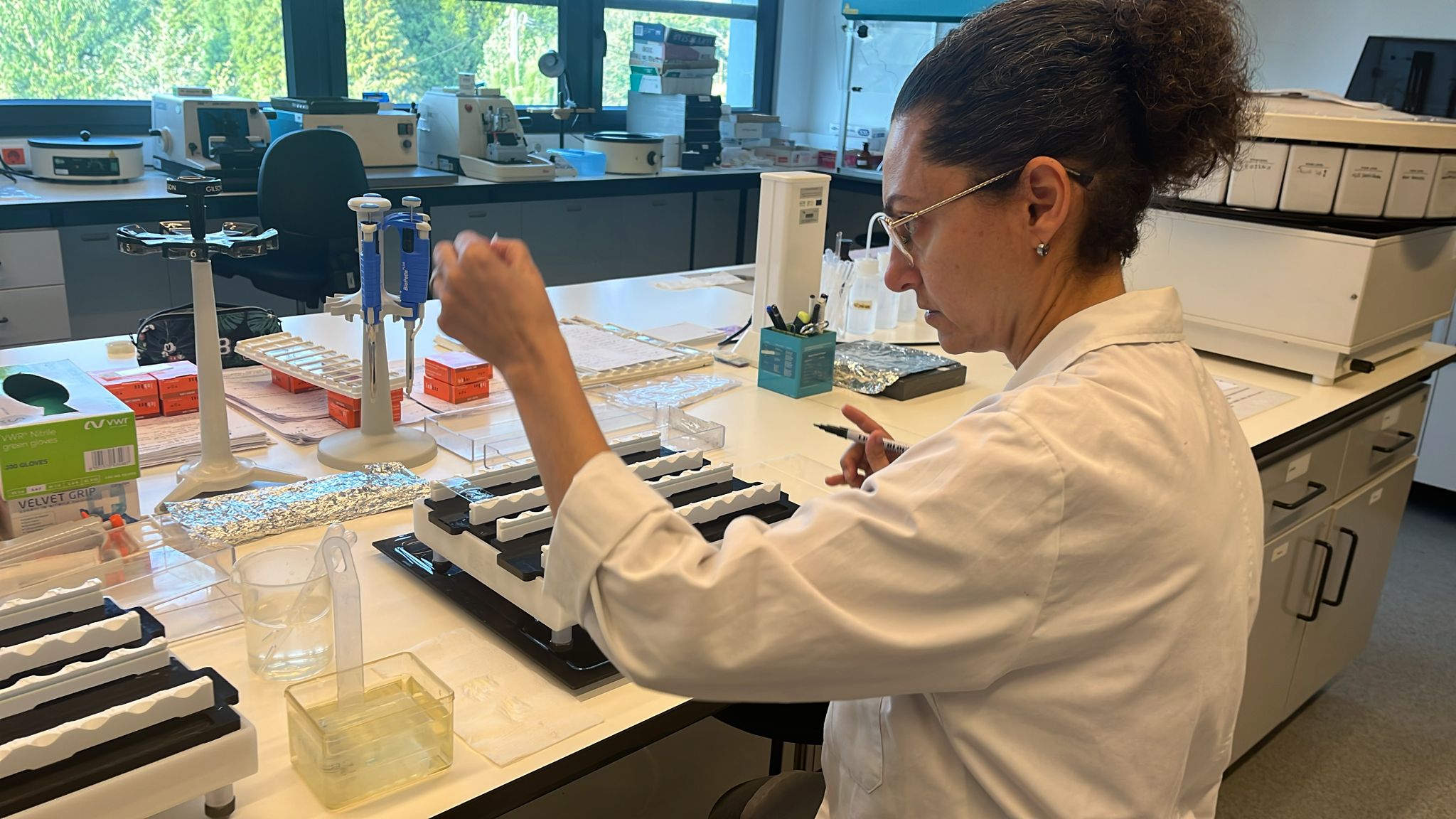
Karla is a co-author, alongside João F. Requicha, of the article “Cannabis sativa in veterinary medicine: Foundations and therapeutic applications”, published in 2024 in the Canadian Veterinary Journal. The study gathers evidence on the use of plant compounds, such as CBD and THC, in pain control, epilepsy, and behavioral disorders in animals.
The researcher also explains that the endocannabinoid system (ECS) is the key to understanding how cannabis works: “The ECS is a biological system present in all animals, which functions as a conductor of internal balance. It activates in the face of pain, stress, or inflammation. The plant's phytocannabinoids help the body restore homeostasis and relieve suffering naturally.”
Learn More
The path of cannabis in animal well-being is made of science, empathy, and new hopes
Over 35,000 scientific articles on cannabis have been published in the last decade; 4,000 in 2024
She emphasizes, however, that veterinary medicine still lacks in-depth studies on pharmacokinetics and safety in different species. “There is an immense desire to prescribe, but we need more science and less empiricism,” she reflects.
Fred, the boxer who inspired hope
Among the numerous patients treated with cannabis derivatives, Karla fondly remembers the case of Fred, a 12-year-old boxer diagnosed with suspected bone tumor and epilepsy. “After he started using a CBD-rich extract, the seizures decreased, and he returned to moving with joy. The most beautiful part was knowing that a friend of the owner, a doctor and also an oncology patient, decided to seek the same treatment after seeing Fred's improvement,” she recalls.
Fred lived longer and with quality of life, proving that care can extend beyond the species and even inspire other human beings.
Between advancements and resistances: the future of veterinary cannabis
Despite scientific advancements, Karla acknowledges that cultural and regulatory barriers still limit the use of veterinary cannabis in many countries. “We need to move cannabis out of the alternative niche and bring it into the scientific field. This begins with education in undergraduate studies and with quality research,” she states.
She mentions that prejudice still manifests in a painful way. “I received messages from colleagues saying that I was ‘going to hell’ for promoting the plant's potential. This shows how strong the stigma still is,” she says.
Nevertheless, the researcher remains hopeful. “Phytocannabinoids are a therapeutic frontier full of possibilities. And if science has the power to relieve pain, it is where I want to continue to invest, for the animals and for all that they represent,” she concludes.