Learn why the pistil is essential for cannabis reproduction
The pistil is a fundamental part of the gynoecium, the female reproductive organ of the cannabis plant, and is responsible for producing female sex cells, although not all plants have this structure.

Published on 09/19/2024
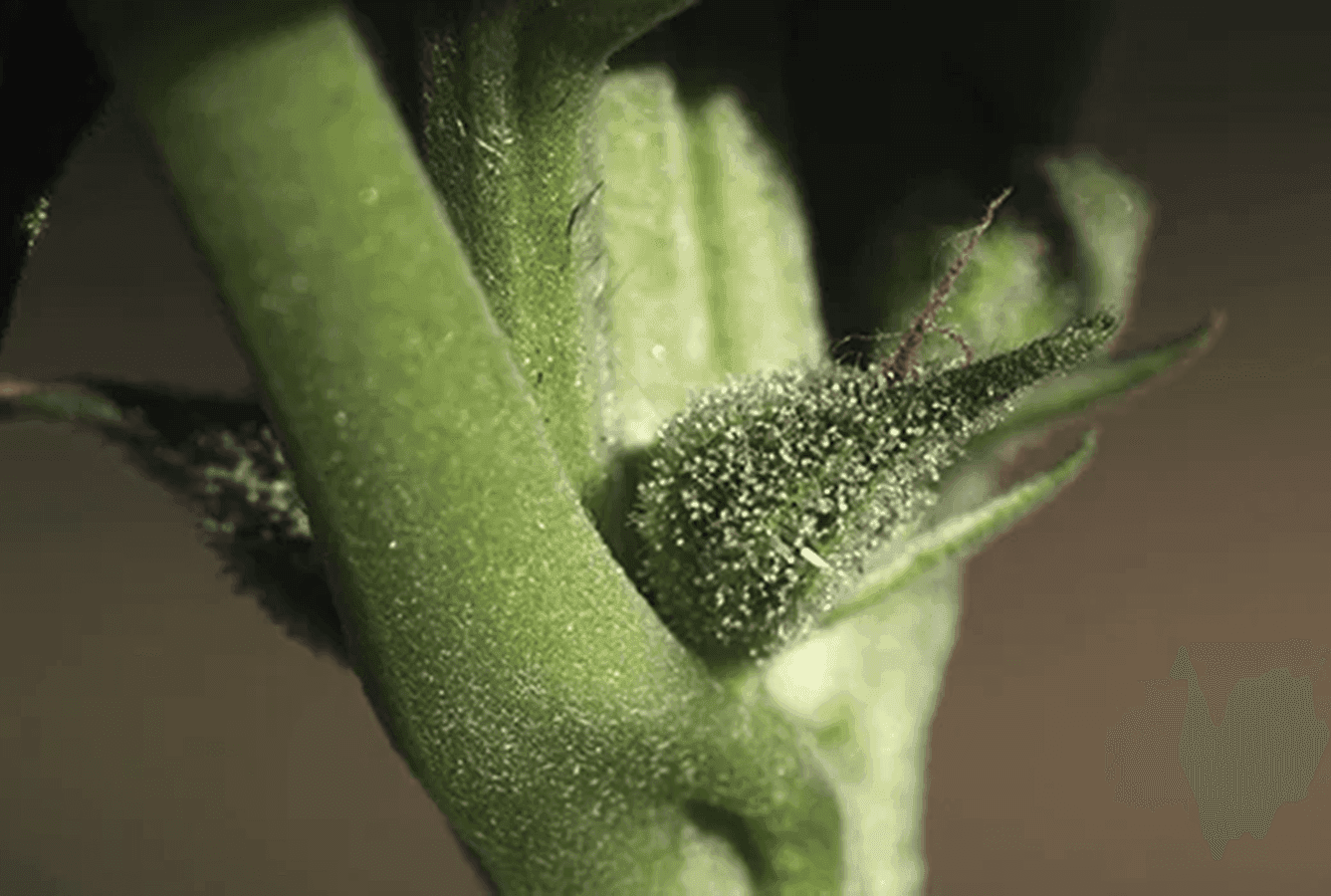
Image: Reproduction/Royal Queen Seeds
The pistil is one of the essential units of the female reproductive organ of the cannabis plant, known as the gynoecium. Although not all plants possess pistils, it plays a crucial role in cannabis reproduction. Each pistil can include one or more carpels, which are the smallest units responsible for producing female sex cells.
Structure and Function
The pistil is composed of three main structures:
Stigma: This is the sticky tip located at the end of the style. Its function is to collect pollen during pollination.
Style: A long stalk that connects the stigma to the ovary. It is responsible for transferring pollen from the stigma to the ovary.
Ovary: Located at the base of the pistil, the ovary contains one or more ovules. The ovules are fertilized by the pollen, and once fertilized, they turn into seeds.
Together, these structures form the pistil, which surrounds and defines the ovary and the ovules. During pollination, the stigma captures the pollen, which is then moved by the style to the ovary, where fertilization of the ovules occurs.

Historical and Current Perspective
The understanding of the pistil and its functions in cannabis has evolved over time. Initially, scientists believed that the female cannabis flowers were composed of a single carpel and ovary. However, more recent studies have revealed that, in fact, female cannabis flowers contain two fused carpels, forming a single ovarian chamber.
These pistils are often confused with stigmas, which are the visible structures resembling white hairs that appear on the plant's buds. Although the cannabis community uses the term "pistillate" to refer to female plants, it is important to note that stigmas are just one part of the pistil. The complete pistil, which includes stigmas, styles, and ovaries, plays an essential role in seed production and the creation of cannabinoid-rich buds.
The Importance of Pistils
Pistils are vital for the reproduction of the plant and directly influence the quality and quantity of the buds produced. In female plants, they are responsible for ensuring fertilization and seed formation, as well as being important indicators of flower maturation.
Understanding the structure and function of pistils is fundamental for those who cultivate cannabis, as these organs play a crucial role in the development of the plant and the production of high-cannabinoid content buds.
With information from El Planteo