OABRJ launches electronic magazine on cannabis law
Historical use of medicinal cannabis is highlighted at the launch ceremony

Published on 09/27/2023
By Yan Ney (OABRJ)
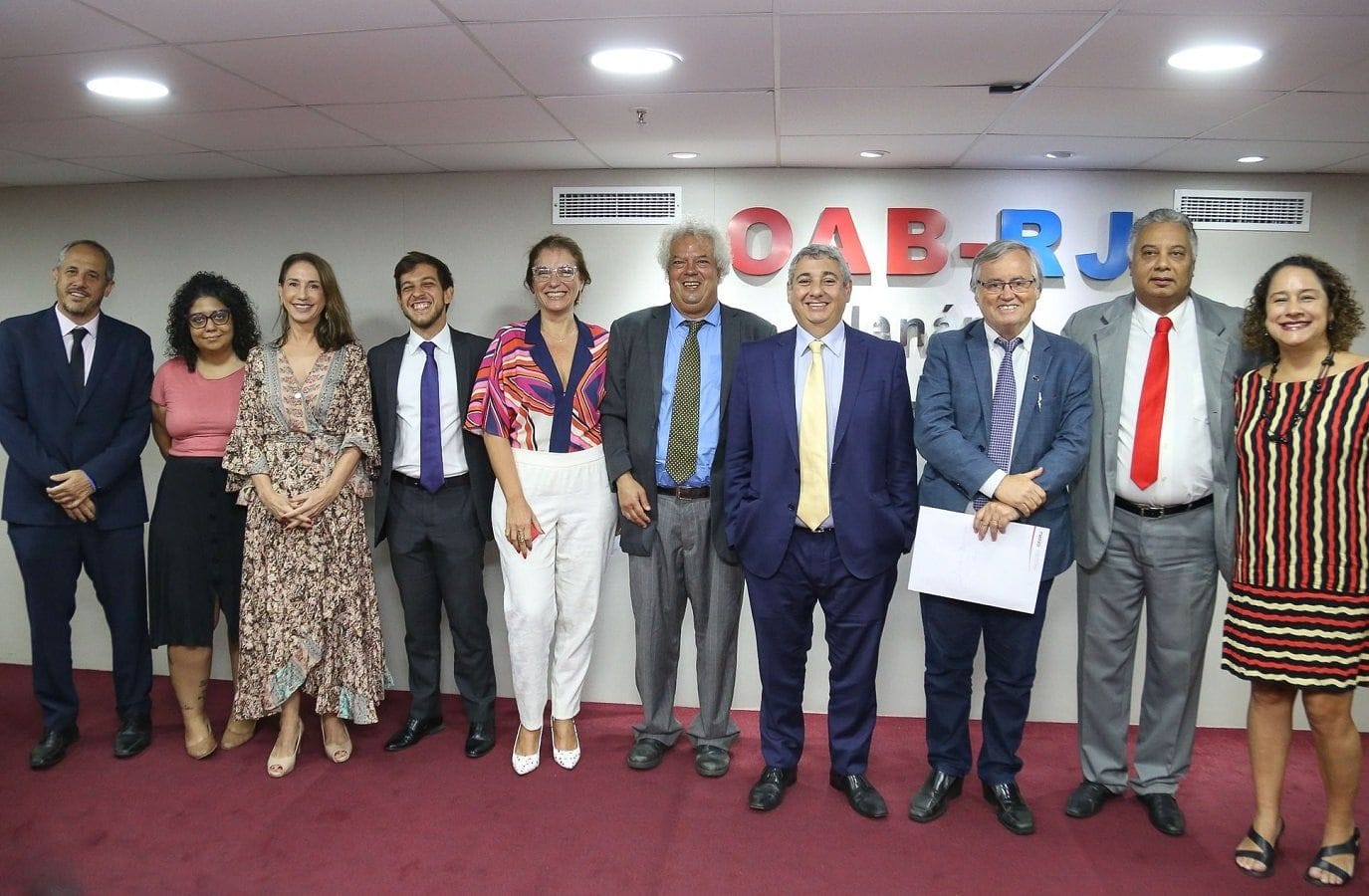
OABRJ, through the Commission on the Law of the Medicinal Cannabis Sector of the Section and its Documentation and Research Center (CDP), promoted the launch of the special edition of the Electronic Magazine of the collegiate. The ceremony brought together politicians and colleagues from the legal field to discuss the historical panorama of medicinal cannabis use, as well as the challenges faced by those who need the medicine today.
"This edition is remarkable for being pioneering in this field and aims to significantly contribute to the advancement of the debate on medicinal cannabis in regulatory, political-criminal, and public policy formulation contexts,” expressed the president of the Commission on the Law of the Medicinal Cannabis Sector of OABRJ, Vladimir Saboia, in the editorial co-signed with the Master of Law and member of the collegiate, Natan Duek, and the director of the CDP, Aderson Bussinger.
Director of the Documentation and Research Center of OABRJ, Aderson recognizes that this is a taboo topic, although he understands that it is increasingly avant-garde, whether from a legal, medicinal, or interpersonal relations perspective. He expressed his happiness in having the CDP as a facilitator of the initiative while questioning the narrative of the war on drugs.
“It is important to understand what surrounds this issue of marijuana, which is the war on drugs. It only serves in this country to kill poor people, black people, young people, and make trafficking an increasingly wealthy bourgeoisie. When they treat drugs as a public health issue, the fuel for trafficking will end,” said Bussinger.
Watch the launch ceremony:
The use of medicinal cannabis in Brazil was regulated by the National Health Surveillance Agency (Anvisa) in 2019. Four years earlier, the same entity established some rules for the importation of cannabis-derived products and the sanitary authorization for their manufacture. The goal of this initiative is to assist individuals suffering from diseases for which the use of the plant has proven clinical benefits. Cannabis is used in the treatment of epilepsy, Parkinson's disease, glaucoma, multiple sclerosis, among other diseases.
In the first year of legalization, 850 requests were made. This number only grew, and in 2021, cannabis for therapeutic purposes was requested 40,000 times by Brazilians. Patients wishing to grow need judicial authorization or must resort to the importation of expensive medications. However, as noted by the councilwoman president of the Special Commission on Medicinal Cannabis of the City Council of Rio de Janeiro, Luciana Boiteux, this remains a challenge for those needing access to the medications.
“We currently have a challenge that has accumulated over the years, corresponding to research and the provision of medicinal cannabis. It is a movement largely composed of mothers who are fighting for access to a medicine that can make all the difference for children and adults,” she expressed.
Chinese writings from 2700 B.C. recommended the use of the plant for joint pain and constipation. Centuries later, the Ebers Papyrus, a medical book from Ancient Egypt, indicated cannabis for eye inflammation and menstrual cramps. In the context of the Brazilian discussion, the president of the IAB's Commission on Criminology, Márcia Dinis, noted that Brazil was the first country in the world to enact a law against marijuana in 1830. At that time, the City Council of Rio de Janeiro penalized the 'pito de pango', the term for marijuana, and those who produced it:
“The sale and use of pito de pango are prohibited, as well as its storage in public houses. Offenders will be fined, namely: the seller 20$000, and slaves and others who use it, three days in jail.”
For Márcia, by penalizing slaves more harshly - directly mentioned in the legislation - it is evident that the fight for decriminalization has always occurred in the social sphere. There was, therefore, structural racism imposed by Brazilian society.

"Our struggle is very ideological. When we are defending such an important issue as the decriminalization of marijuana and free trade, we are also talking about a much larger theme, which is structural racism in the country,” acknowledged the president of the IAB.
Also present at the ceremony were the president of the Commission on the Law of Medicinal Cannabis of OAB/Petrópolis and member of the Commission on the Law of the Medicinal Cannabis Sector of OABRJ, Vilma Seljan; the president of the State Commission on the Truth of Black Slavery of OABRJ and the Commission on Racial Equality of IAB, Humberto Adami; the vice president of the Commission on the Law of Medicinal Cannabis of OAB/Niterói, Carlos Sobral Pinto; the consultant of the Commission on the Law of the Medicinal Cannabis Sector of OABRJ, Lucia Lambert; the member of the Commission on the Law of the Medicinal Cannabis Sector of OABRJ, Natan Duek; the lawyer of the Reform Network Marcela Sanches; the lawyer of the Marijuana March André Barros; the lawyer for patient associations Ladislau Porto; and the anti-racist and anti-prohibitionist activist lawyer Deborah Barros.
Images: Flávia Freitas/OABRJ