Precision Agriculture in Cannabis Cultivation
How precision agriculture is revolutionizing cannabis cultivation with drones, AI, and advanced sensors
By Amanda Campos
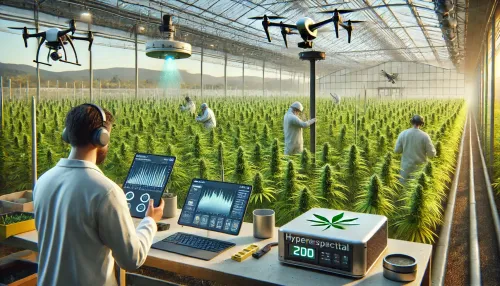
The cannabis industry has grown significantly in recent years, driven by a rising wave of legalization in various countries along with greater social acceptance for medicinal and recreational use. As the market expands, it becomes essential to enhance cultivation and harvesting processes, and in this context, technology plays a central role, especially with precision agriculture (PA). This technique encompasses the use of sensors, devices, and software to monitor and manage, in real-time, the growth conditions of crops, ensuring greater efficiency and quality.
According to Embrapa, PA is based on the collection, processing, and analysis of temporal, individual, and spatial data from cultivation areas. This set of information is used to improve management decision-making, increasing the efficiency of resource use, productivity, quality, profitability, and sustainability of agricultural production.
High-Performance Technologies Used in Cannabis
Some techniques are already employed in countries where cannabis production is legalized, such as:
Hyperspectral remote sensing, generating images for detailed analysis of production fields, allowing early detection of stress or disease in plants;
Use of unmanned aerial vehicles – drones, for scanning and optimizing growth cycles and predicting the best harvest time;
Predictive modeling applications and software for yield and productivity;
3D scanning of plants for precise morphological measurements;
Fully automated growth chambers;
Machine learning algorithms for rapid data processing and identification of desirable agronomic traits, such as seeds with maximum allowable amounts of THC and CBD, oil content, and terpenes quantified accurately.

In addition to the benefits to plants, PA can help promote the sustainability of crops, for example, by using sensors and smart irrigation systems. These devices ensure that each plant receives the precise amount of water and nutrients – via fertigation, depending on the stage of development they are in, minimizing resource waste and increasing the efficiency of the agricultural system.
Some sensors measure more than one variable in the same device, such as soil moisture, pH, electrical conductivity (EC), light intensity, and Vapor Pressure Deficit (VPD), which is basically a measure of the pressure difference between the moisture inside and outside the plant leaf.
Legal Aspects
In Brazil, it was recently decided by the First Section of the Superior Court of Justice (STJ) that it is possible to import cannabis seeds, via CNPJ, of the variety known as industrial hemp, which has low THC (tetrahydrocannabinol) content – the psychoactive principle of marijuana. The permission is valid as long as it is intended for the production of medicines or for pharmaceutical industrial use, and awaits regulation to be issued by the National Health Surveillance Agency (Anvisa) for the release of cultivation.
This measure was crucial for the start of searches for equipment and techniques that allow extracting the maximum potential of cannabis cultivation, and in this sense, the ICTCB research team has been conducting research on the viability of industrial hemp planting in Brazil, participating in fairs and conferences on the subject – supported by legal aspects.
In the cannabis industry, ensuring product quality and complying with regulatory standards is an essential part of the process throughout the production chain. Precision agriculture technologies allow for continuous monitoring of factors such as temperature, humidity, and light, ensuring ideal conditions for cultivation. This rigorous control guarantees quality and facilitates compliance with industry regulations.