South Africa starts pilot planting with local hemp seeds
Initiative in the Limpopo province tests national hemp genetics to boost rural and economic development

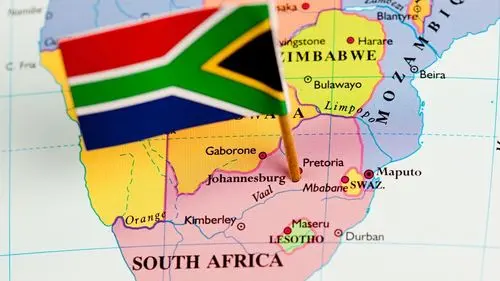
The Limpopo province, located in the far north of South Africa, has started planting the first locally developed hemp seeds by the Agricultural Research Council (ARC), as reported by Cannabiz Africa. The pilot project aims to structure an economy based on the plant, specifically focused on rural development.
The initiative is coordinated by the Limpopo Hemp and Cannabis Farmers Association (LHCFA) in partnership with the provincial government. The main objective is to generate robust production data on the national variety.
Experimental hemp cultivation
The main activity took place on December 8, with a practical demonstration at Joanne Herbs Farm in Levubu. On that occasion, the ARC Can 1 variety was introduced into the soil.
Dr. Rudzani Mathobo from the Limpopo Department of Agriculture and Rural Development (LDARD) led the action. He presented cultivation techniques and discussed the vast potential of hemp for the agro-processing sector.
Days earlier, on December 5, the Limpopo Agriculture Secretary, Nakedi Kekana, conducted the technical delivery of the seeds. A group of 15 farmers was selected to monitor the performance of this hemp genetics in the field, aiming to justify future commercial expansion.
Hemp as a transformation tool
The project is the result of collaboration between government agencies, universities, and producers, led by Mashudu Jennifer Badane, president of LHCFA. The provincial strategy aims to position hemp as an engine for economic transformation for rural communities, going beyond just medicinal use.
Hemp chain organization
The model adopted in Limpopo prioritizes organizing producers at the local level before provincial expansion. In November 2025, the association's core was launched in the Capricorn District, an event attended by the South African Police Service (SAPS) and agriculture representatives.
For the association president, decentralization is vital for the sustainability of the hemp sector. "This marked the beginning of structured efforts to build district-level associations, recognizing that true transformation happens at the grassroots level."
She emphasizes that the planning deviates from traditional centralized management. "This is not a top-down command and control approach but a collaborative model where each district contributes to the hemp value chain."
The future of hemp in the region
The practical advancement of planting was preceded by a summit held in June 2025. The meeting, involving the University of Venda and research institutes, laid the groundwork for the technical support that is now reaching hemp producers.
For 2026, LHCFA projects expanding access to seeds and establishing processing units. The focus is on local value addition aligned with the Sustainable Development Goals (SDGs). "2025 was a year defined by action," Badane concluded.
With information from Cannabiz Africa