Spain Bans HHC: Learn about the Banned Cannabinoids and the Impact on the Market
Spain has banned HHC and other cannabinoids. See what has changed with the new law, the affected substances, and what this reveals about the future of cannabis.

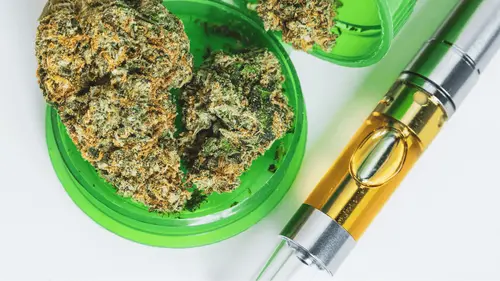
In a move that raises an alert about the future of cannabinoids worldwide, Spain has officially announced the prohibition of HHC (hexahydrocannabinol) and other cannabis-derived compounds.
The decision, which amends Royal Decree 2829/1977, marks a significant turning point in the debate about the new frontiers of cannabis in Europe and raises questions: what is really prohibited? And what changes for those closely following the cannabis scenario?
Spain Bans HHC: Which Substances Were Affected?
The Spanish Ministry of Health updated its list of prohibited psychotropic substances, following a trend initiated by the UN by including HHC in List II of narcotics. Despite recognizing its medical potential, it prohibits recreational use.
The new regulation affects not only HHC but also other semi-synthetic cannabinoids, such as:
HHC-O (HHC acetate),
HHCP (hexahydrocannabinofuran),
HHCP-O (HHCP acetate),
Delta-8-THCP (JWH 091),
Delta-9-THCP (THCP),
THCP-O (delta-9-THCP acetate),
THC-O (delta-8-THC acetate),
Delta-8-THC-C8,
Delta-9-THC-C8,
H4-CBD (tetrahydrocannabidiol).
From the publication in the Official Gazette, the commercialization of products containing these substances is officially prohibited throughout the Spanish territory, both in physical stores and online.
Why Did HHC Come under Authorities' Scrutiny?
HHC is a "minor" cannabinoid found naturally in small amounts in cannabis seeds. However, for commercial purposes, it is usually produced semi-synthetically in a laboratory. Until recently, it circulated in a sort of legal "gray area," being promoted as a less regulated alternative to THC.
The recent UN decision brought more attention to HHC on the international scene, paving the way for countries like Spain to tighten their policies.
Despite the new regulation, experts warn that the prohibition of HHC in Spain may have a limited effect. Araceli Manjón, an expert in international drug control, explained to the newspaper El Salto that the creation of new psychoactive substances is faster than legal processes can keep up with.
This means that while some molecules are banned, others not yet mentioned in legislation may emerge to fill the space left by the previous ones. “There will always be a loophole for chemical innovation,” Manjón pointed out.
A Possible Path: Regulating Cannabis Holistically
Faced with this race between chemistry and legislation, many argue that broader regulation, based on scientific evidence about the cannabis plant, would be a more effective solution than piecemeal prohibitions.
However, this scenario still seems distant in Spain, where the issue remains surrounded by political and social resistance.
With the prohibition of HHC in Spain, it is likely that other European nations will follow the same path in the coming months. For those monitoring the cannabis market, it is necessary to pay attention to international legislation, which has been changing more rapidly and, above all, to observe the future of "alternative" cannabinoids that will still be the subject of many debates.