Uruguay considers allowing sale of cannabis to tourists and non-residents to combat the illegal market
Director of IRCCA states that the current model has reached a limit and that including foreigners is essential to expand the formal market and ensure health safety; measure could boost economy and tourism

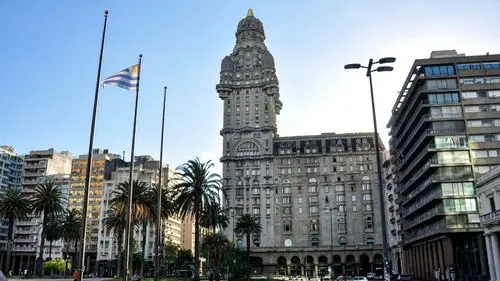
The Uruguay is considering the possibility that tourists and non-residents aged 18 and older who arrive in the country may be able to purchase cannabis even if they are not citizens.
The executive director of IRCCA (Institute for the Regulation and Control of Cannabis), Martín Rodríguez, confirmed that the agency is analyzing the possibility of expanding the legal cannabis circuit in the country, increasing the scope of the formal market and weakening the illicit market.
Currently, only individuals with permanent residence or Uruguayan identification card can access regulated sales in pharmacies, which currently offer four varieties: ALPHA, BETA, GAMMA, and EPSILON.
However, the underlying issue goes beyond attracting visitors: it has to do with the original objectives of the regulation.
Why does Uruguay want to legalize cannabis for tourists?
Uruguay has long surpassed the debate on regulation: it regulated, implemented, and improved a system that, with its nuances, has shown concrete results. A network of clubs, pharmacies, and home producers has been consolidated; public information campaigns have been strengthened; and a policy prioritizing harm reduction and state control of the supply chain has been solidified.
As Martín Rodríguez explained, regulation has been “consolidating over the years,” but the model now faces a limit: what has been achieved so far is not sufficient to continue eliminating the illicit market or filling the access gaps left by the original regulations.
In an interview with Canal 10, the director asked: “What do we need to do to ensure that cannabis regulation continues to better achieve its objectives?” He answered: “One of the main objectives is to increase the scope of the formal market, to continue replacing the illegal or irregular market with a formal market,” as reported by Swiss Info.
However, undeniably, cannabis tourism can act as an unstoppable force to boost the economy, curb the illicit market, and ultimately generate more tourism. Some places with robust recreational markets — such as California and Colorado — have already implemented cannabis sales programs for tourists, with very promising results. For example: increased hotel, gastronomic, and cultural activity, and higher state revenue.
But the measure is not only aimed at cannabis tourism. In Uruguay, many non-residents — who are not necessarily tourists — also do not have access to cannabis sales in pharmacies. Consider those who come to spend a few months during the summer, those who live abroad but travel to visit family, or those who are passing through for work, study, or for any other reason. As long as their registered address is outside Uruguay, they cannot legally purchase marijuana in pharmacies.
In 2013, during José Mujica's presidency, Uruguay passed Law 19.172, which created the world's first state-regulated cannabis market for adults. Since then, the country has implemented a policy that combines state control, traceability, harm reduction, and supervised access mechanisms. More than twelve years after its enactment, the model has shown progress: it has consolidated a growing formal market, reduced part of the illegal circuit, and generated an unprecedented cultivation, production, and sales system globally.
But the fundamental question, raised by Rodríguez, is this: what happens to tourists or non-residents aged 18 and older who arrive in Uruguay and want or need cannabis but cannot obtain it legally? Simple: they turn to the illegal market.
Rodríguez categorically stated: “The inclusion of foreigners is at the heart of the discussion,” as those who visit Uruguay and wish to use marijuana already do so, but are forced to resort to the black market. Therefore, “this discussion is crucial to consider the next step in marijuana legalization,” the official stated.
The logic behind the proposal is simple: just as Uruguayan residents have the right to access the regulated circuit, those who visit the country should also have a safe, controlled, and traceable route, without being relegated to a parallel market that the law itself has always sought to reduce.
How to obtain cannabis if you are not Uruguayan? The policy that never happened
Currently, recreational access is limited to three avenues: registered home cultivation, club membership, and purchase at pharmacies. For this, prior registration is always required, in addition to being of legal age and a resident or Uruguayan citizen.
Member clubs are legally prohibited from admitting occasional customers or offering flowers to non-members. And pharmacies — even if they wanted to sell to a tourist — cannot do so: regulations require the customer to be registered as a resident.
The idea of allowing tourist access is not new. In 2021, Daniel Radío — then Secretary-General of the National Drug Secretariat and President of IRCCA — already spoke of allowing foreign visitors to purchase legal marijuana as “another incentive for the arrival of tourists” and as “an additional source of revenue.”
Months later, in dialogue with El País, he assured that he wanted to implement cannabis tourism “as soon as possible to start testing what happens” and suggested that in the future, it would be obvious that people could “have a glass of wine or smoke cannabis” when traveling, but that today there are still “remnants and sequelae of prohibition.”
However, this momentum did not translate into a concrete reform: Law 19.172 was not modified, nor was a specific registry created for non-residents, and sales to tourists were never implemented.
In 2022, the issue returned to Parliament through a bill proposing to allow “non-residents legally in the territory of the Republic” access, during their stay, to the cannabis sales mechanisms authorized by the 2013 law. This discussion reflected support and resistance within the then-governing coalition and showed that political consensus was still not sufficient to fully open the doors to cannabis tourism.
In this debate, numbers were presented: with 3.4 million inhabitants and over 1.5 million foreign tourists in just nine months, a study by the consulting firm Equipos estimated that about “100,000 people per year […] will enter the tourism sector to consume cannabis if this door is open,” which would imply an additional annual demand of up to 1,470 kilograms, based on the 15 grams per month allowed by the regulated system.
At the time, Frente Amplio deputy Eduardo Antonini advocated for an equal access regime for residents and non-residents, with the exception of personal cultivation due to its permanent nature, and warned that the current exclusion leads many visitors to the illicit market “with the consequent risks.”
Retail stores, temporary registrations, and the questions we all ask
The new factor in the discussion is twofold. On the one hand, IRCCA is no longer just talking about making life easier for tourists, but also about the possibility of creating “sales centers alternative to pharmacies,” something that requires the modification of an article of Law 19.172, which left sales exclusively in the hands of these establishments.
“Clearly, we need to modify this point of the law to allow the regulatory body, IRCCA, to choose the best mechanisms for marketing the product, beyond the pharmacy,” said Rodríguez.
On the other hand, the debate intersects with old proposals that were never regulated, such as creating temporary records for tourists — which would expire upon leaving the country — or the possibility of authorized tourism companies joining cannabis clubs and offering short-term memberships to their clients, an idea that Antonini defended as a way to “correct an inequality” and boost the local economy.
None of this is definitive: the new administration of Yamandú Orsi and IRCCA, led by Rodríguez, will have to translate these alternatives into concrete texts, negotiate parliamentary majorities, and only then define how access will be for non-residents.
What could the opening of access to tourists and non-residents mean?
If Uruguay finally allows the legal purchase of cannabis for adult use by tourists and non-residents, the change could be interpreted at various levels:
From an economic standpoint, it is about capturing a segment of cannabis tourism that already exists globally and moves around 17 billion dollars per year between flowers, derivatives, experiences, and associated services in countries like the USA. In terms of health and safety, this implies offering standardized and traceable products to people who already consume them, but without guarantees of quality or origin, which, in turn, fuels drug trafficking. And in terms of rights, this echoes Radío's concern about a “fundamental inequality” in a law that allows residents to smoke in regulated channels, while pushing outsiders into the market that the regulation itself sought to dismantle.
Twelve years after the law advocated by former President Mujica, and after several failed attempts to open the doors to visitors, the momentum of IRCCA may finally be gaining strength. Under the new government of Orsi, this suggests that Uruguay does not want to remain stuck in a gradual regulatory experiment, rather than a fully developed model capable of integrating those who visit the country for just a few days or months.
The question now is whether 2025 will finally be the year when “cannabis tourism” ceases to be a headline and becomes a daily practice, or if sales to non-residents will continue to be the unfulfilled promise of Uruguayan regulation and a harsh blow to illicit sales.
Content originally published by Camila Berriex on El planteo