Battle of Giants: Can Alcohol Be Replaced by Cannabis?
With an eye on the growth of the cannabinoid-infused beverage market, experts say that cannabis may have more space than alcohol in the future. But can this really happen?

Published on 01/25/2022
By João R. Negromonte
According to data from consumer consultancy Kantar, the non-alcoholic beverage market grew by 2.6% in 2021 alone in Brazil (where we still do not have legislation for the commercialization of cannabis-infused beverages). Although this is not enough to offset the decline of this industry in 2020 due to the pandemic, experts claim that the recovery could be even greater in 2023.
Following this trend, companies producing cannabis-infused beverages cannot be left out. With the resurgence of bars, restaurants, and beverage stores intensifying, and with increasingly comprehensive legislation, beverage brands like the American Cann are heavily investing to not miss out on this growth.
With a bubbly drink infused with cannabinoids, the brand recently launched a challenge for its consumers. The idea is for people to go 30 days without consuming alcohol and only drink cannabis-infused beverages, dubbed “Cannuary” (a blend of the brand name and the month of January), referencing the proposed one-month pause.
For the company's CEO, Jake Bullock, speaking to the WeedMaps portal, “we all know that alcohol is one of the worst things we do to our bodies, and yet we continue to do it because alcohol creates a social situation. By replacing (alcohol) with a microdose of cannabis, drinks like Cann really provide a light, uplifting feeling and make you want to laugh a lot while being yourself with the people you like. Cann allows us to abandon alcohol without sacrificing the effect.”
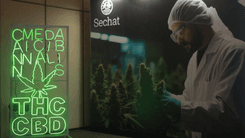
For Tiago Zamponi, a columnist for Sechat and National Sales and Business Development Director at Molecule, a Canadian company developing a portfolio of cannabis-infused beverages, the lack of knowledge, information, and regulation may hinder this market evolution; however, Tiago assures that cannabis beverages already replace alcoholic drinks.
“The market is still very new for us to say that it could, who knows one day, surpass the alcoholic beverage market, not to mention that it depends a lot on each person's preference; many like to drink gin, others wine, but one thing I can say is that cannabis-infused beverages give us the same benefits as alcohol, just without the hangover the next day,” Zamponi states.
Another interesting point is that, according to a 2017 study from the University of Georgia, since the legalization of cannabis beverages in the U.S., orders for beer and wine have dropped by 15%. “Additionally, cannabis-infused beverages in Canada experienced higher growth rates than any edible category in 2020, based on retail sales data at the product level,” Zamponi highlights.
“In Canada, cannabis beverages cannot yet be sold in bars or restaurants, only in dispensaries (stores that sell cannabis in Canada) or have more than 10mg of THC in products; however, for other cannabinoids, there are no limits, respecting, of course, the government-imposed legislation of 30g, which is about five cans of the beverage,” concludes the director of Molecule.
Many people are already turning to cannabis or its derivatives to reduce the consumption of other substances like alcohol, which, for many, could be the solution to excessive consumption, given the therapeutic potential of the plant and its components.
However, there is still a long way to go before claiming that the cannabis beverage industry can surpass that of alcoholic beverages; after all, a series of legislative, market, political, social, and cultural factors still prevent the cannabis market from developing in the way we would like.