Judicial decisions support the maintenance of associative cannabis cultivation in Brazil
Lawyer Max Warner explains how the Cannabis do Bem Association secured in court the safe-conduct to cultivate over 900 cannabis plants in Florianópolis, after years of legal uncertainty and a decisive police operation

Published on 12/11/2025
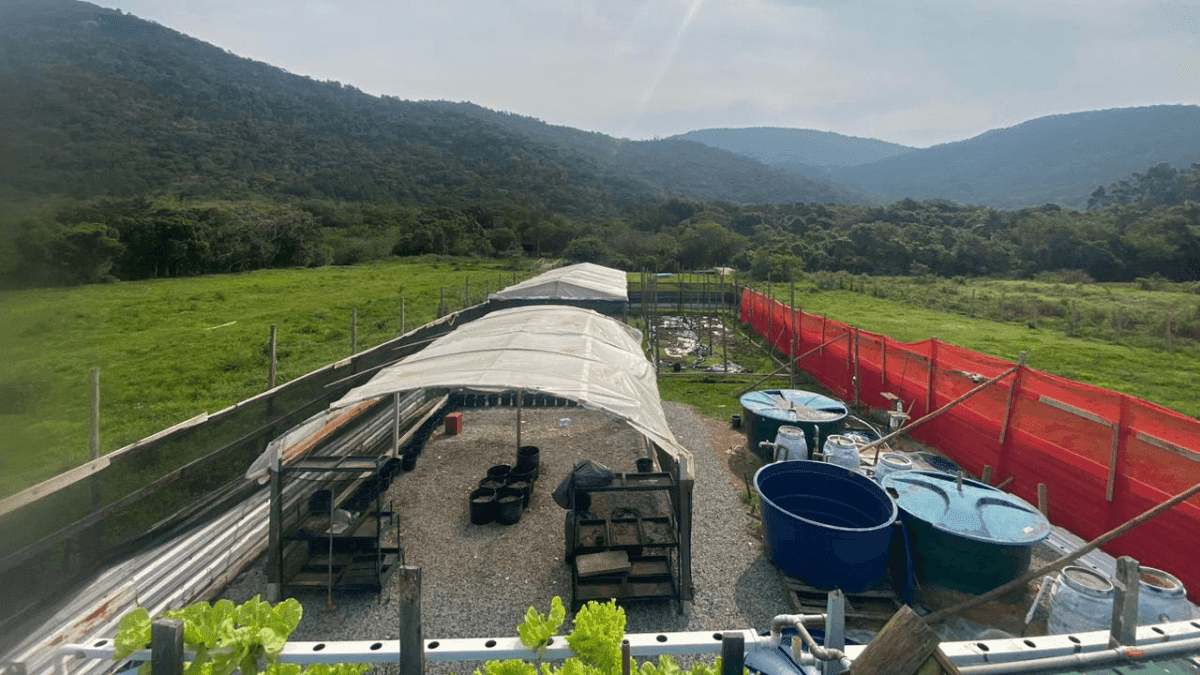
The backstage of the decision that protects Cannabis do Bem's cultivation in SC | Photo: Disclosure/ICDB
The path taken by judicial actions involving associative cannabis cultivation in Brazil has led courts to grant safe-conducts to ensure the continuity of treatments, in a scenario marked by the lack of federal regulation and the intensification of police operations. One of the most recent cases, in Santa Catarina, highlights how judicial decisions have become the main mechanism for protecting patients and associations.
In narratives spanning almost three years of waiting, an unexpected police operation, and the urgency to protect patients, lawyer Max Warner explained how the Cannabis do Bem Association secured in court the right to organically cultivate over 900 cannabis plants.
The authorization now ensuring the association's cannabis cultivation is the result of a long legal battle that began in 2022 and needed to be redirected due to the real risk of treatment interruption. The lawyer specialized in cannabis-related law details the strategies, difficulties, and social impact of the decision.
From civil action to collective habeas corpus: the path to authorization
Warner explains that the process began in October 2022 when he and lawyers Matteus Jacarandá and Jamil Issy filed a civil action against the Union and ANVISA. The goal was to secure judicial authorization to produce and provide medicinal products exclusively to the members of the Cannabis do Bem Association.

However, the progress was slow: after almost three years, the case had not been judged, and the injunction continued to be denied. Still in 2025, patient associations from various regions of the country were facing police operations, which raised an alarm within the association.
"It was a scenario of absolute legal uncertainty," Warner recalls. Faced with this, the team chose a new path: filing a collective habeas corpus to ward off possible police actions and ensure treatment continuity. The request was filed on September 10, 2025.
However, the turning point in the case would come from an unexpected episode.
BOPE operation and real risk of illegal coercion
Even before the injunction analysis in the habeas corpus, the headquarters of the Cannabis do Bem Association was the target of a BOPE operation in Santa Catarina on September 20, 2025. All plants, extracts, oils, and ointments were seized, and the association's president was taken to the police station.
According to Warner, the report from the responsible Police Chief acknowledged that there was "no evidence of trafficking." The police authority pointed out that it was cultivation and manipulation aimed exclusively at associative medicinal use — preventing an on-the-spot arrest.
For the lawyer, the operation was decisive in sensitizing the Judiciary. The occurrence report and videos of the action were attached to the habeas corpus, highlighting the concrete risk of illegal coercion against the leaders. As a result, the safe-conduct was granted, ensuring the necessary legal protection for cultivation.
Despite the victory, the effects of the operation still persist: to this day, according to Warner, the seized materials have not been returned, directly affecting the treatment of dozens of patients.
Legal limbo and expectation for federal regulation
For the specialist, the issues faced by associations do not stem from specific gaps in the law but from the complete absence of clear and specific federal regulation on medicinal cultivation, especially in the associative model.
"Today, associations are in a true legal limbo," he states. In 2025, the country saw an increase of about 230% in police operations involving patient associations, a direct reflection of this lack of rules that delimit action, oversight, and security.
There is an expectation that the Union and ANVISA will comply with the Superior Court of Justice's determination to regulate medicinal cultivation by March 2026. Still, Max emphasizes: "there is still great uncertainty about the content of this regulation, as it is unknown whether it will adequately meet the medical needs of patients and, above all, the specificities of the productive arrangement of the associations, which are currently the main access alternative to treatment for thousands of people."
Social impact: judicial decisions as an alternative to the illegal market
Warner highlights that judicial authorizations like the one granted to Cannabis do Bem go beyond health assurance: they also reduce patients' dependence on the illegal market, weaken trafficking, and decrease health risks.
Citing the Prohibition Era in the United States, he points out that historically prohibitionist models strengthen organized crime and place consumers in uncontrolled environments. "When the State does not regulate, clandestinity regulates," he observes.
For him, authorized associative cultivation, in this context, offers an opposite path: safe treatment, medical prescription, traceability, and quality, with positive impacts also on public safety and the reduction of social harm. "Therefore, it is a measure that, in addition to protecting the fundamental right to health, produces concrete and positive effects on public safety and the reduction of social harm," he concludes.