Brazil stands out in global report with success stories on the use of cannabis for pain
Report featuring Brazilian participation highlights successful clinical cases


Refractory chronic orofacial pain (RCOP) is a persistent medical condition that affects about 40% of the Brazilian population. The pathology does not respond to conventional treatments and significantly impacts patients' quality of life.
Various causes may be associated with this condition, such as neurological, infectious, and autoimmune diseases.
A report published in the Karger Journal, based on the International Medical Cannabis Conference at the University of Bern (2025), gathers promising clinical evidence on the use of medical cannabis for chronic pain, highlighting an article by Dr. Cynthia De Carlo.
"The international scientific community has turned its eyes with great interest and credibility to Brazilian research and professionals, who have been presenting positive and promising results in the use of medical cannabis for the treatment of orofacial pain — an area still little explored until now," comments De Carlo.
According to the doctor, this advancement places Brazil in a prominent position, providing support to researchers and pressuring councils and regulatory bodies to recognize that the therapy is indeed effective and beneficial. "It also elevates Brazilian Dentistry to a level of great respect," she emphasizes.
Use of cannabis in the treatment of orofacial pain
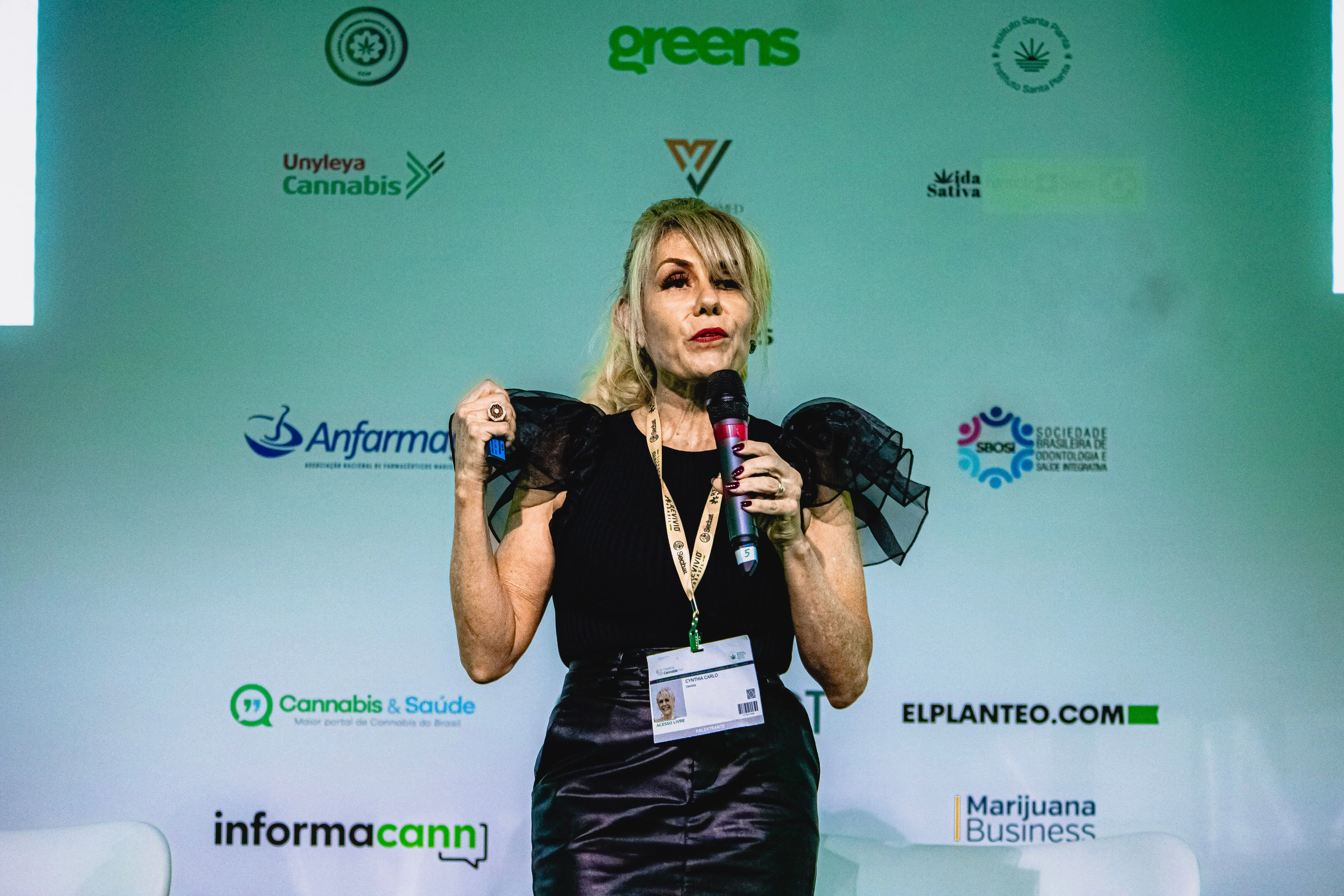
Dr. Cynthia De Carlo presented a clinical case demonstrating the positive effects of cannabis in the treatment of RCOP. Based on scientific literature, she highlighted the plant's potential to restore physical, emotional, and cognitive balance, as well as alleviate symptoms such as stress and anxiety.
The case of a 40-year-old patient was presented, who sought relief from intense facial pain, migraines, cervical pain, jaw clicks, insomnia, anxiety, and depression. After consulting various specialists and receiving a diagnosis of temporomandibular dysfunction (TMD) and advanced bruxism, she began using full-spectrum cannabis oil 1500 mg in March 2021.
In July of the same year, using 0.5 mL of cannabis oil three times a day, the patient reported significant improvement: “happy, energetic, without headaches, swelling, clicks, or neck pain.” By November 2021, she was no longer using allopathic medications.
Cannabis also helps patient with cauda equina syndrome
Another clinical case presented in the report was developed by researchers from the TRI Center in Campinas (SP). They reported the use of cannabis oil with 75 mg/mL of CBD and 9 mg/mL of THC in a 36-year-old patient with cauda equina syndrome (CES), who suffered from refractory neuropathic pain.
After a year of complementary treatment with cannabis, the patient reported an 80% improvement in pain and quality of life, with no reported side effects.
The report also addresses the regulation of medical cannabis in Latin America, highlighting that Brazil has legalized its use with strict control of THC content (< 0.2%). Despite the mention of Brazil, the authors of the section are from Colombia and the United States.