Cannabis without THC or CBD: American genetics arrives in Brazil focusing on CBG
Badger G® variety promises to boost the pharmaceutical sector and facilitate monitoring with red leaves and high CBG content

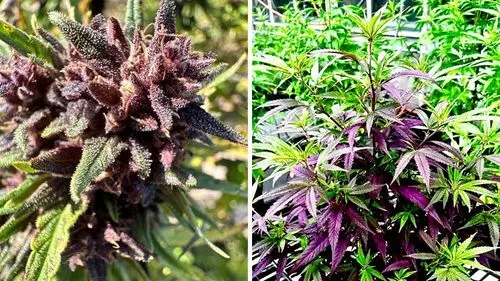
The industrial hemp variety, named Badger G®, is being introduced in Brazil by the company Rochedo Assets Investments, based in Mato Grosso. The main differential of the genetics, patented by the company, is the total absence of tetrahydrocannabinol (THC) and cannabidiol (CBD), presenting, in contrast, high levels of cannabigerol (CBG), known as the "mother molecule" of cannabinoids.
Developed in Wisconsin (USA) by Crop Innovation, the plant uses the CRISPR-Cas9 genetic editing technique. The method, according to the developers, "deactivates" the genes responsible for THC and CBD synthesis, keeping only the CBG metabolic pathway active.
André F. Steiner, owner of the Badger G® license, explains that the technique differs from transgenics (GMO). "It is different from a genetic modification, where I take a gene from an insect and place it inside the plant's DNA," he says. The CRISPR technique enters the DNA and cuts the expression of the genes we want to cut, such as THC and CBD".
CBG and monitoring safety

The choice for CBG, according to Steiner, is strategic. He points out that, although there are about 120 cannabinoids, most transform into THC or CBD at the end of maturation. CBG and other "rare" cannabinoids remain in small quantities, requiring large biomass volumes for extraction, which raises the price - Steiner estimates the price of CBG at 4 thousand dollars per kilo.
"We know the power of this cannabinoid for health," says the entrepreneur, citing research on its potential anti-inflammatory, neuroprotective, and analgesic properties.
In addition to the chemical composition, the genetics have a distinct visual characteristic, naturally red leaves. According to the company, this serves as a "genetic signature" that facilitates control and monitoring, visually distinguishing it from psychoactive varieties.
"For monitoring, it became simple. Everything that is red is legal. What is no longer red may not be legal," emphasizes Steiner. He compares the ease of identification with the high security costs required in other countries for cannabis cultivation, such as in Jamaica, where he operated. "Brazil is for us to plant on a large scale, in a field, without worries".
Entry strategy and regulation

The initial target audience for Badger G® is the healthcare sector. "The pharmaceutical industry is our focus because now we can deliver to them what they want, on a large scale," says Steiner.
Seizing the moment of regulation of cultivation for medicinal purposes - which is currently in the hands of the Superior Court of Justice (STJ), after the Federal Government requested an additional 180 days to deliver the regulation - the company seeks to start conversations with regulatory bodies.
According to the entrepreneur, the genetics already have approval from the Department of Agriculture (USDA) and the Animal and Plant Health Inspection Service (APHIS) in the United States, which consider it as a "regular plant".
Steiner informs that the company plans to use this documentation to "activate the Map [Ministry of Agriculture and Livestock] and Anvisa [National Health Surveillance Agency]". He also mentions engagement with Embrapa, governors, and senators to present the genetics as a solution to regulatory impasses of hemp in Brazil.
"We believe that, in the short term, the Brazilian government and regulatory agencies already understand that we are losing tens, if not hundreds of billions of dollars a year". Steiner, estimating a regulatory advancement "between three and six months". He also suggests that regulation may occur at the state level, through decrees.
Industrial vision and future genetics

Although the immediate focus is pharmaceutical, Steiner sees Badger G® as a "gateway" for the complete industrial use of hemp in Brazil, covering sectors such as construction (bioconcrete), textile, bioplastics, and biodiesel.
The company is already working on developing new varieties focused on other rare cannabinoids. "We can already produce, soon we will have the other one in the oven to come out with cannabichrome (CBC). And then we will have another cultivar and another cultivar," he reveals.