Companies seek to streamline the export of Cannabis products from Colombia to Brazil
Increased demand and bottleneck at the National Narcotics Fund of Colombia cause delays of up to 60 days in certificate issuance and halve exports to Brazil


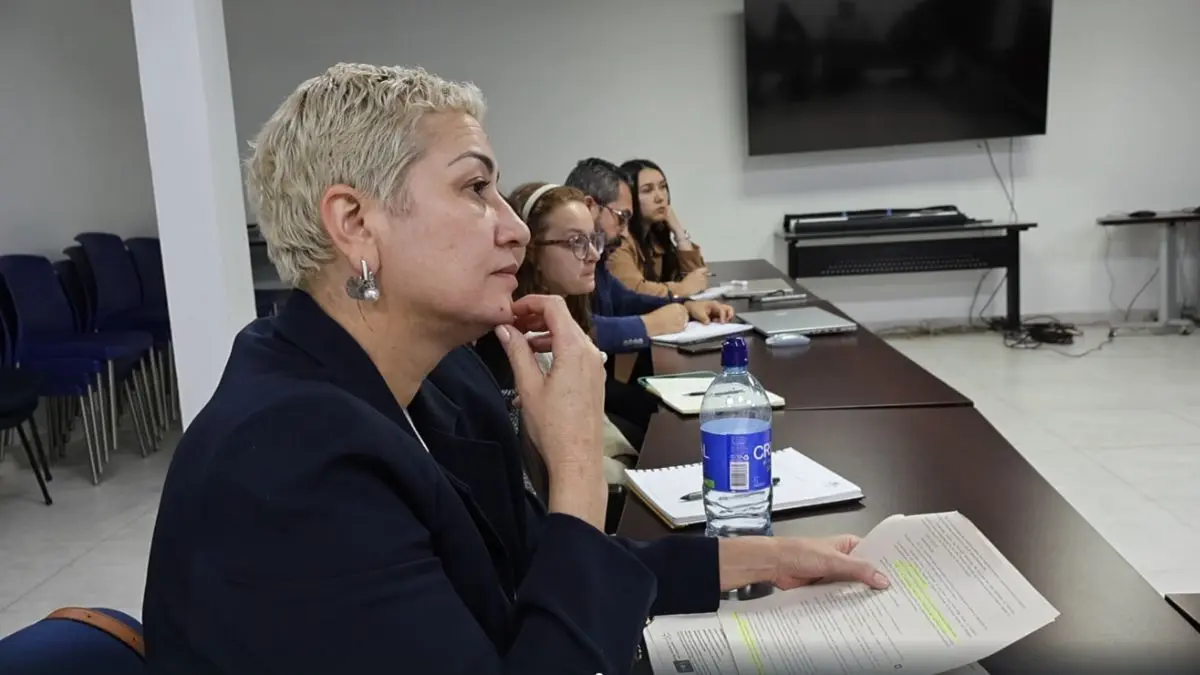
Companies representing Brazilian patients and Colombian industry entrepreneurs gathered at the headquarters of the National Narcotics Fund of Colombia (FNE) to discuss solutions to expedite and streamline the export process of medicinal Cannabis products to Brazil.
Since the establishment of the export certificate, implemented in 2018 and consolidated between 2021 and 2022, the system operated satisfactorily — mainly because the export volume was low. However, with the significant growth in Brazilian demand, the FNE began to face an operational bottleneck. The increase in the number of requests overloaded the system, which is not automated, and each shipment needs to be individually analyzed through the so-called “visto bueno”.
This backlog of processes led to a delay of up to 60 days in certificate issuance — a timeframe that was previously only five days — directly affecting Brazilian patients' access to products and halving the volume of exports from Colombia to Brazil.

Divergence with Brazilian regulation
In Brazil, Anvisa — the agency responsible for regulating the sector — does not require the export certificate issued by the Colombian government.
For individual imports, the process only requires:
Documentation and patient authorization with Anvisa.
Technical documentation of the products;
Proof that the product is regulated in the country of origin.
This lack of regulatory understanding is one of the main points of discussion between the parties, as it makes the Colombian process more time-consuming and bureaucratic than required by Brazilian rules.
Position of the Colombian government
According to representatives of the Colombian government, the export certificate was created to meet the requirements of the United Nations (UN), which establishes a limit of up to 0.2% THC in exported products. The measure aims to ensure that all exported products comply with international substance control and health safety standards.
Economic and logistical impacts
With the increase in exports to Brazil and the consequent overload of the FNE, the certification process, which should last a maximum of 15 business days, now exceeds two months in some cases. Additionally, the company representative needs to personally appear at the agency's headquarters to collect the document, increasing costs and adding logistical complexity.
The result is a 50% drop in Colombian exports. In 2024, Brazil received approximately 300,000 bottles from the United States, while only 8,000 (registered in Brazil) came from Colombia — a difference explained by the greater agility and regulatory simplification of American exporters.
“The biggest market that Colombia is losing competitiveness in is the express shipments market (RDC 660), which only allows the entry of products intended for individual patients,” explained Luis Rodrigo Tamayo, operational director of Carmen’s Medicinals.
“With the growth of the Brazilian market, the FNE is having difficulties issuing the departure certificates on time. This backlog started in July — before, issuance took a week; now it can take up to 60 days,” he added.
Tamayo also highlighted that Colombia currently serves about 4.5% of the Brazilian market, but the bottleneck at the FNE is causing significant losses for exporting companies.

Credit: Sechat
Companies report difficulties
Colombian companies directly involved with Brazil report delays and loss of competitiveness.
For Catalina Olaya, founder of Cannabis Salud, which operates in a B2B model, delays have hindered product distribution in the Brazilian market.
“Currently, we export ointments and oils to Brazil. Previously, we used the courier method — an international express transport system, different from postal shipments — and the product reached the patient in about 15 days. Now, this timeframe exceeds two months,” she stated.
The issue is also felt in the companies responsible for the transportation and clearance of products.
According to Fernanda Vanzeli, commercial manager of Courier Brasil Express, the process is highly regulated and depends on specific channels.
“Importation can be formally done via Siscomex (Integrated Foreign Trade System), in the case of import clearance, or through express shipment — which is the modality used for patients.
This product only enters Brazil through express shipment, not postal shipment. Conventional post offices are not authorized because they are not linked to the Federal Revenue Service or Siscomex to carry out the procedures,” she explained.
Credit: Sechat
Seeking solutions
During the meeting, representatives from Colombian companies and Brazilian patients sought to align the Colombian process with Anvisa's requirements, in order to facilitate bilateral trade and ensure the continuity of patient treatment.
The group intends to issue a joint letter to the Colombian government, requesting a review of the certification process, the modernization of the export system, and the alignment of national standards with Brazilian requirements, aiming to regain Colombia's competitiveness in the medicinal Cannabis market. FNE members declined to be interviewed.