FNE promises to expedite cannabis exports to Brazil; agency seeks to understand Anvisa rules
Director-General of the National Narcotics Fund of Colombia, Milver Rojas, states that the process will be immediate once Anvisa confirms and foresees a return to the four to five-day deadline for each authorization

Published on 10/30/2025
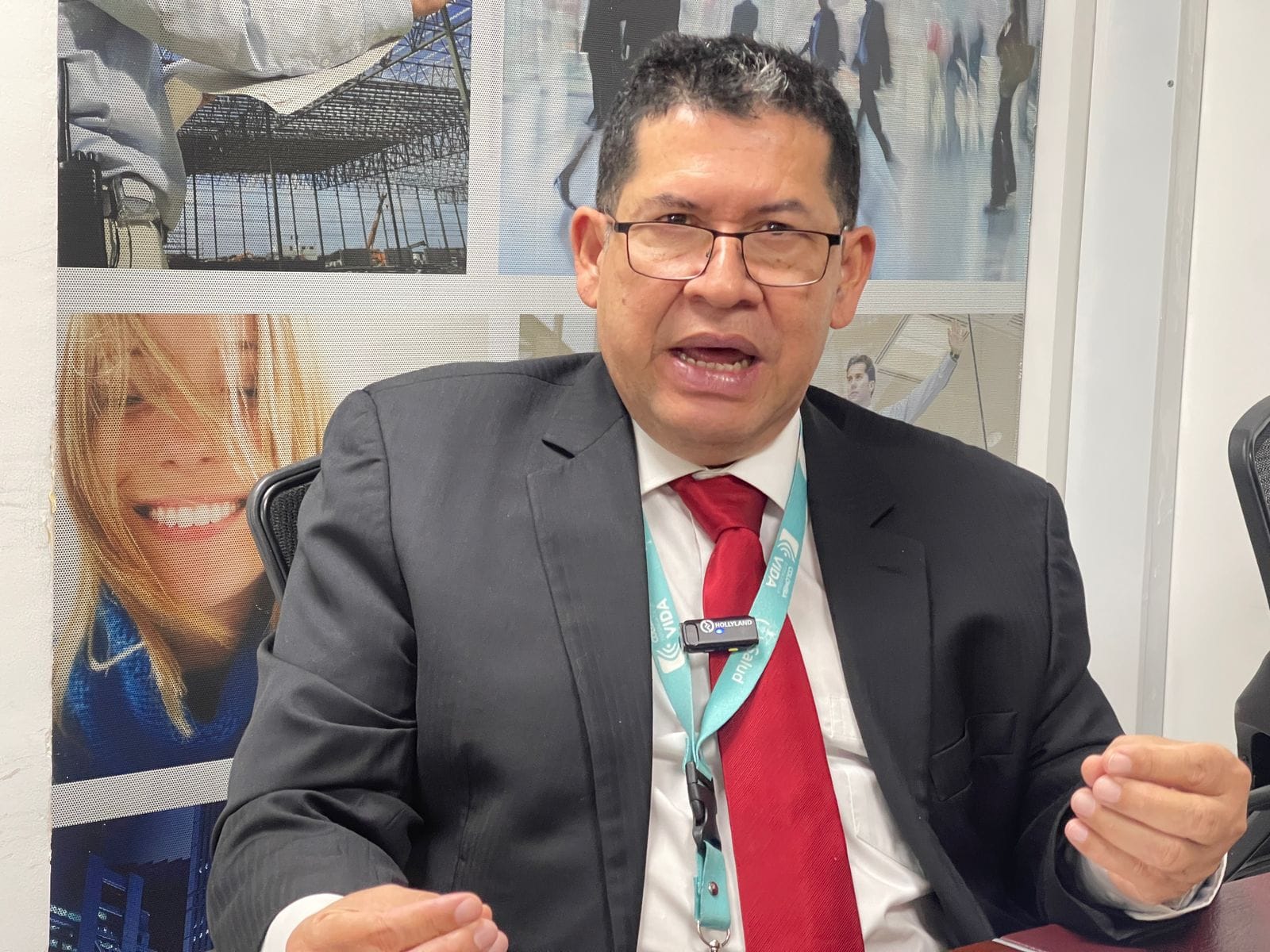
Milver Rojas, Director-General of the National Narcotics Fund (FNE) of Colombia, during an exclusive interview with Sechat, stated that the country is ready to expedite the export of medicinal cannabis to Brazil
Companies representing Brazilian patients and Colombian industry entrepreneurs met at the National Narcotics Fund (FNE) headquarters in Bogotá to discuss solutions to expedite the export process of medicinal cannabis products to Brazil.
After the meeting, the Director-General of the FNE, Milver Rojas, stated in an exclusive interview with Sechat that Colombia is ready to expedite exports once an official confirmation is received from Anvisa regarding the rules applied in Brazil.
"Once we have a positive response from Anvisa, the process starts immediately to expedite. From there, everything will depend on the volume we are receiving," said Rojas.
The director explained that there are proposals under review to streamline the process, including the possibility of consolidating authorizations into a single document per company, instead of issuing individual certificates for each patient.
"There are also proposals in this direction — to do it in the company's name, with the number of patients in a single document, or continue to do it patient by patient. However, the process is streamlined by not having to go through the entire export certificate process. It could be faster as we adopt one of the proposals on the table," he explained.
Rojas emphasized that, once the new procedure is approved, document issuance will be immediate.
"We consider that, once the change arrives, it will be immediate. There may be a certain backlog of ongoing processes, but I believe that within a week, we will already be issuing the first documents and we will not take longer than we proposed: four or five days, which was the goal to expedite," he said.
When asked about the FNE's operational capacity to meet a possible increase in export demand to Brazil, the director assured that the agency has the structure and prepared staff to respond quickly.
"If we don't have to process certificates, the good visas are relatively quick, and the staff we have is trained for that. I don't think there's a problem, and yet, we would seek the possibility of increasing, as far as possible, the number of collaborators working in the area," he said.
Brazil is a priority for Colombia
The director highlighted that Brazil is seen as a market of high strategic relevance for Colombia, and that the government has a national policy aimed at strengthening the medicinal cannabis sector.
"We are clear that Brazil is an extremely important market for Colombia. The national policy is precisely to promote the company and the medicinal use of cannabis," he said.
Rojas also recalled that a new decree was issued in Colombia two days ago, updating the regulations on the subject, and that a law sanctioned last year seeks to strengthen the country's health autonomy, including all types of medications — among them, medicinal cannabis.
"The day before yesterday, a new decree was issued that modifies Decree 811, which was in force on the subject of cannabis in Colombia. We also have, since last year, a new law that seeks to improve this health autonomy, including all types of medications. And obviously, cannabis is considered a medication for this specific use," he said.
The director reinforced that the Colombian government's priority is to strengthen local companies and expand the country's presence in the international medicinal cannabis market, especially in Brazil.
"It is a population that interests us a lot, as a State, to promote our companies, which are currently competing for these patients. That is our goal, and that is what we want," he said.