Hemp at COP 30: the green ally that Brazil still insists on ignoring
Experts argue that hemp can be a protagonist in the ecological transition and a key piece in decarbonization goals, but the absence of the topic at COP 30 raises an alert about the political cost of silence

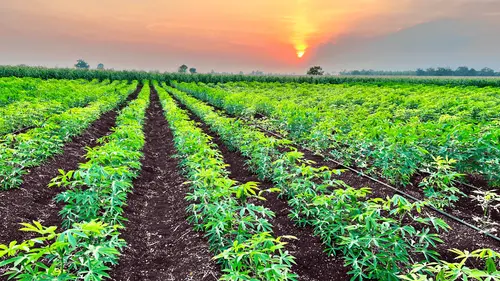
While the world turns its eyes to Belém do Pará, home of COP 30, Brazil carries a paradox: it is one of the greatest powers in biodiversity, but still hesitates to recognize the potential of hemp, a plant capable of capturing carbon, regenerating the soil, and driving a green and inclusive economy.
Ignoring cannabis on the international climate agenda comes with a high political cost. The country runs the risk of losing prominence in a debate that combines science, sustainability, and innovation, precisely the pillars of the ecological transition that the world expects from Brazil.

For lawyer Fabrício Ebone Zardo, president of the Cannabis Brazil Science and Technology Institute (ICT Cannabis Brazil), hemp is more than an agricultural crop: it is a tool for planetary regeneration.
“Hemp has superior benefits compared to other natural fibers, standing out as a powerful tool for achieving global environmental goals. Its potential for carbon capture and soil regeneration makes it a strategic ally in decarbonization policies and the green economy,” he explains.
From speech to action: the role of the legal sector
Zardo also argues that the legal sector plays an essential role in turning the plant's potential into concrete reality. “Lawyers can act through specialized consultancy in cannabis and environmental law, guiding companies, institutes, and producers on the legal framework of industrial hemp, licensing regulations, and access to bioeconomy incentives,” he states.
He points out that integrating the culture into carbon market mechanisms can establish hemp as one of the main vectors of green innovation in the country, provided there is legal certainty and well-structured public policies.
Hemp: a symbol of reconnection
With COP 30 being held in Belém do Pará, a territory of resistance and biodiversity, the discussion about the cultural and symbolic role of hemp gains new dimensions.
“Given the climate urgency and the depletion of the fossil model, we need to inaugurate a new civilizational model, one of regeneration and bioeconomy. Hemp transcends its value as a raw material: it is a symbol of reconnection between nature, economy, and society,” concludes Zardo.
While the agenda remains absent from the official COP 30 schedule, the chorus of experts warning about ignoring cannabis is growing: to disregard cannabis is to waste a historic opportunity to align Brazil with the forefront of the global green economy.