Hemp Industry in Italy Challenges Decree Criminalizing Low-THC Flowers
Emergency decree ignores Parliament and sparks immediate reaction

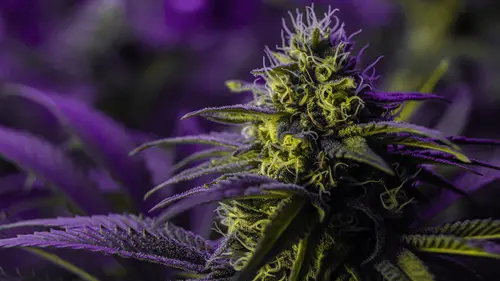
The coalition of Italian hemp industry trade associations has launched a legal and political campaign against the new government decree that prohibits the commercialization and cultivation of hemp flowers, including non-psychoactive compounds like CBD, CBG, and CBN. The group argues that the measure is unconstitutional, violates European Union legislation, and threatens thousands of jobs.
Emergency Decree Ignores Parliament and Sparks Immediate Reaction
The measure was implemented by the government of Giorgia Meloni through a "Security Decree," published on April 8, which reclassifies all hemp flowers as narcotics — regardless of THC content. The text came into effect without passing through Parliament and could be converted into law in the next 60 days. The enforcement is immediate.
According to the industry, the decision jeopardizes over 30,000 jobs and a market valued at 2 billion euros, affecting about 3,000 Italian companies. Industry representatives argue that the regulation violates constitutional principles and regulations of the European internal market, which allow the circulation of products with up to 0.3% THC.
Associations Organize Coordinated Legal Offensive
The response from the entities was swift. Associations such as Canapa Sativa Italia, Resilienza Italia Onlus, Sardinia Cannabis, Canapa Italia, and Federcanapa announced a united front to challenge the decree. In a joint statement, they declared: "We are activating all channels to challenge its legality, constitutional compatibility, and compliance with EU legislation."
Among the planned strategies are:
Actions in Regional Administrative Courts and the Constitutional Court;
Formal complaints to the European Commission;
Collective civil actions for financial losses;
Structuring legal defenses against criminal charges;
Establishment of a legal defense fund and national mobilization of the sector.
Measure Violates EU Legislation and Lacks Scientific Basis, Say Experts
The decree is based on Article 18 of the 2023 "Security Law," which groups industrial hemp with high-THC cannabis — something incompatible with European guidelines. In 2020, the European Court of Justice ruled that CBD is not a narcotic and cannot be prohibited without evidence of health risks.
"With one stroke, the government labeled thousands of law-abiding entrepreneurs as criminals," stated a spokesperson for the Canapa Italia Business Association. Federcanapa also criticized the lack of scientific basis in the decision, pointing to devastating impacts.
History of Regulatory Instability in Italy Concerns Sector
Italian legislation on hemp has been characterized by contradictory changes. Since 2016, when the country legalized cultivation with up to 0.6% THC, various decrees and circulars have created legal uncertainty. In August 2024, the government tried to classify oral CBD as a narcotic — an attempt blocked by a court decision.
In March 2025, the Petitions Committee of the European Parliament received a complaint from Canapa Sativa Italia, but the European Commission has not yet initiated a formal process.
Industry Mobilizes and Sees Decisive Moment
The associations are calling on entrepreneurs and supporters to mobilize, contribute to the legal defense fund, and document abuses. "We must unite forces and show the institutions and the judiciary that the industrial hemp sector will not quietly accept unconstitutional and economically destructive decisions," said the coalition.
The outcome of the legal battle could set a precedent with a direct impact on the hemp industry throughout Europe.
With information from: CannaReporter