Hot flashes and sleepless nights: cannabis as an ally of menopause
Nearly 80% of middle-aged women turn to cannabis or CBD to relieve menopausal symptoms like sleep and mood, reveals Menopause research

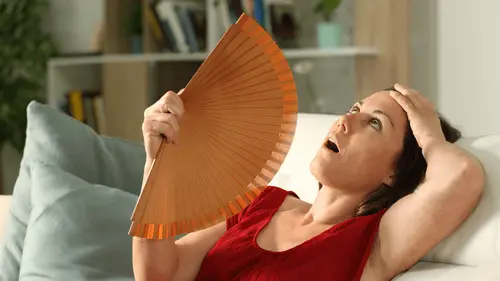
Hot flashes, sleepless nights, and mood swings are common but still underdiscussed effects of menopause. A study published in the Menopause journal revealed that nearly 80% of middle-aged women turn to cannabis or CBD to alleviate these symptoms.
Conducted by researchers from the Massachusetts General Hospital and Harvard Medical School, the study surveyed 258 participants — 131 in perimenopause and 127 in postmenopause — recruited through digital platforms and social networks between 2020 and 2021.
In a publication by Harvard Health Publishing, Dr. Heather Hirsch from Brigham and Women’s Hospital (Harvard) stated that an increasing number of patients report using cannabis to sleep or manage anxiety. The legalization in various states and the ease of access make the plant an attractive alternative, despite the lack of long-term studies on safety and efficacy.
Significant cannabis use
The numbers are striking: 86.1% of the respondents reported current cannabis use, and 78.7% said they specifically use it to deal with menopausal symptoms.
The most common forms of consumption were smoking (84.3%) and edibles (78.3%).
Among the main reasons for use were:
Sleep disturbances (67.4%), a common and debilitating issue;
Anxiety and mood swings (46.1%);
Vasomotor symptoms, such as hot flashes and night sweats, affecting 60% to 80% of women in this phase of life.
More challenging perimenopause
Significant differences were found between the two analyzed groups. Women in perimenopause, the transition period before the definitive end of menstruation, reported more intense symptoms than those already in postmenopause.
They presented:
Higher prevalence of anxiety (P < 0.01) and depression (P = 0.03);
Greater burden of hot flashes (P = 0.04);
Higher use of cannabis specifically to treat mood swings and anxiety (P = 0.01).
Among postmenopausal participants, a higher incidence of neurological conditions like glaucoma was recorded.
The role of the endocannabinoid system
The authors point out that the decline in estrogen and progesterone, characteristic of menopause, triggers a series of physical and emotional symptoms. The endocannabinoid system, which regulates processes like sleep, mood, anxiety, and body temperature, seems to play a central role in this phase of life.
Preclinical research shows that estrogen influences the production of anandamide, an endogenous cannabinoid, and its absence leads to reduced cannabinoid receptor activity. In animal models, the administration of anandamide or compounds that prevent its degradation was able to reduce anxiety and reverse vasomotor changes. This suggests that cannabinoids may indeed compensate for some of the effects of hormonal deficiency.
Alternative to hormonal therapies
Although hormone therapy is a widely used option, its risks and side effects, such as mood swings, fatigue, and increased likelihood of certain types of cancer, lead many women to seek alternatives. In this context, medical cannabis emerges as a promising non-hormonal strategy, with potential efficacy and fewer adverse effects.
Furthermore, the use of cannabis for women's health-related symptoms is not new: historical records already mentioned the plant's use in relieving menopause-related complaints. The current legalization movement has only expanded access and interest in this therapeutic possibility.
Expectations vs. reality
Another relevant point highlighted by the researchers is the role of expectation. Previous studies have shown that women believe cannabis can be effective mainly for symptoms like irritability, muscle and joint pains, insomnia, anxiety, and hot flashes. This expectation can influence both adherence and perception of results.
Therefore, the authors argue that it is essential to differentiate between the placebo effect and the actual therapeutic properties of cannabis in clinical trials.
Social impact and need for new research
Menopausal symptoms represent a significant burden: they go beyond physical discomfort, affecting self-esteem, productivity, and quality of life. According to the researchers, this makes the search for safe and effective new therapies even more urgent.
Although the study data indicate that medical cannabis is already widely used for this purpose, it is still unknown which formulations, cannabinoid profiles, and dosages are most effective for each symptom.
“The results suggest that many women are using cannabis as a complementary treatment for menopause, especially in relieving sleep disturbances and mood swings. However, controlled clinical studies are still needed to confirm the efficacy and safety of these practices,” conclude the authors.
Read the full study: A survey of medical cannabis use during perimenopause and postmenopause
Learn More
Cannabis and women's health: what science reveals about climacteric and menopause
Cannabis in menopause: study reveals benefits for women's health