Jundiaí College recruits volunteers for groundbreaking study with cannabis in Alzheimer's
Jundiaí School of Medicine is recruiting volunteers for a pioneering study with THC and CBD in patients with moderate Alzheimer's, bringing hope for new care and improved quality of life

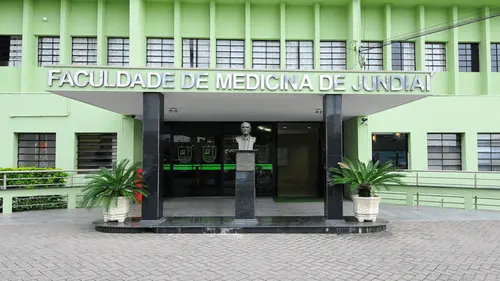
Investing in research is not just about adding data to reports: it's about opening paths for families to find new horizons and patients to have a better quality of life. It is in this spirit that the Jundiaí School of Medicine (SP) is recruiting volunteers for a pioneering clinical trial in Brazil, which investigates the combined use of cannabidiol (CBD) and tetrahydrocannabinol (THC) in people with moderate-stage Alzheimer's.
The ongoing study
Conducted by master's student Tereza Raquel Xavier Viana, who is also a writer, the project is the first in the country to analyze balanced formulations of THC and CBD in patients with moderate-stage agitated Alzheimer's. The goal is to understand the interaction between the molecules and measure their effectiveness in reducing symptoms that impact not only the patients' lives but also those of their caregivers.
Recruitment is done through a form and is aimed at people over 60 years old, with a confirmed clinical diagnosis and exams attesting to the stage of the disease. To ensure safety, there are exclusion criteria, such as a history of adverse reactions to the compounds, recent use of cannabis or certain medications, and serious illnesses that may pose risks.
The entire process strictly follows the ethical protocols of the Research Ethics Committee (CEP/CONEP) and is closely monitored by doctors and specialists from the institution. The research is supervised by Dr. José Eduardo Martinelli and co-supervised by Professor Ivan Aprahamian.

In an interview with Sechat, master's student Tereza Raquel Xavier detailed how the selection and monitoring of volunteers work in practice.
How does the patient screening process work in practice and what are the most important criteria for defining who can participate in the research?
Screening is essential because it ensures patient safety and research quality. Appointments are held at the Geriatrics Outpatient Clinic of the Jundiaí School of Medicine (FMJ). To participate, the patient must have moderate-stage Alzheimer's, already confirmed by clinical diagnosis and imaging exams, and be 60 years old or older. We also have exclusion criteria, such as serious illnesses that may put the patient at risk, recent use of cannabis or certain medications, and a history of adverse reactions to CBD or THC. For inclusion, the patient's legal guardian must sign the Informed Consent Form (ICF), which formalizes participation clearly and transparently.
After a volunteer is accepted, what is the initial routine for monitoring and guidance so that they and their caregivers feel safe participating in the study?
After acceptance and signing the ICF, the patient undergoes three monthly evaluations in the first three months. These are cognitive, functional, and behavioral tests conducted by the FMJ Geriatrics team. Then, randomization occurs, a draw that determines which group the patient will be in: the intervention group, which receives the medicinal oil and monthly evaluations, or the control group, which also undergoes monthly evaluations and is essential for scientific comparison. In the intervention group, there is also weekly monitoring, with an open channel to report any adverse effects. The caregiver receives a dosage sheet to record everything. It is a process designed to provide support and security, both to the patient and the family. They do not walk alone.
What is the scientific and social relevance of conducting a pioneering research like this in the country?
As far as we know, this is the first study in Brazil to investigate the use of THC and CBD in a balanced formulation in patients with moderate Alzheimer's. The significance is enormous. For patients and caregivers, it means hope for new care options and quality of life. For healthcare professionals, clinical data that provide more security and support. For science, it is knowledge produced in Brazil that interacts with international research. And in the future, it can open doors to public policies, helping to create safe protocols and expand access within the healthcare system. It is an ethical, regulated research that can impact thousands of families.
More than just a study, it is an investment in the future of science and, above all, in the dignity of those living with Alzheimer's and their families. For those who wish to participate in the recruitment, it is necessary to fill out this form and await a response from the institution.