New technique uses light to predict cannabinoid levels weeks before harvest
New methodology based on hyperspectral imaging allows growers to anticipate the final concentration of THC and CBD, just by analyzing the leaves, without damaging the plant

Published on 12/05/2025
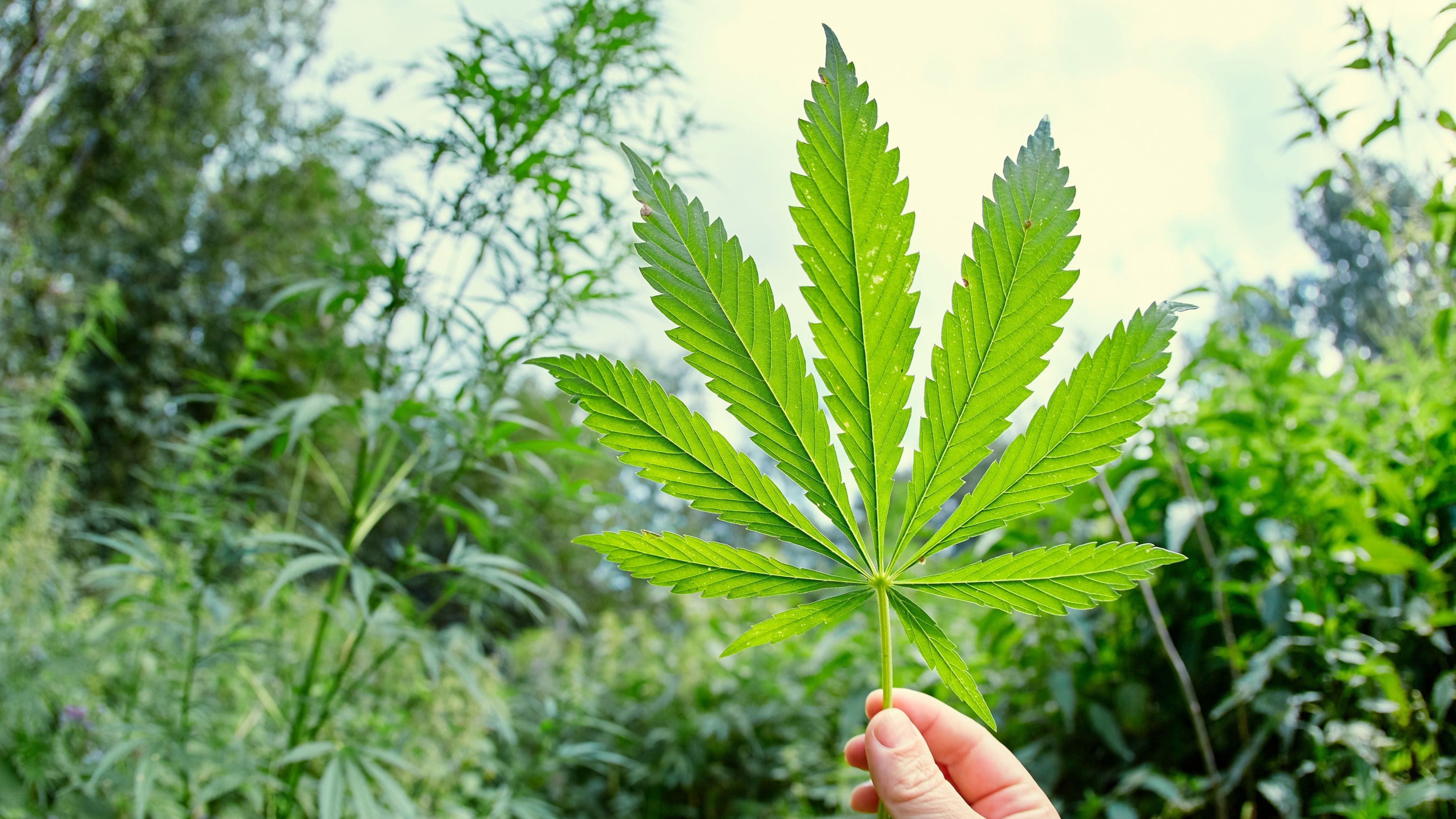
Study demonstrates that measuring light reflectance on large leaves allows estimating future chemical levels. Image: Canva Pro
Researchers from the School of Agriculture, Food and Wine at the University of Adelaide, Australia, have developed an innovative method capable of predicting the cannabinoid content in Cannabis sativa plants. The identification takes place weeks before the flowers mature, ensuring accuracy and efficiency in the process.
The study, published in the scientific journal Industrial Crops & Products, demonstrates that measuring light reflectance on large leaves allows estimating future chemical levels. This eliminates the need to cut the plant or perform complex processes to check cannabinoid levels, such as cannabidiol (CBD) and tetrahydrocannabinol (THC).
According to Kellis Fernanda Amancio Moreira, agronomist at the AbraRio Association, the technology is promising, especially in the research field. "The equipment shows good correlation with others that perform this type of analysis. It proved to be more sensitive to variations and is an important tool for genetic improvement, as long as it is used in environments where it is possible to control environmental factors, especially lighting," she evaluates.
Technology advances in cannabinoid level analysis
The new technology promises to impact both the industrial hemp market and the medicinal cannabis market. It offers a robust tool to monitor regulatory compliance and optimize the harvest timing.
However, the agronomist makes an important caveat about the application of this technology in different climates. "Regarding excess THC, the impact depends on the type of cultivation. In countries with a temperate climate, where protected cultivation predominates and there is control of lighting in visible and non-visible ranges, it is a key tool for the production process," explains Kellis.
In the national scenario, the dynamics change. "In the specific case of Brazil, where outdoor cultivation predominates, using low-consumption fluorescent lighting only to condition the scotoperiod, the equipment would partially reduce investment losses," ponders the agronomist.
Kellis details that since the phase between planting and floral induction corresponds to about 50% of the total investment, the technology would help stop losses. "The losses would refer only to half of the invested value, since it is not possible to manipulate the lighting that influences the plant's secondary metabolism in the field. Therefore, it would be possible to eliminate only the plants that exceed THC levels, instead of discarding the entire crop," she concludes.
The future of laboratory analyses
Currently, potency validation requires sending physical samples to laboratories, using methods such as high-performance liquid chromatography (HPLC). Although the new light technique is less invasive, Kellis Moreira points out that it will not replace traditional methods, but will serve as a logistical complement.
"Quality control with laboratory analyses will not be eliminated, as it is a method that is already validated and is mainly carried out on the crude extract for oil production," says the specialist.
For her, the great advantage lies in the transparency of the production chain: "The equipment functions as a useful tool in a scenario where the production chain separates the plant producer from the medicine manufacturer. Thus, the producer will know what they are delivering in terms of quality and chemical composition, which will later be confirmed by the manufacturer through the laboratory".
How cannabinoid level measurement works
The method is based on the use of a portable hyperspectral device, different from common cameras. This equipment captures how light reflects on the leaf surface in hundreds of wavelength bands, including spectra invisible to the human eye.
According to the study, the collected spectral signatures are processed by machine learning algorithms. These mathematical models correlate the "light signature" of the young leaf with the future cannabinoid levels that the flower will present.
The tests achieved a predictive accuracy considered high by scientists. The coefficient of determination - a metric that indicates the quality of the prediction - reached 0.89 for CBD and 0.77 for THC.
Application in the industry and cannabinoid level control
The ability to predict the plant's chemical profile before full flower development offers crucial logistical advantages. For industrial hemp producers, who operate under strict THC limits, the technique allows early identification of non-standard plants.
"The 'early' prediction of THC content would mitigate this risk, allowing the identification and removal of individual plants likely to exceed legislated limits," points out the study.
This avoids total destruction of crops, a common loss when late tests reveal that the plantation has exceeded the psychoactive limit. In medicinal cultivation, the tool assists in selecting productive genetics even in the vegetative phase, optimizing the final cannabinoid content.
Methodology to validate cannabinoid levels
To validate the method, the team used two distinct cultivars (Black Label and Mountain Strong CBD 1) subjected to seven lighting regimes. LED lights with varied spectra and high-pressure sodium lamps were used to test the variables.
The researchers took measurements at two moments. "Early" (two weeks after the start of flowering) and "Late" (four weeks after). Surprisingly, early measurements proved effective in predicting the final harvest result and cannabinoid levels.
Furthermore, spectral analysis was able to distinguish between different cultivars and identify the type of light used in cultivation. The authors conclude that this technological integration, which does not require sample destruction, represents a significant advance for the sector.
Regarding the possibility of using light to correct the production route, the AbraRio engineer emphasizes that timing is essential. "Some adjustments can be made during the plant's vegetative stage. It is important to note that other abiotic factors also have a great influence on metabolic expression," she says, adding that future research should focus on the growth stages preceding flowering.
"The possibility of using remote sensing is interesting, as it allows evaluating other aspects related to fertilization, pest control, and irrigation, which may be influencing the plant's chemical profile," concludes Kellis.