Public spending in the drug war in Brazil reaches billion-dollar figures
Prohibition costs R$ 51 billion annually and contributes to the incarceration of Black and poor populations, highlights report

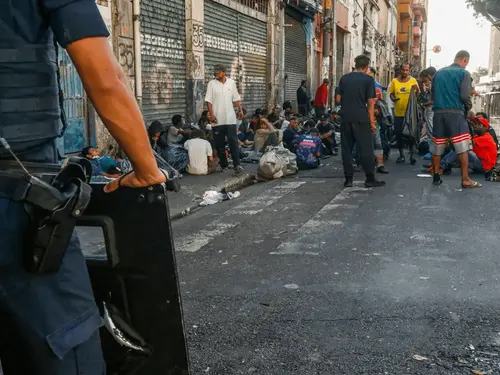
The war on drugs in Brazil has generated a significant impact on public finances and society, standing out as one of the country's main challenges. According to the Atlas of Violence 2024, produced by the Institute of Applied Economic Research (Ipea), the annual costs of violent deaths related to drug prohibition can reach R$ 51 billion. These figures reflect not only the loss of human lives but also the substantial expenses incurred by the state with the criminal justice system and public health.
Economic and social costs of prohibition
Drug prohibition entails high economic and social costs. In addition to the loss of thousands of human lives, there is a huge financial burden borne by the state. This includes expenses with policing, the Public Prosecutor's Office, the Public Defender's Office, and the prison system. Estimates indicate that, in the states of Rio de Janeiro and São Paulo alone, these expenses amount to around R$ 5.2 billion annually.

“All drug policies in Brazil are not against drugs, but rather against the user,” highlights lawyer and consultant member of the special commission on medicinal cannabis of the Federal Council of the Brazilian Bar Association (CFOAB), Maurício Lobo, who adds: “The police approach in the peripheries and large housing complexes is not the same as that carried out in a luxury condominium.”
Lobo also reminds us that there are currently about 50,000 people incarcerated for possession of 25g of illicit substances, such as marijuana, which generates a cost to the state of R$ 1.5 billion per year.
The project “Drugs: How Much Does Prohibition Cost,” published by the Center for Studies in Public Security (CESeC) in 2019, divided these costs into three main areas: public finances, education, and health. The first study, “Shooting Oneself in the Foot,” highlighted the high expenditures on repressive and punitive activities of the criminal justice system. The second, “Shots into the Future,” analyzed the impacts on education, with children and young people having their academic performance compromised by violence resulting from the war on drugs. Finally, the third report, “Health in the Line of Fire,” revealed the damage to access to health services caused by frequent armed confrontations.
Racial inequality and incarceration
The war on drugs also exacerbates racial inequality in Brazil. According to the report, prohibition, combined with institutional racism in the public security system, results in a disproportionate prevalence of Black individuals being killed or incarcerated. The selective criminalization of Black and peripheral youth is aggravated by the lack of objective criteria to differentiate consumers from traffickers, which resulted, for example, in the recent decision by the Supreme Federal Court (STF) that decriminalized the possession of marijuana, defining a quantity of 40g or six female plant stems for personal use.
For Lobo, “the decriminalization of marijuana by the Supreme Court does have positive effects on society, especially in peripheral communities. What the STF did was have the courage to address a subject that politicians often neglect due to electoral interests. However, it is important to remember that the state is secular and our religious or personal opinions should not be part of the debate on drugs, which should be understood as a public health issue and not a security one.”
Data from the Atlas of Violence 2024 shows that drug trafficking is linked to almost 70% of deaths in some states, such as Minas Gerais. Applying this percentage at the national level, we estimate that about 32,000 lives were lost in 2022 due to drug trafficking. In contrast, only 1,460 people died from poisoning or overdose of illicit drugs in the same year, demonstrating the disparity between deaths associated with prohibition and drug use.
Criminal factions, corruption, and the economic impact of violent deaths
Prohibition also favors the emergence and consolidation of criminal factions in Brazil. It is estimated that there are about 70 factions, whose income comes mainly from drug trafficking. These groups invest in weaponry and police corruption, perpetuating their existence and increasing violence and public insecurity.
Research indicates that violent deaths related to prohibition result in enormous economic losses. It is estimated, according to the Atlas, that in 2017 alone, one million one hundred and forty-eight thousand Potential Years of Life Lost (PYLL) occurred due to these deaths. This indicator shows that prohibition reduces the life expectancy at birth of Brazilians by 4.2 months.
The data presented by the Atlas of Violence 2024 demonstrate, according to Maurício Lobo, “an irrationality in persisting with the drug prohibition policy. In addition to the high financial costs and the perpetuation of violence, the war on drugs sustains structural racism and social inequality in Brazil. Therefore, the search for alternatives that promote justice and social equity is urgent, aiming to build a fairer and safer society for all.”