Cannabis: RDC 327 Review May Enhance Safety for Dentists in 2026
CFO supports dentists among authorized professionals to prescribe safely and with quality


The incorporation of medicinal cannabis in dental offices has been advancing. Legally, dentistry is still a healthcare area marked by legislative interpretations and regulatory uncertainty, especially regarding prescribing competence.
In 2026, there is great anticipation that dentists will have more security to work with cannabinoid therapy, with the possible inclusion of the category in RDC 327, currently under review by the National Health Surveillance Agency (Anvisa). The change may be formalized by the Collegiate Board of the agency if the review of the standard is put on the agenda at the first meeting scheduled for January 28.
The standard regulates the sale of cannabis products in Brazilian pharmacies and drugstores, and its update is awaited by the sector. The text under analysis proposes the explicit inclusion of the dentist as an authorized professional to prescribe.
Currently, according to the strict letter of the current standard, prescriptions for direct purchase at pharmacies are restricted to physicians. The change aims to align regulation with clinical practice reality.
New Dispensing Rules in RDC 327
In addition to professional recognition, the update of RDC 327 suggests technical changes in product dispensing. Items with a concentration of up to 0.2% Tetrahydrocannabinol (THC) may be prescribed with a white prescription.
Products exceeding this limit will still require notification with a type “A” (yellow) prescription. These cases are usually intended for patients with more severe and complex health conditions.
The proposal also foresees an expansion of the permitted administration routes. Currently restricted to oral and nasal forms, the new guidelines of RDC 327 should include dermatological, sublingual, and buccal routes.
CBCM 2026: May 21-23 at Expo Transamérica in São Paulo. Secure your spot to participate in the Dental Cannabis module
Register here
Legal Competence and Clinical Practice
Although the Anvisa standard review brings specific clarity, the Federal Council of Dentistry (CFO) maintains that professionals already have legal support to act. The Council states that dentists "can and have the competence to make them (prescriptions)."
This position is based on Federal Law No. 5,081/1966, which regulates the profession. In addition, RDC 660/2022 already allows the inclusion of dentists in import forms.
The focus of the prescription should be restricted to the professional's area of expertise. This includes the management of orofacial pain, neuropathic pain, bruxism, and Temporomandibular Joint (TMJ) dysfunctions.
João Paulo Colesanti Tanganeli, from the Regional Council of Dentistry of São Paulo (CROSP), reflects on therapeutic hierarchy. "Cannabis-based medications are not the first treatment option," he emphasizes.
Scenario Evolution and RDC 327
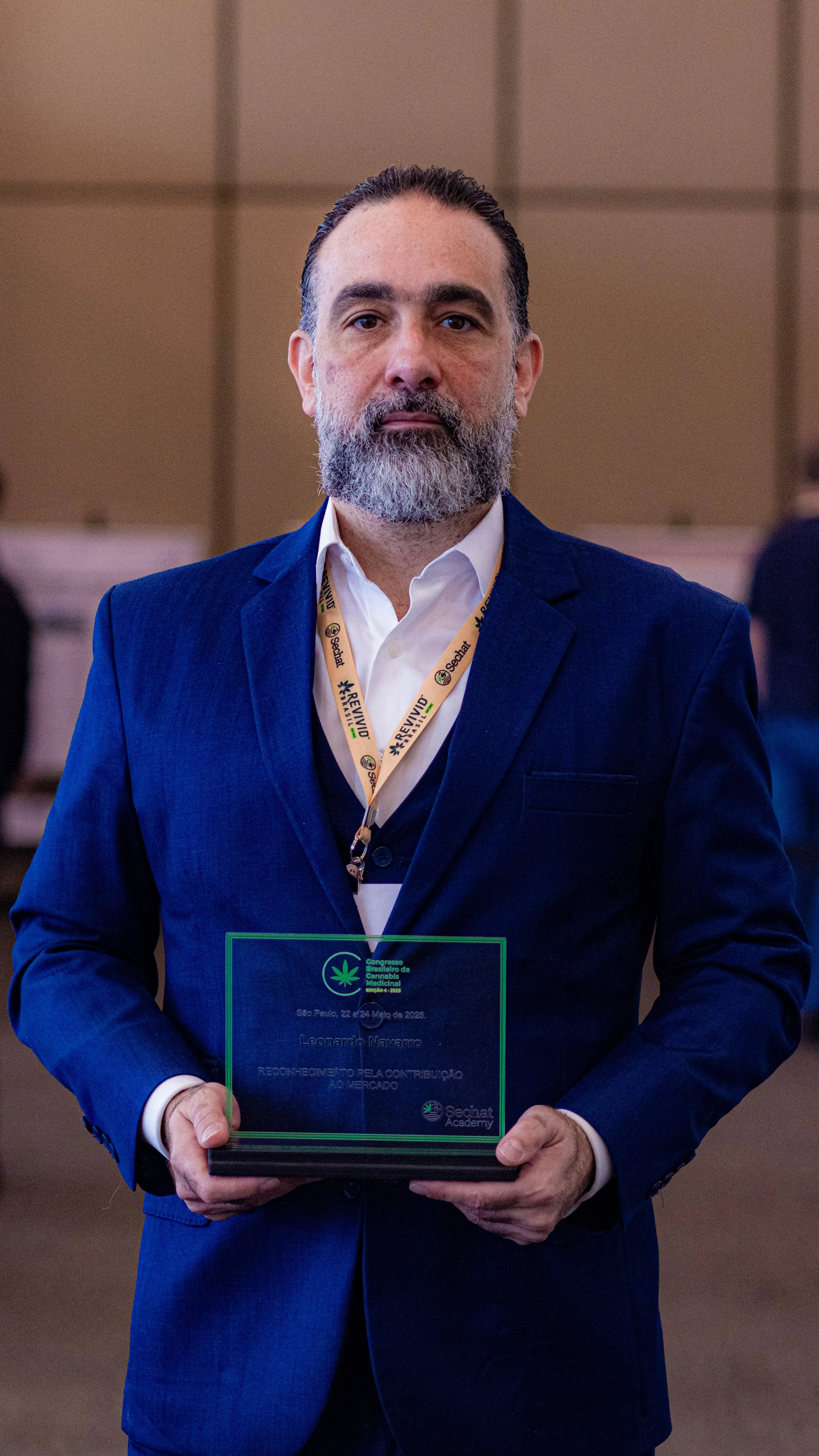
The need for explicit regulation was addressed by lawyer Leonardo Navarro during the Brazilian Medicinal Cannabis Congress in May 2025. The specialist pointed out that the lack of guidelines put the dentist in a "gray area."
"This creates insecurity for the prescribing professional. He doesn't know if he can, if he should, or how he should prescribe," Navarro said, referring to the RDC 327 rules. He highlights the significant advancement of the standard review that "already proposes the inclusion of the dentist as a prescribing professional."
The sector was also impacted by Federal Resolution No. 278/2025 of the CFO, which regulated Teleodontics. The standard allows remote prescriptions, modernizing access while awaiting Anvisa's regulatory outcome.
In a new interview with Portal Sechat, the lawyer highlighted the current position of the CFO, as representative at the federal level, supporting professionals in the field when prescribing. Nevertheless, Navarro criticized the entity's delay in speaking out. "They were silent in the same way as the CFM [Federal Council of Medicine]. They only positioned themselves on something that is already a reality," he concludes.
Watch the interview statement: