Have you heard of canabizetol? New cannabinoid shows better results than cannabidiol in initial tests
Study reveals that the rare cannabinoid has remarkable antioxidant properties and anti-inflammatory action; expert warns of the need for more studies

Published on 10/09/2025
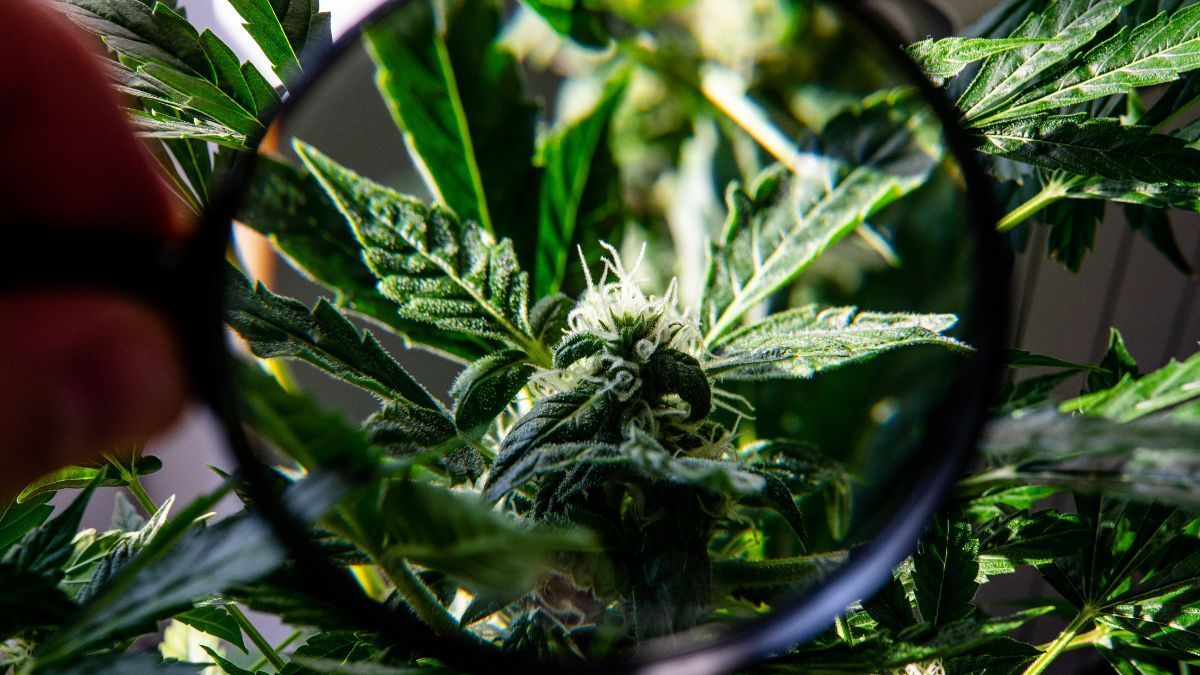
The isolated cannabinoid, classified as canabizetol (CBGD), shows promise for expanding the knowledge about the plant's therapeutic potential. Image: Canva Pro
Scientists have discovered canabizetol (CBGD), a new cannabis compound that exhibits “remarkable antioxidant and anti-inflammatory properties for the skin”. The isolated cannabinoid, one of the rare ones in the dimeric class, shows promise in expanding the knowledge about the plant's therapeutic potential.
Canabizetol is formed when two cannabinoid molecules join together by a methylene bridge. Besides the medical findings, it stands out as one of only four molecules of its kind identified in the dimeric cannabinoid class.
Therapeutic potential of canabizetol
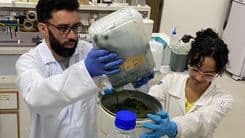
A study conducted by Italian and Swiss authors demonstrated the efficacy of the new compound in laboratory tests. The results were published in the September 2025 issue of the Journal of Natural Products.
“We have shown that canabizetol exhibits remarkable cutaneous antioxidant and anti-inflammatory activity, significantly greater than that observed for the known dimeric cannabinoid cannabidiol”, the study states.
Chemists examined the NF-κB molecular pathway, which acts as a switch for inflammation. The tests indicated that canabizetol showed significant potential in inhibiting this pathway.
The relevance of canabizetol for dermatology
According to Dr. Guilherme Marques, a physician and Political Director of the Pan-American Multidisciplinary Association of Endocannabinology (APMC), the discovery may be relevant for dermatology. “This study shows how the discovery of some minor cannabinoids can reveal chemical structures with very different anti-inflammatory mechanisms,” he explains.
"Especially when we are talking about some skin diseases that involve this inflammation, like psoriasis, atopic dermatitis, and so on,” adds the expert.
However, he emphasizes the importance of interpreting the results with caution. “We need to recognize that we are talking about in vitro evidence, that is, observations in cells, not in the context and complexity of a living being,” the physician points out.
Advances in research and the future of canabizetol
The study's authors believe that the discovery opens doors to identifying other compounds of great biological interest. “Natural dimeric compounds are of considerable importance, as they allow for a greater exploration of chemical space,” they stated.
This study comes at a time when technology enables scientists to analyze an increasingly wide range of cannabinoids. However, for healthcare professionals, enthusiasm must be accompanied by caution.
Dr. Guilherme Marques highlights that the point of caution is to differentiate between initial findings and practical application. "The fact that this molecule inhibits interleukin 8 in a culture of keratinocytes seems very promising to me, but it does not prove any therapeutic efficacy for humans,” he comments.
Managing expectations about the new cannabinoid
The advancement in classifying cannabinoids expands knowledge beyond famous compounds like THC. With each new discovery, there is a responsibility to communicate the advances without creating false hopes.
According to Dr. Marques, the approach with the patient should be one of "scientific transparency without promising therapeutic benefits". He explains that the discovery of canabizetol, while relevant, may not be ready for clinical use.
“Many therapies that work in the laboratory do not prove effective in humans. Therefore, communication must inspire a certain trust in science as a process, not in a specific molecule, not in a panacea,” he concludes.
With information Marijuana Moment