Overcoming prohibitionism is essential for access to medicinal cannabis and strengthening the industry: see the analysis of the speakers at CBCM 2023
In Brazil alone, the medicinal market is expected to reach over R$ 600 million in 2023, according to a report by the data intelligence company Kaya Mind

Published on 05/05/2023
By Thaís Castilho
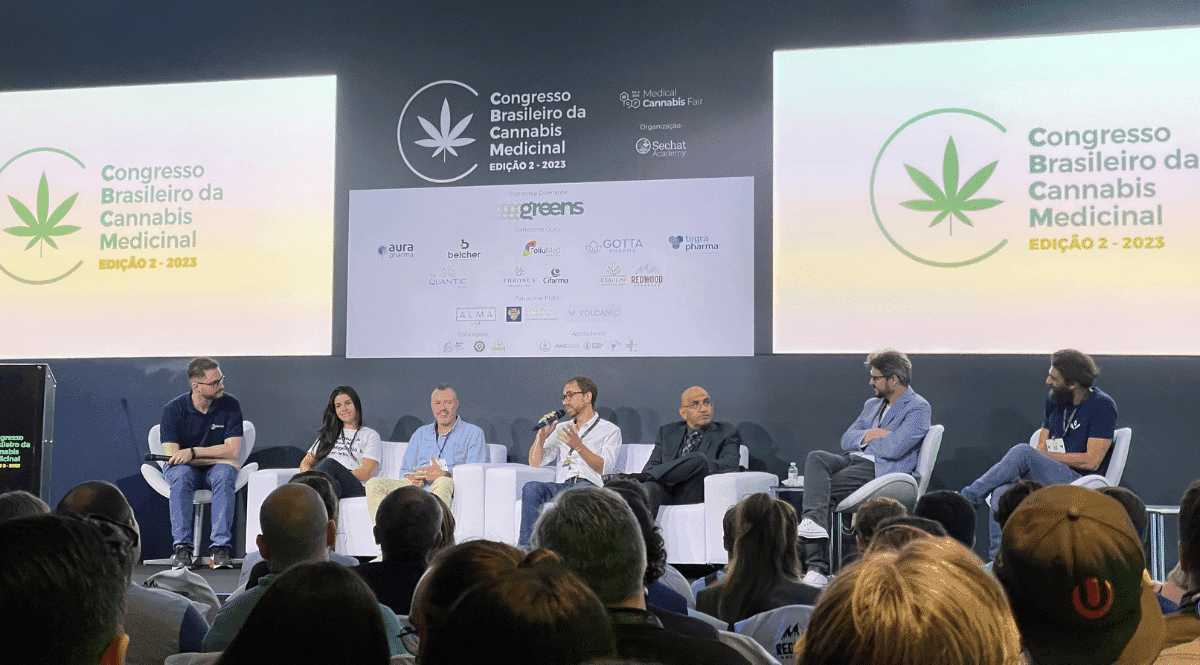
At the second edition of the Medical Cannabis Fair and the Brazilian Congress on Medicinal Cannabis, an event promoted by Sechat and held at the Expo Center Norte in São Paulo (SP), the importance of regulation and democratization of access to plant-based treatment was discussed.
The second block on Legislation and Business brought significant numbers about the current cannabis scenario in Brazil. Today, there are about 240,000 people in Brazil undergoing treatment with the plant, with excellent results proving the effectiveness of the treatment.
According to the data presented by Maria Eugênia, CEO of Kaya Mind, the market is expected to reach over R$ 600 million in 2023. If there were regulations that included medicinal, industrial, and adult (recreational) use of the plant, there would be the potential to create 328,000 formal and informal jobs in the country, and in four years, the sector would generate R$ 26.1 billion for the Brazilian economy.
“The cannabis scenario is undergoing a constant transformation. The number of patients, clinical indications, and access methods are increasing, and yet the market is not fully regulated. The prohibitionism that victimizes people every day for the same plant that saves many others also harms the medicinal market and society as a whole, but there are still reasons for some optimism,” explains Tarso Araújo, a journalist specialized in cannabis.
In this regulatory scenario, the stance of regional and federal medical councils is considered important, both by regulatory bodies and by doctors, so it is important for the medical profession to engage with the councils and promote discussion.
“It is important for the medical profession to participate in the discussions of medical councils to propose changes regarding cannabis treatment,” Leonardo Navarro.
Access methods to cannabis products
While the legislative sphere does not make the distribution of cannabis by the SUS (Unified Health System) a national policy, Anvisa (National Health Surveillance Agency) has been creating mechanisms based on research, scientific evidence, and listening to social actors to ensure the population's basic right to health.
These regulations have made access to this type of treatment possible. Today, anyone with a prescription can request authorization to purchase, whether imported or from pharmacies in the country, as RDC 660 allows this route.
“When it comes to cannabis, we have a growing number of potential medicinal uses of cannabis and promising confirmations, but still not confirmatory or conclusive answers, and therefore, they cannot be extrapolated generally to the population,” emphasizes João Paulo Perfeito, a representative of Anvisa.
The industry has been able to move forward, albeit slowly, to offer new pharmaceutical solutions made from the substance. Through RDC 327, which is a Sanitary Authorization, companies can import inputs to produce and market medicines in Brazil. There are 26 cannabis-based medicines authorized for sale in pharmacies and drugstores. All of them guarantee safety, quality, and efficacy, following agency criteria.
Habeas Corpus, the right to grow and produce one's own medicine at home
Among the access methods to cannabis as a treatment, Cultivation HCs (Habeas Corpus) have proven to be an efficient and safe resource.
Although it is possible to access cannabis through the regulations created by Anvisa, the high cost of products ends up being a hindrance. Since it is a plant, producing cannabis-based medicines at home is a viable reality, but criminal under drug law, which categorizes cannabis as a prohibited substance.
If the patient proves that cannabis is effective for their treatment, it is perfectly viable to file a lawsuit to ensure that the State does not repress their conduct. These are Cultivation Habeas Corpus, which guarantee the patient's freedom as a cultivator. After all, the right to health prevails. It is estimated that there are currently about two thousand Habeas Corpus requests granted by the judiciary.

Bill Projects underway nationwide
Since the state of São Paulo approved the law for the distribution of cannabis by the SUS, the subject has been expanding in discussions both in the legislative field and in the national media.
There are bills of this nature being processed in practically all federal units. Of the 27 states, there are bills being processed in 24 of them, with 11 already having approved laws.
Recently, the Federal Senate held a public hearing to discuss Bill 89/2023, which deals with the distribution of cannabis by the SUS. But the bill that is stalled in the Chamber of Deputies and the broadest of all, as it also deals with cultivation, is Bill 399/2015.
Judicialization by the SUS burdens public coffers
While the legislative branch does not regulate access to cannabis products, the number of judicialization processes authorizing state-funded treatment is increasing. The Public Defender's Office authorized all requests submitted since 2018, as the processes, although bureaucratic and time-consuming, prove the treatment's efficiency for patients.
What most bills argue, in addition to prioritizing democratic access to treatment, is that some companies providing the products end up being favored over others.
Since the distribution of cannabis products is done through the SUS, there must be bidding processes for the purchase of medicines.
Cannabis associations ensure treatment for over 100,000 patients
The associative movement was an organizing alternative that civil society found to access treatment and cannabis products.
Organized by the third sector, these groups work to combat misinformation about the plant, support research, educate on the benefits of cannabis, and provide treatment and products.
A Kaya Mind survey reveals that there are about 80 associations spread throughout Brazil, but only five of them can grow and produce oil with legal certainty.
The main appeal that associations make in this regulatory scenario is for bills to pay special attention to the associative model because, since 2014, when this movement began to form, these groups have served over 100 patients.
As they are nonprofit, associations can provide free treatment for thousands of people. In a way, they perform the role of the SUS.
“Associations exist because the government did not do its part, and in need, we roll up our sleeves and make it happen with the tools we have to change the law by practicing civil disobedience to promote health, which is a universal right guaranteed by the Brazilian constitution,” highlights Pedro Sabaciauskis, president of the Santa Cannabis Association.