The Year of Cannabis: trends and projections for the market in 2026
Financial consolidation, cultivation regulation, and strengthening of events mark the sector's prospects for the next year

Published on 01/09/2026
According to experts, the three central pillars will be regulatory definition, operational efficiency of companies, and technical qualification of healthcare professionals. Image: Canva Pro
The medicinal cannabis market in Brazil is heading towards a decisive moment of consolidation in 2026. By 2030, the legal sector is expected to grow, on average, 26% per year, reaching the mark of R$ 1.1 billion by the end of the period. The data is from Grand View Research, 2025, disclosed in the 5th Sechat Cannabis Guide.
More than just record figures, the advancement projects a cycle of market restructuring, marked by regulatory maturation, professionalization of agents, and strengthening of the production chain.
According to experts, the three central pillars will be regulatory definition, operational efficiency of companies, and technical qualification of healthcare professionals.
However, the current scenario requires caution. The period of accelerated expansion gives way to a phase of demand for financial sustainability and corporate maturity.
Efficiency in the cannabis market
According to Danilo Lang, founder of the Cannabis and Jobs platform, the "golden rule" for the next cycle will be administrative rationality. "The focus, from the conversations I have with executives and professionals in the sector, shifts from being exclusively about volume and accelerated expansion to prioritizing margin, recurrence, and revenue predictability of operations," analyzes Lang.

The change in mindset reflects a necessary adaptation to the pressures of the cannabis market. The attempt at total vertical integration — where a single company tries to control everything from cultivation to distribution — is likely to lose strength to more integrated and collaborative business models.
"Strategic partnerships in distribution, logistics, R&D, and channel access gain relevance, replacing forced vertical integration attempts that usually increase costs and complexity," points out Lang.
According to the executive, the medicinal sector is now being treated "less as a future promise and more as a business that needs to sustain itself in the present".
Pharmaceutical quality and medical education
On the clinical and product side, the trend for 2026 is the raising of the quality bar. With the expectation of a review of RDC 327/19 by the National Health Surveillance Agency (Anvisa) and the possible conclusion of national cultivation regulation, the national market should prioritize standardization.
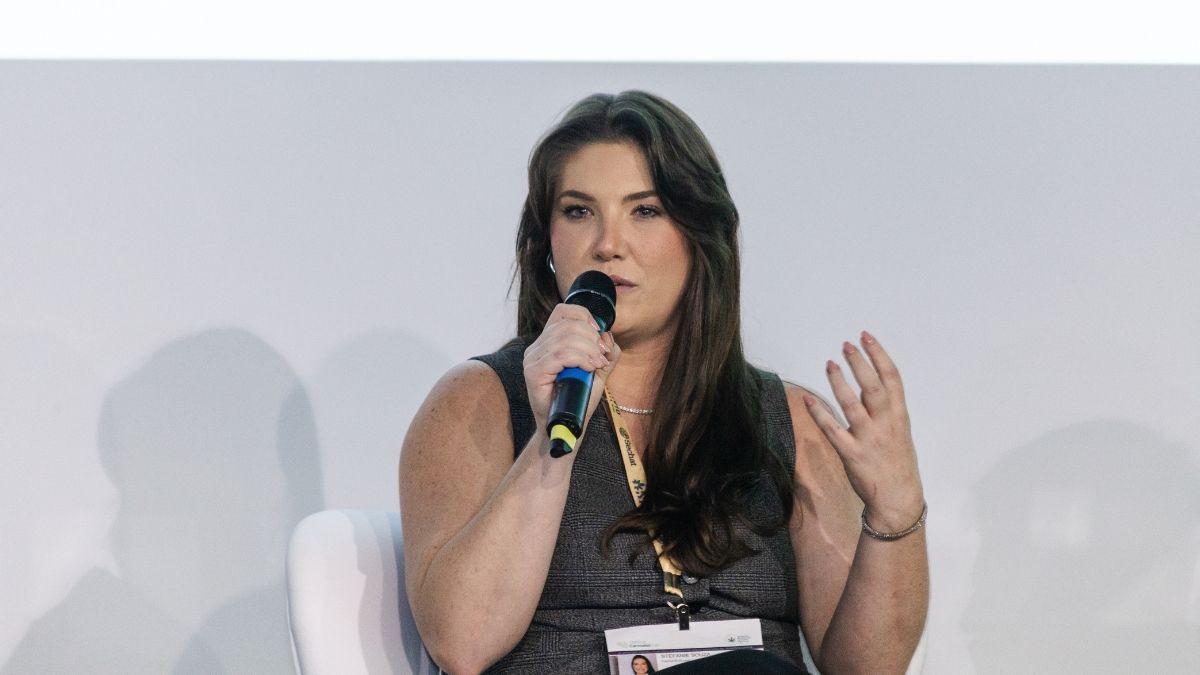
Stefanie Souza, a pharmaceutical specialist in the sector, highlights that the competitive differential will reside in clinical safety. "I observe the consolidation of companies that take this work more seriously as a trend, supporting prescribers and patients with a high standard of quality in their products, such as the so-called Pharmaceutical Grade," she states.
This demand for quality directly drives the need for continued medical education in the cannabis market. Generic training gives way to technical specialization. "The creation of extension courses and postgraduate programs certified by the Ministry of Education has been attracting more and more enthusiasts in the field," Souza adds.
Events drive the sector
The search for technical qualification and the need for integration among the links in the production chain have strengthened the schedule of in-person events. These meetings have evolved from being mere commercial showcases to becoming hubs for continuous education and scientific debate, essential for the maturation of the cannabis market.
Stefanie Souza notes that the heterogeneity of the audience reflects the sector's maturation. "The increasingly significant participation of different professional profiles in congresses and scientific events, such as the Brazilian Medicinal Cannabis Congress, reaffirms the importance of information and knowledge exchange within this community," she states.
Scheduled for May 2026, at the Transamerica Expo Center (SP), the 5th Brazilian Medicinal Cannabis Congress (CBCM) aims to bring together healthcare professionals and industry. The program, curated by a scientific committee, focuses on technical rigor as a tool to combat stigma and increase medical adherence.

Simultaneously, the market is witnessing a greater segmentation in the content offered, moving away from generalist approaches. According to Danilo Lang, this specialization is a direct response to prescribers' demands.
"I believe that medical education is likely to become more technical, segmented, and evidence-based. We already see this trend happening at the Cannabis Fair, bringing content focused on specialty and pathology, aligned with clinical practice," Lang points out.
The 5th edition of the Cannabis Fair, also taking place in May 2026 in São Paulo, reflects the expansion of the sector's scope. The event will cover everything from cultivation and extraction to industrial hemp and logistics services, with the presence of over 80 national and international exhibitors.

The regulatory horizon of cannabis
The legal landscape will also be decisive for the course of the cannabis market in 2026. A decision by the Superior Court of Justice (STJ) extended the deadline for the Union to regulate industrial hemp cultivation until March 2026.
The measure generates expectations of promoting national input production, which could reduce dependence on imports and impact the final price.