Trump reclassifies cannabis and paves the way for CBD coverage by Medicare

Published on 12/18/2025
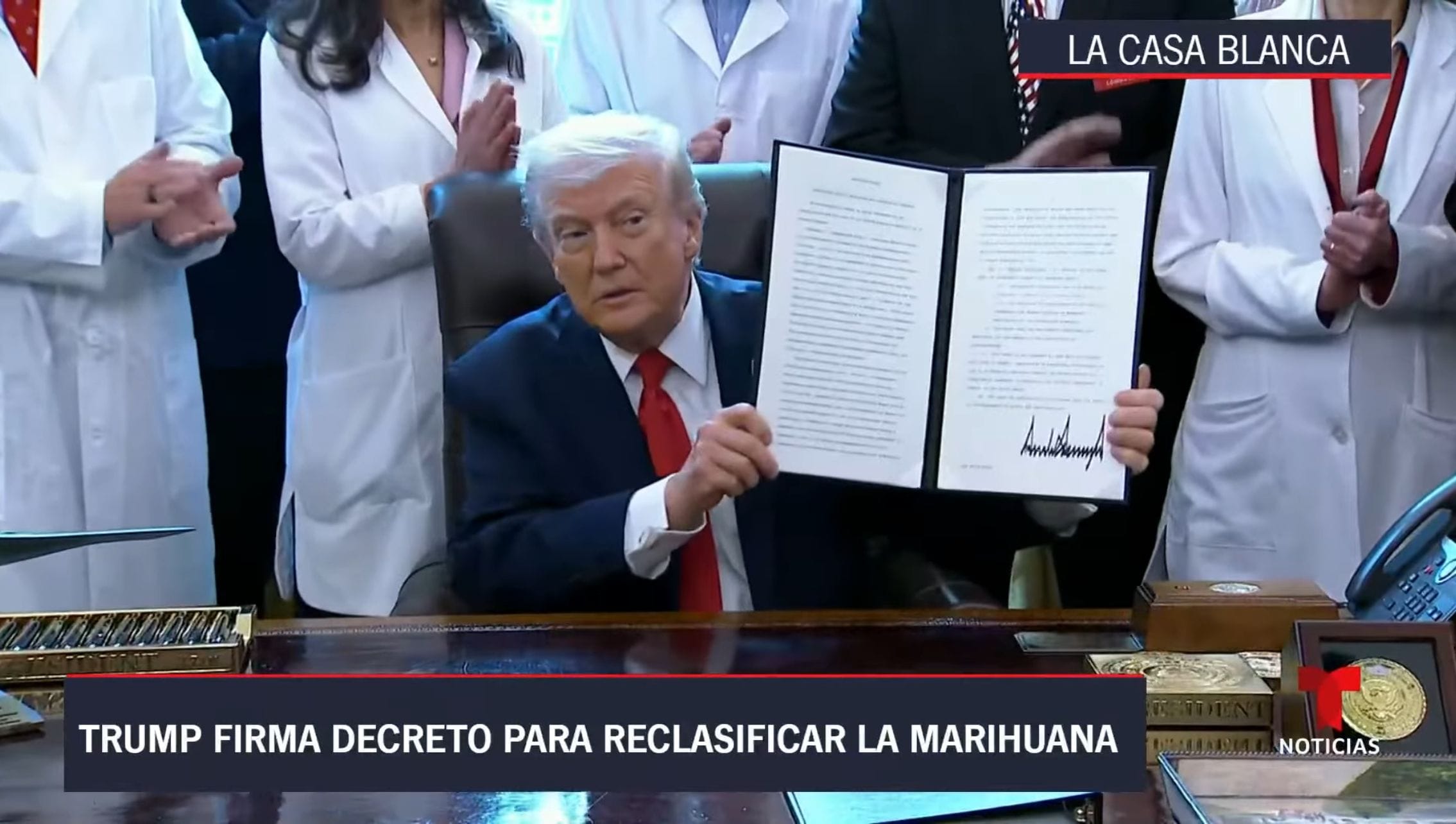
Reproduction: Telemundo
The President of the United States, Donald Trump, signed an executive order this week reclassifying marijuana from Schedule I to Schedule III of the Controlled Substances Act, a milestone that changes the federal status of cannabis and officially recognizes its medicinal potential. The measure also directs the government to advance studies to include CBD-based treatments in Medicare coverage, a federal health program for the elderly and people with disabilities.
The information was published by MJBizDaily, specialized in the cannabis industry.
Historic change in federal drug policy
The reclassification removes marijuana from the group of substances considered to have no medical value and high potential for abuse, a category that includes drugs like heroin and LSD. With the move to Schedule III, cannabis now occupies the same regulatory level as controlled medications that require a prescription, such as some opioids and anabolic steroids.
Despite the progress, the measure does not legalize marijuana at the federal level or automatically change state laws regulating the medicinal or adult use of the plant.
Official recognition of medicinal use
According to MJBizDaily, the decision represents the first explicit recognition by the U.S. federal government that cannabis has therapeutic applications. The expectation is that the change will facilitate scientific research and clinical trials, currently limited by regulatory and bureaucratic barriers imposed by the previous classification.
Fiscal impact for the cannabis industry
One of the immediate effects of the reclassification is the potential end of the application of Section 280E of the Tax Code, which prevents companies in the sector from deducting basic operational expenses. If the interpretation is confirmed by tax authorities, the legal cannabis sector could see a significant reduction in tax burden.
Expected advances in scientific research
Experts interviewed by MJBizDaily believe that universities and federally funded research centers are likely to expand studies on cannabis, as the new classification reduces legal and institutional risks associated with handling the plant.
Marijuana remains illegal at the federal level
Despite the reclassification, marijuana remains prohibited by U.S. federal law. Issues such as broad decriminalization, interstate commerce, and unrestricted access to the banking system still depend on Congressional approval.
CBD may be included in Medicare coverage
The executive order also mandates that federal agencies explore ways to allow coverage of CBD-based medications by Medicare. According to MJBizDaily, the government is considering creating a pilot program focused on elderly patients, initially targeting chronic pain treatment and other specific conditions.
Pilot program and next steps
The administrator of the Centers for Medicare & Medicaid Services indicated that the implementation of a pilot project could start in 2026, depending on technical and regulatory assessments. The initiative will still require definitions on formulations, medical criteria, and prescription protocols.
Political coordination and industry influence
The report highlights that cannabis industry executives and advocates for medicinal use had an active role in the discussions leading up to the decision. The government views the measure as a pragmatic adjustment to the reality of medicinal use already regulated in dozens of U.S. states.
Credit: MJBizDaily