Alexandre de Moraes Criticizes Arrest of Association Leaders
STF Justice Alexandre de Moraes states that the lack of regulation does not justify drug trafficking arrests without investigation. Understand the case.

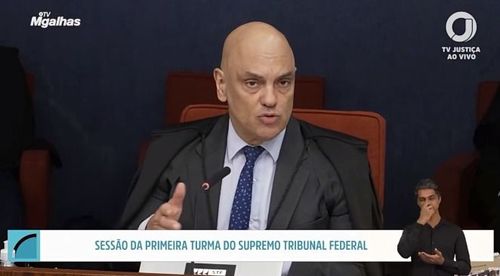
Justice Alexandre de Moraes, of the Supremo Tribunal Federal (STF), criticized the arrest of physicians and leaders of associations working with medical cannabis. During a session in the First Panel this Tuesday (27), Moraes stated that the absence of specific regulation for these entities is not enough to justify charging their leaders with drug trafficking.
“Clearly, on the one hand, there is a need for regulation, but the lack of regulation does not allow a person to be arrested as a drug trafficker,” stated the Justice.
The remarks were made during the review of an appeal filed by a non-profit association seeking court authorization to cultivate cannabis and distribute plant derivatives to its members for therapeutic purposes. The panel unanimously denied the appeal without reviewing the merits of the requested authorization.
Moraes advocates administrative measures for irregularities
Commenting on the situation of the associations, Moraes stated that any irregularities in the operation of these entities may lead to administrative measures, such as product seizures, closures, injunctions, and the imposition of fines.
“Now, an arrest would only be warranted if there were an investigation and proof of intent to traffic,” he declared.
The Justice also reported cases of physicians linked to associations who prescribe cannabidiol for therapeutic purposes and who, according to him, have been arrested on charges of drug trafficking.
“And until they obtain a habeas corpus, they spend a week, two weeks, three weeks detained as drug traffickers,” he stated.
For Moraes, the absence of specific rules for association activities does not eliminate the need to investigate potential irregularities, but it should not, in itself, substantiate an arrest for drug trafficking.
Justice questions arrests for personal cannabis possession
During the session, Moraes also criticized what he described as non-compliance with STF decisions regarding the possession of cannabis for personal use. The Justice noted that individuals have been turning to the courts to obtain preventive habeas corpus ensuring the domestic cultivation of up to six female plants and the possession of up to 40 grams of cannabis, within the parameters established by the Court.
“Because, unfortunately, Mr. President, in several cases the police have been ignoring the decision of the Supremo Tribunal Federal,” he stated.
In June 2024, the STF ruled that the possession of cannabis for personal consumption does not constitute a criminal offense. The Court established a rebuttable presumption of personal use for anyone possessing up to 40 grams of cannabis or growing up to six female plants. This parameter does not prevent trafficking charges when there are concrete elements indicating commercial intent.
Moraes argued that individuals covered by the conditions established by the Supreme Court should not be taken to police stations or placed under arrest in flagrante delicto only to subsequently seek relief in court.
“If the Supremo Tribunal Federal said that possession, holding, or cultivation for personal use within those conditions is not a crime, if it is not a crime, the person cannot be taken to the police station, the person cannot be arrested in flagrante delicto only to later obtain a habeas corpus,” he said.
STF denied appeal by medical cannabis association
The trial involved an appeal by the Instituto de Articulação de Tecnologias Sociais e Ações Formativas, which sought a safe-conduct to cultivate cannabis and supply plant derivatives to members undergoing medical treatment.
The petition had been granted in the court of first instance, but the decision was overturned by the Tribunal de Justiça de São Paulo (TJ-SP). The association appealed to the Supreme Court seeking to reverse the ruling.
The reporting judge, Justice Flávio Dino, voted against the appeal, considering that the review would require re-evaluating facts and evidence and interpreting ordinary legislation, issues that could not be revisited under that type of appeal. The other members of the First Panel joined the reporting judge, including Moraes.
Thus, the panel did not authorize the cultivation and distribution of medical cannabis by the organization, but neither did it rule on the merits regarding the possibility of granting the safe-conduct under the requested conditions.
The case highlights the legal debate surrounding the operation of medical cannabis associations in Brazil, amid demands for specific regulation and questions regarding the criminal liability of their leaders.