Andy Mannsfeld: “Legalization in Germany could create much more than 27,000 jobs”
In the report, Andy Mannsfeld highlights that the legalization of cannabis in Germany could create far more than 27,000 jobs, contradicting conservative estimates and pointing to an even more significant socioeconomic impact in the country.
Interview by journalist Laura Ramos, originally published on the CannaReporter.eu portal on May 23, 2025.
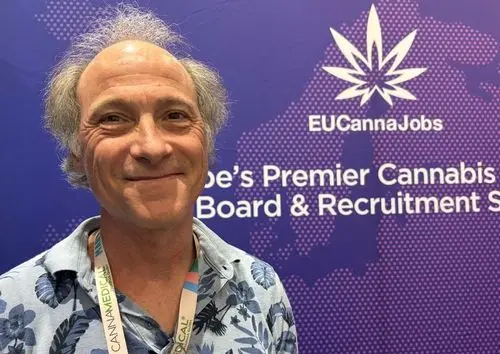
Andy Mannsfeld is the founder of EUCannaJobs, a job search platform specialized in recruiting professionals for the emerging European cannabis industry. Born in Germany and trained in medicine in the United States, Andy was a physician in Colorado during the cannabis legalization process, but federal restrictions prevented him from working in the industry.
After a stint in Vietnam and Portugal — where he tried to launch a cultivation project — Andy eventually returned to Germany, where he identified an urgent need to find qualified professionals for the sector.
Today, through EUCannaJobs, he helps companies and candidates navigate the complex and dynamic European cannabis market. In this interview, conducted during the Mary Jane fair in Berlin in June 2024, Mannsfeld discusses the potential for job creation, the most in-demand profiles, regulatory challenges, and the mistakes Germany should avoid repeating.
Andy, you are the founder of EUCannaJobs, but you are also a doctor, right?
Yes, I was a doctor in the United States and then had a brief stop in Vietnam for a few years before returning to Germany.
Did you have any experience with cannabis in the U.S.?
Yes, I was a doctor in Colorado when the whole legalization process was happening, but due to federal restrictions, I couldn't get involved in the industry. The attorney general's office threatened to revoke my license, and the hospital where I worked, due to receiving federal funds, did not allow its doctors to have any involvement with cannabis or prescribe it. Although Colorado legalized it, federal restrictions made it very difficult.
Was that when you decided to move to Europe?
Actually, that wasn't exactly why. There are many problems in the U.S., so I thought it was time to leave. That was eight years ago.
But you are German, right?
Yes. My parents moved to the United States when I was four years old, but I ended up coming back. My father is almost 90 years old and would also like to return. Although he considered the U.S. the “land of opportunities,” today he is not at all enthusiastic about what is happening there.
Maybe you should offer him a job in Europe! (laughs)
(laughs) He was an excellent chemist. He could have done amazing things with all the processing and manufacturing that exists today, but I think that time has passed for him.
How did you end up working in human resources after medical school?
When I arrived in Europe, I participated in a cultivation project in Portugal. We quickly obtained our pre-license, but we didn't get the funding because it was during the time of the war in Ukraine and all the collateral issues. In that process, I realized how difficult it is to find workers for the cannabis industry, as to obtain the pre-license in Portugal, you need to have a hired cultivator and more people involved. And it was very difficult. Since I knew about the job platforms specific to the cannabis industry in the U.S., I thought, “Why doesn't Europe have this? Europe needs this.” I started it as a side project. When the cultivation business couldn't get funding, I dedicated myself to it full-time.
With this new era of legalization in Germany, do you have any idea how many jobs exist in the sector?
It's very difficult to know. Unfortunately, there is not good data on this. About five years ago, a German university conducted a study and published an article saying that if Germany fully legalized, 27,000 jobs would be created. I think that number is low, but it's the only one we have. My estimate is that it is even higher. Just in the first 30 days after April 1, 2024 [the date of legalization], more than 70,000 patients registered as medical cannabis users, an increase of about 25% in the number of patients in Germany. This in just 30 days. It's a huge growth. Although we do not expect it to continue growing that rapidly, it is clear that there will be significant expansion in the medicinal market, and that will generate many jobs.
What are the most common candidates? Who is getting the most jobs?
There are many types of candidates — from people with a lot of experience with cannabis to those with no professional experience in the sector. We see many professionals with experience in the field, but also many coming from other sectors, with transferable experience in sales or marketing. Often, these people have some personal experience with cannabis, whether through personal use or a family member, but they do not necessarily know the good manufacturing practices (GMP) or agricultural practices (GACP). But that can be learned.
In your experience, what professions will be most needed?
Currently, one of the biggest needs is for pharmacists and pharmacy assistants, as pharmacies are overwhelmed. All these new patients are filling prescriptions; distributors and cultivators are ready to supply more cannabis, but everything needs to go through the pharmacists, which creates a bottleneck. Additionally, there will be a lot of demand for sales professionals, especially if recreational legalization advances. Marketing and IT will also be in high demand, as the entire sector needs technology.
And doctors?
Yes, there is a huge demand for doctors. Many telemedicine clinics are opening to serve cannabis patients. Recently, we spoke with a company that is starting this process and will hire many doctors.
And producers?
That will take longer. More cultivation facilities will emerge in Germany, as the law changed on April 1, allowing more companies to cultivate in the country, in addition to the three already authorized. But it will take at least nine months for these facilities to be built, inspected, and approved — just for cultivation under GACP. EU-GMP certification will take another year or more. So, we will only see more cultivation in operation in about a year.
What do you foresee for Germany now?
There will definitely be a lot of growth in the medicinal market. We will also have cannabis clubs, but the big question is what will happen with the pilot projects for recreational use. If they advance, everything will change, as many who are currently seeking medical cannabis may migrate to the recreational sector. This will reduce the need to visit doctors, for example. Everything will depend on the next six months and the progress of these projects.
So, it’s uncertain.
Yes, but we should know by the end of 2024 if these projects will happen, which could lead to rapid changes.
Do you expect the Human Resources sector to grow as well?
Yes, absolutely. Especially in Germany, but throughout Europe, HR is a complex area. Even small companies need someone specialized, as mistakes can lead to fines or even the closure of the business. Many startups and small companies will need HR and accounting professionals, but perhaps not on a full-time basis, which opens up space for part-time jobs.
At EUCannaJobs, you recruit both candidates and companies, right?
Yes, we work with two audiences: companies, which pay for job postings or recruitment; and candidates, who pay nothing. We need both sides to make it work, which is why our advertising campaigns and social media posts are targeted at both.
Andy, can I ask a personal question? Why did you decide to change careers? From doctor in Colorado to another field… What motivated this change?
Before leaving the U.S., I started doing medical consulting and working in sales in genetics, introducing genetic testing in clinics…