Australia bans video game over cannabis use
Halloween: The Game was refused classification in Australia for allowing cannabis to give players an advantage. Understand the case!

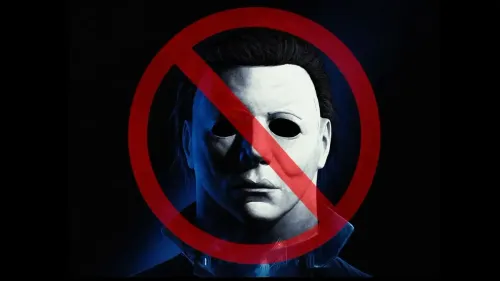
There is something curious when fear shifts places. In Halloween: The Game, danger has a name, a mask, and a long history of stalking people: Michael Myers. Yet, it was not the deaths, blood, or violence of the famous killer that brought the game to a halt before Australian regulators. The reason was a game mechanic involving cannabis.
Australia has refused classification for Halloween: The Game, a title developed by IllFonic, because players can consume cannabis during a match to gain an advantage: locating Michael Myers more easily. Without classification, the game cannot be legally sold in the country.
The case draws attention precisely because of the contrast. The game is a survival horror set in the universe of Halloween, a franchise renowned for violence and terror. But for Australian regulations, the decisive factor was different: the substance appears as a tool capable of enhancing player performance.
In this article, you will learn:
- Why Australia refused classification for Halloween: The Game;
- How cannabis functions within the video game;
- What Australian rules say about drugs in games;
- Other video games that have faced similar issues;
- Why this case does not mean all depictions of cannabis are prohibited;
- What could happen next with Halloween: The Game.
Why did cannabis become a problem in the video game?
Scheduled for release in September 2026, Halloween: The Game features asymmetrical multiplayer: one player takes on the role of Michael Myers, while others try to survive, escape, and prevent the killer from preying on victims. The title also includes a single-player mode.
So far, nothing that strays far from the universe created by the franchise.
What changed the game's fate in Australia was a specific mechanic. During gameplay, survivors can consume cannabis and, as a result, identify Michael Myers' location for a few seconds.
In practice, the substance acts as a strategic resource.
It is precisely this association between cannabis consumption and in-game benefits that clashes with Australian classification rules.
The Australian Classification Board rated the game RC — Refused Classification, a rating that prevents its legal sale in the country.
The developer itself, IllFonic, stated that the decision was not driven by the presence of Michael Myers or the violence and deaths that occur during the game, but by the presence of a controlled substance. Consequently, the company announced that the title will also not be sold in New Zealand.
What do the Australian regulations say?
The core issue of the regulation is not merely depicting a drug in a video game.
Australian guidelines establish specific restrictions on the interactive use of illicit or controlled drugs when linked to incentives or rewards.
And in this context, an incentive can mean a tangible advantage for the player.
The Australian classification board has previously explained that rewards may involve stat boosts, easing tasks, unlocking abilities, or other mechanisms that make progression easier.
That is where Halloween: The Game hits a regulatory wall.
Cannabis is not simply depicted in the narrative. The player interacts with it and receives a benefit in return.
LEARN MORE: Global cannabis laws: a comparison across continents
Cannabis and video games: not an unprecedented case
The decision regarding Halloween: The Game may seem unusual, but the relationship between cannabis and video games has prompted similar rulings in Australia before.
One of the best-known examples is DayZ, a survival game that was also refused classification by the country in 2019.
According to the Australian Classification Board, characters could use cannabis when their survival stats were low. Consuming it boosted food and hydration levels while lowering body temperature.
In other words, cannabis helped the character survive.
For the regulatory body, this framed the use of the substance as an incentive or reward within the interactive experience. The game was given an RC rating.
However, the story had another chapter.
A modified version of DayZ, with cannabis removed, was subsequently rated MA 15+, with consumer advice regarding strong themes, violence, and online interactivity.
This episode helps contextualize what is at stake now.
It is not necessarily an absolute ban on the word cannabis or any depiction of the plant in video games. What matters for classification is how it is integrated into the gameplay mechanics.
Cannabis as a narrative element vs. a reward
This distinction also appears in other cases reviewed by the Australian authority.
The board itself has noted that the simple depiction of drugs does not necessarily yield the same regulatory outcome as interactive drug use tied to player benefits.
The difference lies in the role the substance plays within the experience.
If it appears merely as part of the environment, story, or visual depiction, the assessment can be different.
If the player must consume the substance to become stronger, restore resources, facilitate a mission, or gain any other advantage, the classification changes.
This reasoning was also behind the decision involving We Happy Few. In that game, a fictional drug called Joy made certain situations easier for the player. The Australian Classification Board deemed the mechanic an incentive for drug use and refused classification.
LEARN MORE: Cannabis and video games: a duo that doesn’t always play on the same team
Could the Halloween video game be modified?
For now, the question remains open.
The Australian decision does not necessarily mean that Halloween: The Game will never be released in the country. One possibility, as seen with past titles, is for the developer to alter the mechanic that caused the issue and submit a new build for classification.
In the case of DayZ, for instance, removing cannabis allowed the game to receive a rating later on.
To date, however, IllFonic has made no public announcement regarding a tailored version to satisfy Australian requirements. The developer has stated that the game will simply not be sold in Australia and New Zealand following the decision.
The international launch remains scheduled for September.
The official Xbox page lists September 8, 2026 as the release date, while the game’s Steam page also indicates September 8.
Why is this decision drawing so much attention?
The story of Halloween: The Game highlights an important nuance in how certain regulatory frameworks treat drugs within interactive media.
In a movie, a character can be shown consuming cannabis without the viewer taking any active part in that act.
In a video game, however, the player can be faced with a choice: to consume or not to consume. When that choice alters character performance, the regulatory debate enters another dimension.
It is the difference between watching a depiction and participating in a mechanic.
In Australia, this distinction has been applied on multiple occasions.
The precedent includes DayZ and We Happy Few, along with other titles that faced issues related to the depiction or interactive use of drugs. The Australian Classification Board maintains public records of these determinations.
In the case of Halloween: The Game, the situation carries an added layer of irony because the title belongs to a franchise rooted in slasher violence, stalking, and gruesome murders.
Yet classification standards do not evaluate only the elements that seem most shocking to general audiences.
They examine how specific content is framed—especially when drugs are employed as an incentive or reward throughout the interactive experience.
What did Australia actually ban?
It is crucial to draw a distinction.
Australia has not banned video games simply for including cannabis in their content.
What led Halloween: The Game to receive an RC rating was the combination of interactive substance use and the tangible advantage awarded to the player.
The history of DayZ reinforces this interpretation. In 2019, the Classification Board stated that had cannabis use not acted as an incentive or reward, the content could have accommodated a high-level rating, such as R18+.
Therefore, boiling the issue down to “Australia banned cannabis in video games” is inaccurate.
The reality is much more nuanced—and precisely for that reason, far more intriguing.
The ruling illustrates how a minor in-game mechanic can carry outsized consequences when a creative work navigates differing international regulatory systems.
Cannabis, gaming, and the boundaries of representation
Between escapes from Michael Myers, what ultimately placed Halloween: The Game at the center of regulatory debate was not the killer’s mask, but the in-game function assigned to cannabis.
It reads like an improbable script: a horror video game, a serial killer, violent scenes, and a Halloween night chase. Yet, it was a mechanic lasting just seconds—consuming cannabis to pinpoint the enemy's location—that proved decisive in blocking the title's classification in Australia.
More than a gaming trivia curiosity, the episode demonstrates how the depiction of cannabis continues to be navigated across different cultural spheres.
In video games, the issue goes beyond the mere presence of the plant or substance. It also concerns how it is used, what role it plays, and what behavior the game actively rewards.
And in this space where entertainment, regulation, and digital culture intersect, even a brief player choice can alter the fate of an entire release.
Sources and references
- Australian Classification Board. Media statement — classification history of the game Dayz, 2019.
- Australian Classification Board. DAYZ — Refused Classification, official record.
- Australian Classification Board. DAYZ — Modified version, MA 15+ classification, 2019.
- Australian Classification Board. Classification of the game We Happy Few.
- Australian Classification Board. Annual reports on video game classifications and drug-related guidelines.
- El Planteo. Report on the refusal of classification for Halloween: The Game in Australia, published August 12, 2026.
- PC Gamer. Coverage on the refusal of classification for Halloween: The Game in Australia.
- Xbox. Official product page for Halloween: The Game, with release date and classification details.
- Steam. Official store page for Halloween: The Game.