Bruno Pegoraro presents report on hemp to Minister Carlos Fávaro and coordinates regulation in Brazil
Report from the Ficus Institute highlights the economic and environmental potential of industrial hemp

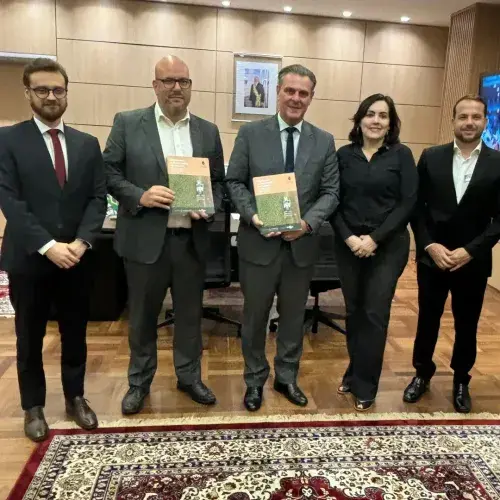
The president of the Ficus Institute, Bruno Pegoraro, was in Brasília to present the report Hemp: The Commodity of the Future to the Minister of Agriculture, Carlos Fávaro. The document highlights how the regulation of industrial hemp can boost the Brazilian economy, generating jobs and promoting sustainability. "The creation of a working group to regulate cannabis cultivation in Brazil is the first recommendation of the report," Pegoraro stated.
The reception of the report was positive. The minister praised the material and acknowledged the importance of the debate on the subject. However, to advance regulation, the formation of a working group involving the Ministry of Agriculture, Anvisa, and other competent bodies will be necessary. "We are dialoguing with all the necessary fronts to form this group and unlock this agenda," Pegoraro explained. The STJ determined, in November 2024, a six-month deadline for MAPA and Anvisa to define the guidelines for cannabis cultivation for medicinal purposes in the country.
PL 5511/2023 and new articulations
Pegoraro's agenda in Brasília also included meetings with parliamentarians and the National Secretary for Drug Policy and Asset Management, Marta Machado. The goal is to mobilize support for Bill 5511/2023, authored by Senator Mara Gabrilli, which proposes a regulatory framework for the cultivation and local production of cannabis, as well as regulations for import, export, and oversight. "This project is essential to provide legal security to investors and producers," Pegoraro emphasized.
Pegoraro also coordinated with the conservative base to facilitate dialogue with deputies and senators. "Our goal is to build a consensus that allows us to move forward responsibly," he said.
Scenario and challenges
Currently, Brazil allows the commercialization of cannabis-based products, but cultivation remains prohibited, forcing the market to import inputs from countries like Colombia. To change this scenario, experts point out that regulation needs to pass through Anvisa and other regulatory bodies, in addition to a broad political debate. "We need to stop depending on imported inputs and develop a competitive national market," Pegoraro stated.
The expectation now is that the articulations gain strength and that the working group is formed to accelerate discussions on the topic.