Cannabis behind the wheel: alcohol increased risks more
Cannabis behind the wheel: study observes drivers in real-world situations and brings surprising findings. Check out what experts say.

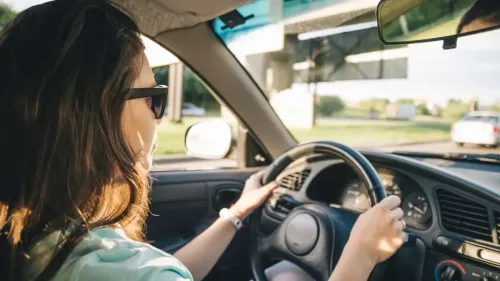
Between traffic lights, sharp turns, and miles driven in daily routines, science decided to observe what really happens when cannabis users get behind the wheel. The results brought new insights to the debate on cannabis while driving.
A study published in the journal Accident Analysis & Prevention observed that trips associated with alcohol consumption showed more speeding episodes, while routes following cannabis use demonstrated speed patterns closer to conditions considered normal among habitual users.
The research comes at a time of growing scientific interest in the impacts of cannabis on urban mobility, especially given the expansion of plant-based treatments in different countries.
Although the topic still sparks controversy, experts note on the study's website that understanding the relationship between cannabis while driving is essential for building evidence-based public policies.
Cannabis while driving: the methodology behind the study
The researchers tracked 41 habitual cannabis users in real-world driving situations.
Participants drove their own vehicles, equipped with systems capable of recording location, speed, acceleration, and video footage.
Additionally, tests were conducted to identify whether drivers had consumed alcohol, cannabis, or both substances.
The major key difference of the study was moving away from laboratory settings and observing the participants' behavior in daily life.
This approach allowed for an evaluation closer to the reality faced by drivers and brought new perspectives to the debate on cannabis while driving.
Alcohol vs. Cannabis: what telemetry revealed behind the wheel
The data showed that trips involving alcohol had a higher incidence of speeding on primary and secondary roads.
Meanwhile, routes classified as cannabis-positive recorded speed levels similar to those observed in trips with no detected substance use.
According to the authors, a possible explanation lies in the emergence of compensatory behaviors among habitual users.
In other words, some people seem to adopt a more cautious stance behind the wheel after consuming cannabis.
The researchers emphasize that the results do not imply an absence of risk, but indicate significant behavioral differences between alcohol and cannabis when it comes to cannabis while driving.
"Trips involving alcohol showed higher proportions of speeding, suggesting impaired judgment or compromised vehicle control. In contrast, cannabis-positive trips presented speeding proportions close to baseline conditions, indicating potential habituation or compensatory behaviors."
Expert perspective: psychology and risk perception in driving
For psychologist Reinaldo Dutra, a human behavior specialist, the study's main contribution is demonstrating that different substances can produce distinct behavioral responses.
"Human behavior is complex and cannot be explained solely by the presence of a substance. The study suggests that habitual cannabis users may develop protective compensatory strategies, such as driving slower or with greater caution."
According to Dutra, risk perception plays a fundamental role in this process.
"Alcohol tends to reduce risk perception and increase impulsivity. Among habitual cannabis users, however, researchers observed signs of a more conservative posture behind the wheel. This helps explain why the debate on cannabis while driving needs to be conducted based on evidence rather than mere perceptions."
Therapeutic use on the road: what do the data say to patients who use cannabis while driving?
Although the study was not developed specifically with medical cannabis patients, the findings contribute to broadening knowledge about the behavior of frequent plant users.
Experts emphasize that variables such as dose, THC concentration, frequency of use, individual metabolism, and clinical conditions can directly influence the observed effects. Therefore, the conclusions should not be generalized to all users.
Reinaldo Dutra gives an important warning: "It is essential to understand that caution does not mean an absence of impairment. A person can reduce their speed and still experience changes in aspects such as attention, reaction time, or decision-making."
The scientific landscape: evidence, simulators, and co-use
Scientific literature has already identified that cannabis consumption can affect certain driving-related skills, especially immediately after use.
Research published in JAMA Psychiatry observed temporary impairments in simulated driving tests, although they also found differences in users' own perceptions of their driving performance.
Other studies point out that combining alcohol and cannabis can significantly increase impairment levels in driving ability, making the combination of both substances a major concern for road safety experts.
Learn more - Cannabis and driving: what you need to know
Studies outside the laboratory: the urgency of naturalistic data
The authors classify the work as one of the first large-scale naturalistic analyses aimed at understanding the relationship between alcohol, cannabis, and driving behavior.
The study helps fill an important gap in scientific literature by analyzing drivers under real-world traffic conditions.
For Reinaldo Dutra, the study's greatest merit lies precisely in observing human behavior outside controlled environments.
"When we observe people in real-life situations, we can better understand how habits, past experiences, and risk perception influence decisions. This understanding is key to creating more effective educational campaigns and more balanced public policies," he evaluates.
Science-based decisions: the future of road safety
The new study adds relevant information to the debate on cannabis while driving. The results suggest that habitual cannabis users may exhibit behaviors different from those observed after alcohol consumption, especially regarding speed and risk perception.
Even so, researchers reinforce that the data should not be interpreted as authorization to drive after consuming cannabis.
The main message remains the need for more research, more information, and decisions based on solid scientific evidence to fully understand the impacts of cannabis on driving.
Sources
- PubMed – Real-world driving behavior, performance, and risk following alcohol and cannabis use in habitual cannabis users (PMID: 42492402).
- Accident Analysis & Prevention.
- JAMA Psychiatry – Driving Performance and Cannabis Users' Perception of Safety.
- JAMA Network Open – Impact of Cannabis Edibles Combined With Alcohol on Driving Performance.