Cannabis Beverage is Already a Reality!
The cannabinoid beverage market is growing, and how does this industry - already regulated in Canada - operate in the country? Columnist Tiago Zamponi tells all.

Column by Tiago Zamponi
What was once an idea or even a dream has now become a reality, at least in the United States and here in Canada. In almost two years, since the sale of cannabis beverages was allowed in Canada, the evolution of this category is remarkable.
I confess that the initial products were not tasty, and the cannabis flavor was very strong, but last year, we saw the emergence of delicious products where we don't even taste the cannabis. Moreover, if we take them out of the packaging, we won't be able to differentiate between a Coca-Cola or a marijuana beverage, for example. (Image below)
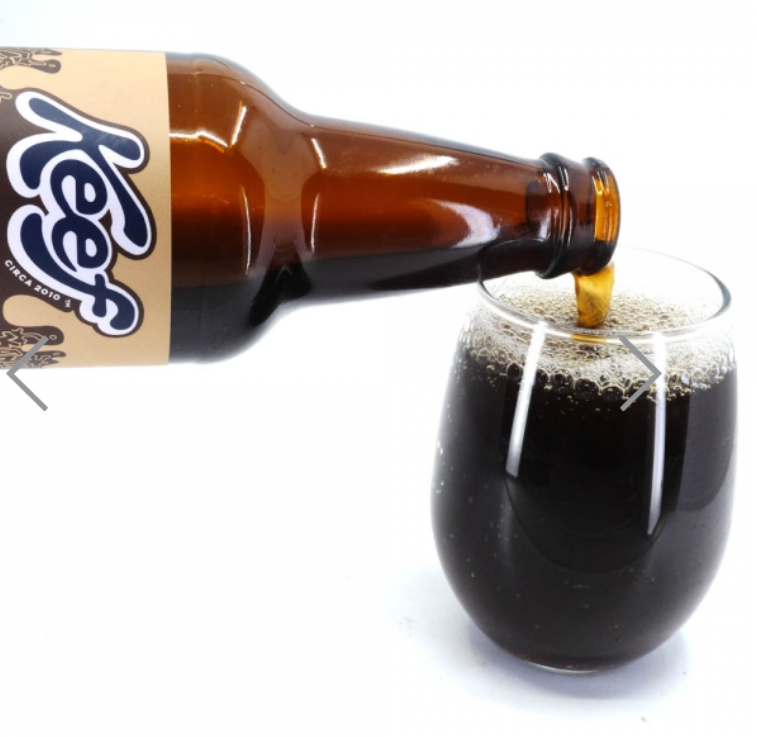
According to Headset (a leading cannabis analytics company in Canada), since the beginning of 2020, cannabis beverage purchases have increased rapidly, representing nearly 4.5 percent of global purchases. So much so that brewing companies are entering this market, like Heineken, which recently launched a product in California, as well as Molson-Coors (a Canadian brewery) that partnered with HEXO (a cannabis company) to create Truss.
Market research has shown that consumers are seeking beverages with less sugar and fewer calories. According to a 2017 study from the University of Georgia, since the legalization of cannabis beverages in the US, beer and wine orders have dropped by 15 percent in the last decade. Additionally, cannabinoid-infused beverages in Canada had higher growth rates than any edible category in 2020, based on retail sales data at the product level.
>>> Join Sechat's WHATSAPP group and be the first to receive news
Many people enjoy beer and wine, but alcohol is toxic, addictive, a known carcinogen, and a major cause of death from liver disease. Furthermore, alcohol is a significant source of calories. In contrast, cannabis is non-toxic, non-addictive, and there is emerging evidence that cannabinoids can actually treat cancer and liver diseases. Lastly, cannabinoids do not add calories, not to mention that marijuana beverages do not leave a hangover.
It is worth mentioning that recently, the Canadian government released some numbers, and from January to June 2021, Canadians spent CA$1.8 billion, of which CAD$23.6 million on marijuana beverages (1.3% of the market), indicating that there is still plenty of room to grow. For reference, cannabis flower sales reached CA$1.3 billion in the same period.
It is important to note that current Canadian regulations hinder the growth of cannabinoid beverage sales. This is because you can only buy a maximum of 30 grams of cannabis per purchase, and a 355 ml beverage has 5.07 grams of cannabis, meaning you cannot buy more than 5 cans (equivalent to 25.35 grams of cannabis).
Such a restriction makes no sense, as there is no limit on the amount of alcoholic beverages you can buy; you can purchase 50 bottles of wine or 100 cans of beer without any problem. Thus, we see that there is no fair treatment for cannabis beverages. For information, there is a movement of producers and consumers pressuring the government to relax this prohibition, as seen in the campaign below:
>>> Join Sechat's TELEGRAM group and be the first to receive news
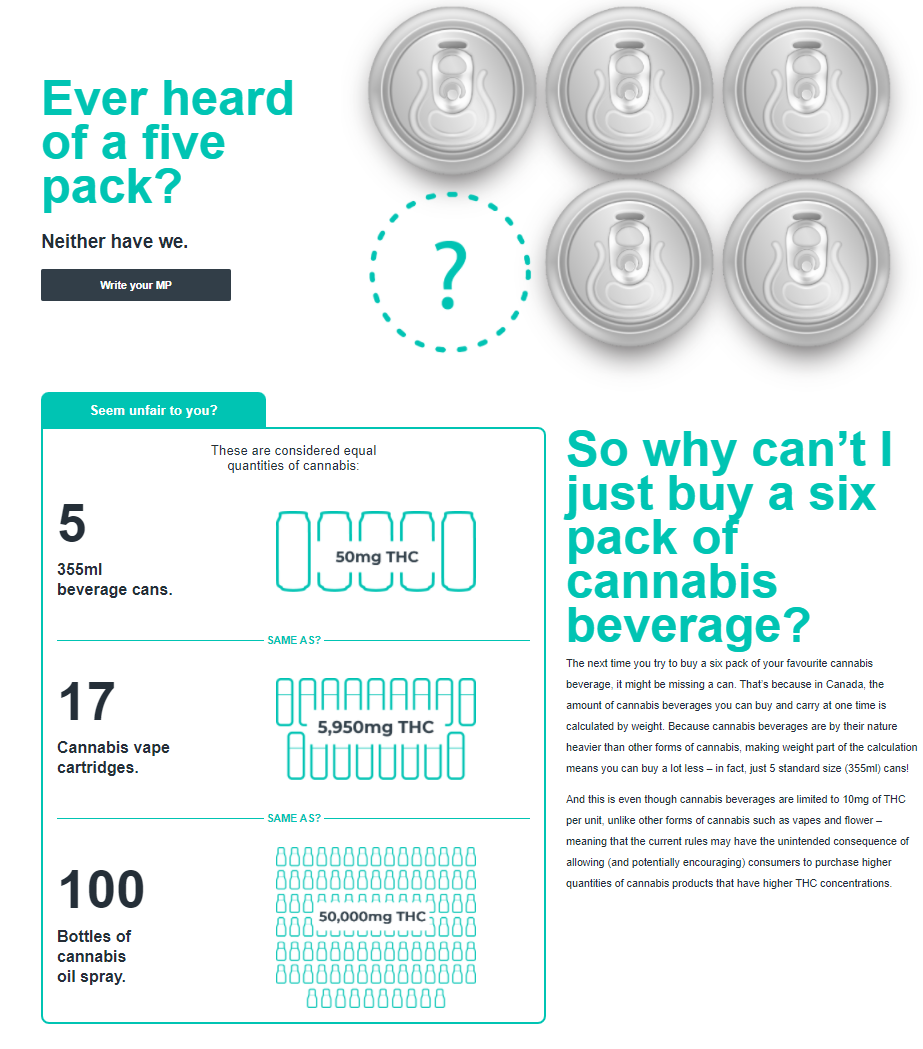
Furthermore, these beverage restrictions have created an unbalanced market. Based on these measures (30-gram limit), consumers can only buy five cannabis-infused beverages - but can leave a store with 100 bottles of cannabis oil spray. Another restriction is that the beverage can only have a maximum of 10 mg of THC, while there is no such limitation for flowers, let alone alcoholic beverages. There is also no limitation for other cannabinoids like CBD, CBG, and CBN.
Government calculations are unfair because they only consider the total volume of a beverage, regardless of how much THC was used in its production.
Cannabis beverages have even greater potential for disease treatment as they can be combined with other important ingredients like minerals, creating an even healthier product.
It is true that the province of Ontario is seeking products (beverages) with high concentrations of CBN and CBG, aimed at consumers looking for treatment alternatives for various diseases who have not adapted to flowers and oils. This demonstrates that not only CBD has potential.
Once again, Brazil is falling behind in this innovation, but we must emphasize that the country is maturing, and stigmas are falling more and more. There is still much to demystify, but cannabis is gaining more followers every day.
Tiago Zamponi is a lawyer, marketing manager, works with business development, strategy, and project planning, and is currently also a columnist for Sechat.
The opinions expressed in this article are personal and do not necessarily reflect Sechat's position.