Cannabis in Canada generates US$ 3 billion and becomes 5th largest agricultural crop
Cannabis in Canada is already an agricultural powerhouse and drives billions. Discover the numbers and what they reveal about the future of the industry!

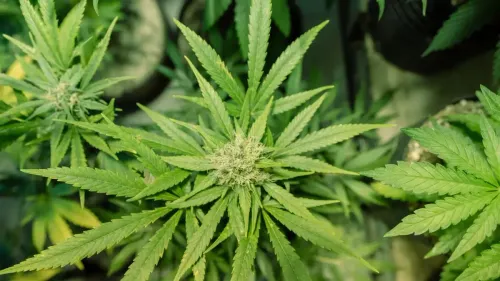
Cannabis generated around US$ 3 billion in farm cash receipts in Canada in 2025, becoming the country's fifth most important crop, according to Statistics Canada data reported by Newsweed. The result highlights the economic significance of the sector and its presence across a chain encompassing agricultural production, industrial processing, retail, and cannabis investments in Canada.
Cannabis in Canada: from marginal crop to agricultural powerhouse
Eight years after legalization for adult use in 2018, cannabis has consolidated a significant presence in Canadian agriculture. According to a report published by Newsweed on October 13, 2026, with information attributed to Statistics Canada, the crop accounted for 5.8% of the country's farm cash receipts in 2025.
The trajectory helps illustrate this transformation. In 2016, farm receipts from cannabis totaled approximately US$ 94.8 million. By 2019, they had already surpassed US$ 1.4 billion. After topping US$ 2.7 billion in 2022 and facing declines in 2023 and 2024, the sector returned to growth and hit a new record in 2025.
With this performance, cannabis surpassed traditional crops such as durum wheat, barley, lentils, and tobacco in farm receipts. The figure reinforces the economic scale achieved by the plant in a regulated market.
More than just an impressive figure, this evolution shows how a supply chain can gain relevance when it integrates different stages of production and commercialization.
Cannabis market in Canada drives billions
The sector's strength is not limited to the field. According to Newsweed, annual legal cannabis sales, including processed products and the medical market, exceed US$ 5 billion.
Retail also posted strong results in 2026. In May and June, monthly sales surpassed US$ 500 million, setting new records, according to the publication.
At the same time, the consumption profile has been shifting. Traditional flower is losing relative market share to other categories, such as pre-rolls, vape products, and edibles.
This diversification helps explain why the market needs to be viewed beyond agricultural production. Processing, distribution, product development, and retail are also part of the value chain.
LEARN MORE: Canada considers expunging cannabis criminal records
Which regions lead cannabis production in Canada?
Canadian production shows significant differences across provinces. In 2025, Ontario accounted for approximately 48% of national farm receipts from cannabis, equivalent to US$ 1.5 billion.
British Columbia followed with US$ 666.5 million, representing 22% of the total. Quebec accounted for 12%, while New Brunswick reached 10% and Alberta around 3%.
In some provinces, the plant's prominence was even greater: cannabis ranked first among agricultural crops in receipts in British Columbia, New Brunswick, Nova Scotia, Prince Edward Island, and Newfoundland and Labrador.
The figures show that the industry is not concentrated solely in major consumer hubs. It also influences regional economies, creates demand for infrastructure, and strengthens various links in the supply chain.
Cannabis, the future, and investment: what do the numbers reveal?
The economic impact of cannabis is also reflected in Gross Domestic Product (GDP). According to data presented by Newsweed, the sector contributed approximately US$ 11.6 billion to Canada's GDP in 2025.
Of this total, about US$ 10.647 billion came from licensed cultivation and processing activities, while US$ 946 million was associated with authorized retail.
The contribution of production and processing activities grew by 31% compared to 2024. Retail, on the other hand, rose 5%, signaling different dynamics across industry segments.
Another shift is taking place with industrial hemp, a variety grown for uses such as grain and fiber. In 2025, Canada dedicated about 15,380 hectares to cultivation, dominated by grain production, which accounted for 84% of the reported acreage for the production categories cited by the publication.
LEARN MORE: Cannabis research: Canada invests C$ 24 million
The Canadian landscape places cannabis at the center of discussions on innovation, agricultural development, and investment. However, economic growth does not guarantee returns for companies or investors. Production costs, competition, regulation, pricing, and shifts in consumer behavior continue to influence results.
The future of the industry will depend on the ability to turn scale into economic sustainability, boost operational efficiency, and respond to the demands of an increasingly diverse market.
Canada's experience shows that cannabis can move beyond debates about its origin and take a prominent place in the economy. As an agricultural and industrial powerhouse, the plant already drives billions. The next chapter will be understanding how this value can be sustained and translated into long-term development.
References
- Statistics Canada. Slicing up the pie: A 50-plus-year look at farm cash receipts. Data on Canadian farm cash receipts in 2025.
- Statistics Canada. Farm income, 2025.
Frequently asked questions
How much did cannabis generate in farm cash receipts in Canada in 2025?
Cannabis generated around US$ 3 billion in farm cash receipts in 2025, accounting for 5.8% of the country's agricultural receipts.
What is cannabis's ranking among Canada's agricultural crops?
In 2025, cannabis reached the fifth position among Canadian agricultural crops by revenue, surpassing commodities such as durum wheat, barley, lentils, and tobacco.
When was cannabis legalized for recreational use in Canada?
Canada legalized cannabis for recreational use in 2018, expanding the regulated market and creating conditions for the industry's development.
Which provinces lead cannabis production in Canada?
Ontario led in 2025, with approximately 48% of national cannabis farm receipts. British Columbia ranked second at 22%, followed by Quebec at 12%.
How much does the legal cannabis market generate in Canada?
According to Newsweed, annual legal cannabis sales, including processed products and the medical market, exceed US$ 5 billion.
What is cannabis's contribution to Canada's GDP?
The industry contributed approximately US$ 11.6 billion to Canada's Gross Domestic Product (GDP) in 2025, encompassing licensed cultivation, processing, and authorized retail activities.
Does the growth of cannabis in Canada represent an investment opportunity?
The sector's growth expands opportunities in cultivation, processing, product development, distribution, and retail. However, outcomes depend on factors such as production costs, competition, regulation, and consumer behavior.
What is the industrial hemp grown in Canada?
It is a cannabis variety cultivated for industrial uses, such as grain and fiber production. In 2025, Canada dedicated approximately 15,380 hectares to cultivation, according to data cited in the report.