Cannabis in the US: North Carolina Proposes Bans on THC
North Carolina moves forward with strict laws to limit hemp-derived THC. Understand the impacts on the industry and the health sector of Cannabis in the US

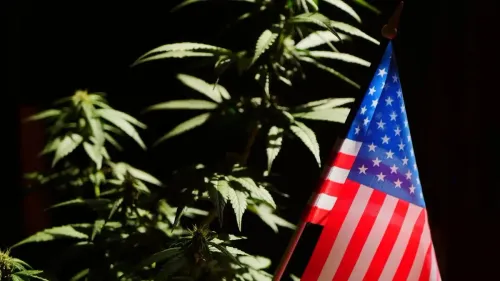
Between legal loopholes and cultivated fields, there is a subtle balance between welcoming care and limiting norms. In North Carolina, the advancing debate over hemp-derived products reminds us that the pursuit of wellness through Cannabis in the US is more than a legislative process: it is a daily journey in the lives of thousands of families seeking relief and clarity amid regulatory uncertainties.
In this article you will see:
The progress of Senate Bill 814 in North Carolina.
The legal difference between Delta-9 THC and other synthetic or derived cannabinoids.
Public health concerns versus the impact on the free market.
The future scenario for Cannabis in the US and consumer protection.
The Cannabis scenario in the US and new state restrictions
The debate surrounding the market for derivatives of Cannabis in the US has gained a new and decisive chapter.
In North Carolina, the Senate Judiciary Committee approved the so-called Senate Bill 814, a legislative proposal aimed at establishing strict restrictions on the trade of products containing hemp-derived THC.
The measure comes in response to the rapid growth of shops and convenience stores selling cannabinoids with psychoactive effects without clear state regulation.
The central goal of lawmakers is to fill a legal loophole that opened since the passage of the federal Farm Bill in 2018.
With the new bill, the state seeks to redefine what is permitted in local commerce, establishing strict age, labeling, and dosage limit criteria for compounds extracted from industrial hemp.
Understand what changes with the new Hemp legislation
Currently, US federal law considers legal any hemp-derived product containing less than 0.3% Delta-9 THC on a dry weight basis.
However, industrial chemical processes have allowed the synthesis of other psychoactive cannabinoids, such as Delta-8 THC, Delta-10 THC, and HHC, from CBD extracted from the plant.
The North Carolina bill proposes to expressly prohibit the sale of these synthesized compounds to individuals under 21, as well as restricting commercialization to establishments properly licensed by the state.
As reported by the specialized outlet Cañamo, lawmakers' intention is to ensure that these products do not easily fall into the hands of teenagers.
According to the publication, "the advancement of state laws seeks to curb an unregulated market that expanded rapidly under the shadow of the federal Farm Bill".
Safety and Health: Arguments from state authorities
Proponents of the measure argue that the lack of standardized laboratory testing represents a real risk to public health.
Without proper oversight, many products sold in retail stores may contain residual solvents, heavy metals, or THC dosages far exceeding those listed on the package.
Healthcare professionals point out that inadvertent consumption of these cannabinoids without guidance can lead to adverse effects, especially in young people. Therefore, the rules will require:
Child-resistant packaging: hard-to-open packaging with no visual appeal to children.
Rigorous batch testing: mandatory certificates of analysis issued by independent laboratories.
Clear labeling: accurate identification of cannabinoid content per serving.
Sales restrictions: prohibition of sales in vending machines or locations near schools.
Economic impact on business owners and Cannabis producers in the US
On the other hand, hemp industry business owners express deep concern over the strictness of the new measures.
Several small business owners and local farmers argue that excessive restrictions could make legitimate businesses operating in good faith unviable.
The hemp industry has become an important source of agricultural and commercial income in the state.
According to statements gathered by the portal Cañamo, industry leaders point out that "a blanket ban on certain compounds could push consumers back to the illicit market, undermining the safety gains that regulation should bring".
Striking a balance between protecting public health and supporting sustainable economic development remains the main challenge for lawmakers involved in the vote.
The future of Hemp and Cannabis regulation in the US
North Carolina's situation reflects a national trend.
Several other US states, such as Florida, Texas, and Georgia, are also revising their laws to close hemp-derived THC loopholes while the US Congress has yet to update the federal Farm Bill.
The bill is expected to head to a vote on the Senate floor before moving to the state House of Representatives.
If approved, the new rules are expected to take effect in the coming months, significantly changing access to these products in the state.
As legislation moves forward, experts stress the importance of grounding regulation in science, respect for patient autonomy, and ensuring safe products for all.
References Consulted
CÁÑAMO. Carolina del Norte avanza hacia restricciones al THC derivado del cáñamo. Available at:
https://canamo.net/noticias/mundo/carolina-del-norte-avanza-hacia-restricciones-al-thc-derivado-del-canamo U.S. Congress. Agriculture Improvement Act of 2018 (Farm Bill). Public Law 115-334.
North Carolina General Assembly. Senate Bill 814 / Hemp Derivatives Regulation.