Cannabis patch: how does it work and what is it used for?
Don't like the smell or prefer to avoid inhalation? The cannabis patch can be an alternative. Learn how this medicinal administration route works!

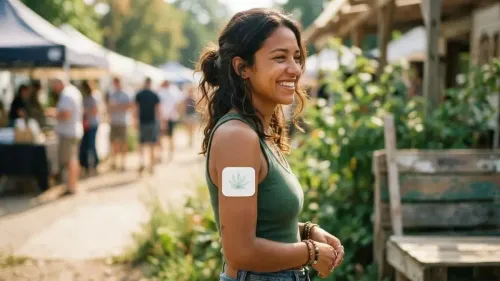
Did you know that cannabis-based patches exist? If you don't like inhaling, prefer to avoid the plant's characteristic smell, or have personal restrictions regarding this method of use, there is another option worth knowing about. The cannabis patch uses the skin as a pathway to deliver cannabinoids, but how does this technology work and how long has it been studied?
In this article, you will learn:
- What the cannabis patch is and how it works;
- How long this technology has been studied;
- Which symptoms it has been investigated for;
- The differences between patches, creams, and oils;
- What science already knows about this route of administration.
What is a cannabis patch?
The cannabis patch is a formulation developed to deliver cannabinoids, such as cannabidiol (CBD) and tetrahydrocannabinol (THC), through the skin. The purpose is to allow these substances to cross the cutaneous layers and reach the bloodstream, rather than being inhaled or ingested.
The technology is known as transdermal delivery and should not be confused with the application of creams and ointments. While many topical products act mainly in the area where they are applied, transdermal patches are designed to transport the active ingredient through the skin, with the potential for systemic action.
A scientific review published in 2021 on Science Direct analyzed research on the delivery of cannabinoids through the skin and highlighted the potential of this route, along with the challenges that still need to be overcome.
How does the cannabis patch work?
The patch is applied to the skin and releases the compound present in its formulation. Depending on the technology used, the active ingredient can gradually cross the skin barrier and reach the bloodstream.
The goal is to provide controlled release, which can promote more stable concentrations of the compound in the body. The duration depends on the composition, formulation, and specific instructions of each product. Therefore, there is no single duration of action that applies to all patches.
Among the features that spark interest in this technology are:
- Non-inhalation delivery: does not require smoking or vaporizing cannabis.
- Possibility of extended release: some formulations are designed to deliver the compound over time.
- Alternative administration route: may be considered in situations where other routes are not suitable, based on professional assessment.
However, this does not mean that every patch has proven efficacy or produces the same effects as cannabis oil. Absorption depends on the formulation and the characteristics of each individual body.
How long have cannabis patches been studied?
Transdermal delivery of cannabinoids is not a new idea. Scientific research on transporting these substances through the skin was already underway before the popularization of patches available in certain markets.
A review published in 2021 examined preclinical studies and strategies to develop systems capable of delivering cannabinoids across the skin barrier. In 2024, another review article, published in the journal Cannabis and Cannabinoid Research, revisited the advancements and limitations of this technology.
Researchers highlighted an important challenge: cannabinoids have chemical properties that make their penetration through the skin difficult. Therefore, the development of effective patches depends on specific formulations and penetration enhancers.
In other words, although the technology has been investigated for years, this does not mean that all products have been widely tested in humans or that their clinical efficacy is established for various conditions.
Which symptoms can cannabis patches be considered for?
According to a report by the portal El Planteo, which features information provided by physician Amanda Medeiros Dias, patches are being explored as an option for conditions such as chronic pain, muscle stiffness, inflammation, arthritis, and muscle spasms.
It is important to make a distinction: these are applications mentioned in the report, not a list of indications with proven efficacy for all transdermal cannabis patches.
The scientific review published in 2024 emphasizes that more clinical studies are still needed to evaluate the efficacy, safety, absorption, and optimal formulation of these products.
Choosing a product must take into account the clinical condition, current medications, cannabinoid concentration, and potential adverse effects. The presence of THC, for instance, can cause psychoactive effects depending on the dose and absorption.
Are cannabis patches available in Brazil?
Availability depends on the product, its origin, and applicable health regulations. Before purchasing or using a cannabis patch, it is important to verify its regulatory compliance and seek guidance from a qualified healthcare professional.
The report by El Planteo describes an access pathway via prescription and import authorization. However, procedures may vary according to current regulations and the product's characteristics. Therefore, it is necessary to consult updated guidelines from the Agência Nacional de Vigilância Sanitária (Anvisa).
Cannabis patches expand the discussion on different ways to administer cannabinoids, especially for people who do not wish to inhale. Still, convenience is not synonymous with proven efficacy: the decision should be individualized and based on available evidence.