Cannabis sales soar, reaching $250 million
Cannabis sales surpass $250 million in Minnesota during the first year of the legal adult-use and medical market. Learn more!

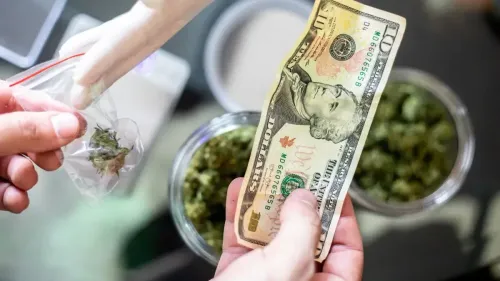
One year after the launch of legal adult-use sales, Minnesota surpassed the milestone of $250 million in cannabis sales, combining products destined for adult use and the medical market. The survey from the Minnesota Office of Cannabis Management (OCM), released in September 2026, highlights how the regulated market has gained scale since its launch.
According to MJBizDaily, approximately $150 million corresponds to the adult-use market, while another $100 million came from medical cannabis. In total, around 1.2 million transactions were recorded.
Cannabis sales grow in the first year
The first operations began on September 16, 2025, after Minnesota legalized adult use in 2023. However, the market's rollout occurred gradually.
According to MJBizDaily, initial product availability was limited, partly because the first cultivation licenses were only granted in June 2025.
With the entry of new cultivators and retailers, cannabis sales began to pick up momentum.
For Eric Taubel, executive director of the OCM, the first year represents an important milestone in building the market. In a statement published by MJBizDaily, he stated that he is more optimistic about the sector's evolution and the ability to establish a sustainable framework for different types of businesses.
[LEARN MORE: Understand how cannabis regulation works in the United States]
Medical cannabis also drives the market
Although adult use accounts for the largest share of cannabis sales, the medical segment continues to hold a significant presence.
According to MJBizDaily, Minnesota has more than 90,000 registered patients in the medical cannabis program, a figure that has more than doubled since 2023.
Among the changes that contributed to this growth are the elimination of patient enrollment fees in 2023 and the expansion of qualifying conditions for the program in 2024.
These figures, however, reflect commercial activity and should not be construed as evidence of therapeutic efficacy. In the case of medical cannabis, clinical outcomes depend on the condition being treated, the product used, and the individual evaluation of each patient.
More businesses enter the cannabis market
The growth in cannabis sales was also accompanied by an expansion in the number of businesses.
OCM data cited by MJBizDaily indicates that more than 300 new businesses were launched in Minnesota during the first year. Currently, the state has a total of 369 licensed companies.
Social equity businesses represent an important share of this market. According to the OCM, businesses owned by verified applicants in this category account for 43% of licensed businesses.
The state has also allocated more than $1.5 million in funding to support small cannabis-related businesses.
Jess Jackson, director of community and economic development at the OCM, told MJBizDaily that the goal is to transform regulation into a long-term economic opportunity for communities affected by cannabis prohibition.
Flower leads cannabis sales
Among the products sold, cannabis flower leads the way, followed by concentrates, pre-rolls, and edibles, according to data presented by MJBizDaily.
Prices also vary between the two markets.
The publication points out that the median price of flower intended for adult use was $13.54 per gram, while flower sold through the medical market had a median price of $9.17 per gram.
The difference reflects the unique characteristics of each segment, demonstrating that cannabis sales take place in markets with distinct consumer profiles and regulatory frameworks.
[LEARN MORE: Medical cannabis: what do scientific studies currently show?]
Cultivation increases production capacity
The expansion of cannabis sales was also accompanied by the growth of local production.
According to the OCM, Minnesota went from 11 licensed cultivators and 72,083 plants to 102 licensees and 486,720 plants. The number of cultivated plants increased by approximately 575%.
Another highlight cited by the agency is the presence of small businesses: nearly three-quarters of licensees fall under the microbusiness category, considered the smallest license type in the state.
For the regulatory body, this scenario illustrates the active participation of small cultivators and businesses in shaping the supply chain.
What does $250 million represent?
The first year of cannabis sales in Minnesota reveals a market in the process of consolidation, marked by expanding supply, the entry of new businesses, and concurrent growth across both adult-use and medical segments.
Beyond commercial transactions, tax revenue also stands out among the period's indicators.
According to data from the OCM and the Minnesota Department of Revenue cited by CBS News, operations, combined with sales of lower-potency hemp products, generated $45.6 million in tax revenue between September 2025 and July 2026.
The state still faces regulatory shifts related to hemp products and federal rules expected in December, which could impact portions of the market.
Thus, the cannabis sales recorded in the first year help to measure not only the sector's economic scale, but also the transformation of a supply chain that is still taking shape.