Cannabis Self-Cultivation Offers Hope Against "Worst Pain in the World"
Carolina Arruda wins the right to grow cannabis at home through a legal battle and prioritizes self-cultivation for her treatment
*Article updated on Saturday (10/04) at 4:10 p.m.
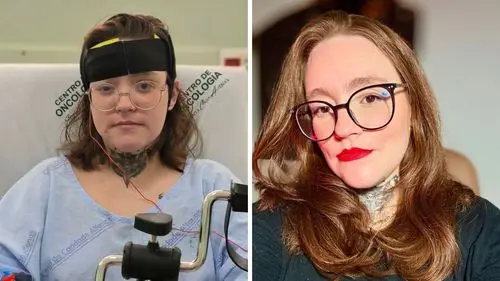
A decision by the Minas Gerais State Court of Justice (TJMG) marks a milestone in Carolina Arruda's life, 29, and sets a precedent in the fight of patients for access to alternative treatments.
A resident of São Lourenço, in southern Minas Gerais, she obtained a preventive Habeas Corpus that guarantees the right to cultivate Cannabis sativa at her residence for medicinal purposes. The achievement is the newest chapter in a long and painful battle against trigeminal neuralgia, a rare and devastating condition often described by medicine as the "worst pain in the world".
Treatment with cannabis is not new to Carolina, but the administration route and the high cost of legal medications became barriers. Vaporizing the plant's flower proved to be the most effective way to relieve acute crises, an urgent need that the traditional system could not meet.
"Trigeminal neuralgia presents with intense, lancinating pain crises that can occur several times a day in response to minimal stimuli such as chewing, brushing teeth, or temperature changes," explains Dr. Rafaela Bock, who is following the case.
A Journey Marked by Pain
Carolina's history with neuralgia began early, at 16, in a moment of double vulnerability. "I was pregnant with my daughter. Around four months into the pregnancy, I started having the pains," she recalls.
The first crisis was a shock, a 30-second episode that "seemed to last for hours" to her. "It was a crisis where I could only squeeze my face with my hand and scream and cry. No one understood what was happening," she says.
What started with sporadic episodes cruelly evolved over the years, becoming a daily occurrence. However, the diagnosis took four long years. "I saw 27 neurologists, and they all said it couldn't be Trigeminal Neuralgia because I was too young and that it was an 'old person's disease'," she laments.
The key to the diagnosis came from family memory. Her father and grandmother noticed the similarity of her behavior during crises to that of her great-grandfather, who also suffered from the same condition. It was with the same doctor who treated her great-grandfather, in São Paulo, that Carolina finally heard the name of her disease.
She also discovered that her case was doubly rare; in addition to being bilateral, affecting both sides of her face, her pain was caused by a tortuous artery compressing the trigeminal nerve root inside the brain.
"It was the peak for me to fall into a deep depression"
With the diagnosis, another exhaustive search for an effective treatment began. Hundreds of medications were tested, with no response and strong side effects, bringing hope back to surgical procedures.
After hearing more than 50 "no's" from doctors, Carolina underwent her first surgery in 2020, but the relief lasted only a month. "Then the pain returned and returned much worse," she laments. Seven more surgeries followed, each leaving a trail of sequelae. "I left the surgery already in pain, I had horrible sequelae, I couldn't swallow, I spent months unable to speak, with paralysis in the laryngeal nerve, spitting into a little pot that I couldn't even swallow saliva from."
The last one, in 2023, resulted in facial paralysis on the right side of her face. "It was the peak for me to fall into a deep depression. Because besides realizing that nothing was going to work for me, that I was never going to get better, at that moment, I had to relearn how to speak, eat, talk, do everything."
The incessant physical pain combined with new limitations and loss of hope brought her to a breaking point. At the end of 2023, after a suicide attempt, Carolina was admitted to a psychiatric clinic for two months.
A Seed of Hope
Upon leaving the clinic in January 2024, Carolina began structured treatment with medicinal cannabis. Although she had already tried smoking and some oils, nothing compared to the almost immediate relief provided by vaporized use during pain peaks.
"I had smoked marijuana a few times, and I noticed that when I smoked, the pain at the peak of the crisis eased a bit, I could have better control. With vaporization, the situation was even better," she says.
"Trigeminal neuralgia presents with intense, lancinating pain crises," explains Dr. Rafaela Bock. "In this context, it is important to provide rapid relief, with the inhaled route being the most indicated due to the speed of therapeutic effects," she continues.
The Achievement of the Habeas Corpus
With a judicial process for health insurance coverage stalled, a legal request made due to the high cost of cannabis medications, the solution was to seek the right to self-cultivation. "We started prioritizing cultivation," says Carolina.
To the surprise of her lawyer, Murilo Nicolau, the decision was quick. "This Habeas Corpus was filed two weeks ago, and it took less than seven days for the decision. It's not common," he points out. He explains that the need for vaporized use, which cannot be easily legally obtained in Brazil, was one of the pillars of the argument.
The cultivation is not random. With the help of her husband, who is a biologist, and guidance from specialists, a careful planning was made, from choosing the plant genetics, with 22% THC, to setting up a greenhouse with light, temperature, and humidity control.
The number of plants allowed in the judicial decision also follows a technical criterion. "Every agronomic calculation is based on the medical prescription," explains agronomist Vinicius Carrasco, who issued the report for the process. "Through this calculation, we can arrive at the number of plants that are safe for continuous and uninterrupted medical treatment."
While waiting for her plants to bloom, Carolina still uses the medication she managed to save from the last purchase. The plant, growing under her care, is more than a future remedy. It is a symbol of autonomy, hope, and, for her, the real chance to have her life transformed.
For Dr. Rafaela, the benefits go beyond pain control. "THC helps reduce the intensity and duration of crises, increase the spacing between them, and control associated symptoms such as nausea, insomnia, and loss of appetite. Additionally, it helps improve the psychological reaction to pain, reducing the embedded suffering of crises."
See what the doctor says: