CBD gains space in well-being: expert explains benefits and limits
Psychologist Maria Klien explains how CBD can support emotional care without replacing therapy, highlighting balance, safe information, and patient empowerment

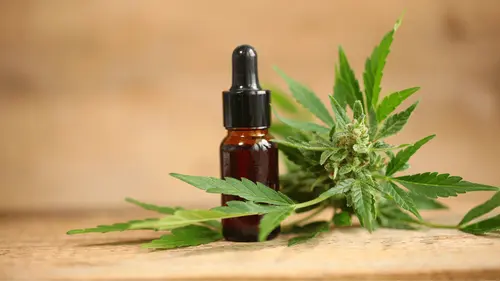
In a scenario where modern life demands more than the body can deliver, emotional care strategies have become a recurring and urgent topic. Among them, CBD oil emerges as a possible ally. Not as a magical solution, but as part of a mature conversation about mental health, supported by science, safe information, and professional guidance.
The trend, already observed in countries advancing in medicinal cannabis policies, also resonates here. And, according to psychologist and writer Maria Klien, this movement only makes sense when understood beyond trends, shortcuts, or the desire for immediate results.
A resource that prepares the ground - without replacing therapy

Psychologist Maria Klien reinforces the role of integrated care in emotional health | Photo: Press Office
For Maria, integrating CBD into emotional care does not mean replacing therapy sessions with drops of oil. The central point lies in balance. “CBD is a medication with active action on the nervous system. It prepares the territory for change to happen, but does not diminish the importance of therapy or healthy habits,” she explains.
The psychologist points out that in the face of conditions such as intense anxiety, post-traumatic stress, or already crystallized traumas, the patient often cannot advance in the most challenging stages of treatment without proper chemical support. “If the internal soil is fertile for fear, the body reacts. CBD helps to reorganize this system, allowing the therapeutic dive to be deeper and the person to have more emotional tolerance,” she points out.
She describes this reorganization as a gain in “sanity”, the interval between action and reaction. “When we are suffering, we react too quickly. With more sanity, we have time to breathe, think, and choose how to respond,” she says.
Regaining balance amid daily chaos
The accelerated routine, the permanent demands, and the feeling of always dealing with more than one should make up the emotional backdrop for many people.
In this context, CBD can play an important complementary role. “The psychologist is not a mother who protects from everything. Life has challenges - and many. When the person is chemically organized, they can look at their own life more clearly, build resilience, and expand their internal securities,” says Maria.
For her, it is not about numbing discomforts, but about allowing the patient to have resources to overcome them.
Education before decision: what the patient needs to know
With the popularization of medicinal cannabis, the expectation for quick solutions is also growing, which, according to Maria, is a risk. “People want a miraculous medicine. But there is work that is ours, of the patient themselves, and there is risk and benefit in everything, including natural treatments,” she analyzes.
The psychologist warns of “health anxiety”, a phenomenon that gained strength in the post-pandemic period: the excess of information, often poorly contextualized, causes people to seek diagnoses on Google and draw conclusions based on videos or posts from influencers.
Therefore, before starting to use CBD, she recommends three basic steps:
- Understand risks and benefits, always with professional guidance.
- Access reliable sources, avoiding noise and misconceptions.
- Actively participate in your own treatment, without fully delegating self-care to the substance.
“Cannabis is not suitable for all audiences, such as pregnant women, for example. And there are cases where it can indeed be the safest option. Everything depends on individual evaluation,” she emphasizes.
Science, dialogue, and maturity at the center of change
The advancement of research and the expansion of public dialogue have helped to deconstruct taboos, but also bring challenges. “Science is empirical. It transforms as it is used, tested, observed. CBD is just one of the cannabinoids, and our understanding of it grows as studies become more robust,” says Maria.
At the same time, she emphasizes that information without guidance can generate even more anxiety. “Today we see people trying to follow all the recommendations circulating on social media, even when one contradicts the other. This makes people sick”.
For her, the safest path is one: responsible education combined with professional guidance. “The patient needs to have autonomy, but cannot bear the burden of having to figure everything out alone. Our role is to provide adequate information, not to overwhelm them with tasks and unrealistic expectations,” she concludes.