Cortex under construction: what parents need to know about cannabis and adolescence
USP specialist explains how cannabis use in adolescence can affect the development of the prefrontal cortex and warns about long-term cognitive and emotional impacts

There is something deeply delicate about witnessing a child's blossoming into adolescence. It is like watching a bridge being built between childhood and adulthood, brick by brick, amidst strong winds, emotional instabilities, quests for identity, and often, invisible risks.
In this scenario, cannabis may seem, to many young people, just another experiment in freedom. Yet for parents, it is a concern beyond, as access to vaporizers, hookahs, and tobacco, even if illegal, is just a step away. But, under the watchful eye of neuroscience, this experiment brings serious implications for the still-developing brain.

Psychiatrist and neuroscientist José Diogo Ribeiro de Souza, PhD from USP Ribeirão Preto and specialist in cannabinoids with over a decade of experience in clinical research, sheds light on this topic with sensitivity and firmness.
He invites us to understand what is truly at stake when adolescents have early contact with cannabis and how parents can act with guidance, presence, and affection, without judgment.
The adolescent brain: a project in full swing
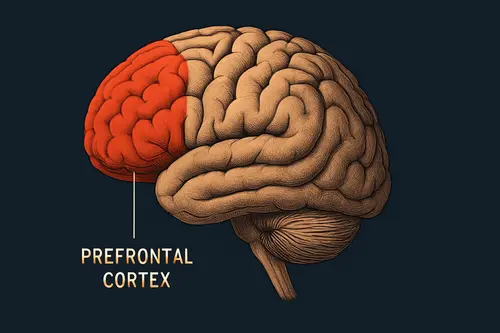
“The prefrontal cortex is like the conductor of the brain,” explains the neuroscientist. It is responsible for decisions, planning, self-control, and emotional regulation, precisely those skills that seem to be “loading” during adolescence. And it is no coincidence: this is one of the last areas to mature, undergoing a sophisticated process of synaptic pruning and reorganization of neural connections.
During this phase, the brain is highly plastic, meaning it is shaped by experiences and the environment. But this plasticity also makes it vulnerable. “Early exposure to THC, the main psychoactive component of cannabis, can interfere with brain maturation, disrupting important functions,” warns the specialist.
Neuroimaging studies show, in fact, that frequent adolescent users may exhibit reduced volume of the prefrontal cortex and alterations in its connectivity, resulting in impulsivity, cognitive difficulties, and even psychiatric risks.
An imbalanced system: the impacts of cannabis on the developing brain
The endocannabinoid system, the body's natural regulator, is central to brain development. It acts in synapse formation, neurotransmitter balance, and the emotional architecture of the young individual. “When THC artificially activates this system, it can disrupt this process, affecting the prefrontal cortex, the hippocampus, and the limbic system,” explains José Diogo.
According to the doctor, these changes are not merely theoretical; they are linked to attention deficits, memory issues, inhibitory control, and increased vulnerability to disorders such as anxiety and psychosis. “The risk is higher in those with genetic predisposition, family history, or who start using products with high THC concentration early,” he emphasizes.
Reversible effects? It depends.
The hope of reversal exists, but it is not universal. In cases of light and early discontinued use, there may be partial recovery of cognitive functions.
However, in situations of prolonged and intense use during the critical years of development, the effects tend to be more persistent. “It is common, in clinical practice, to see young people with functioning similar to ADHD after years of use,” notes the specialist.
Recreational vs. therapeutic: fundamental distinctions
Many parents wonder: if cannabis can be medicine, why can't it be used freely? José Diogo responds clearly: “medicinal use is guided by protocols, with predominance of CBD and low THC concentration, indicated only in specific situations such as resistant epilepsy or autism with severe symptoms. On the other hand, recreational use, especially without dose and frequency control, is not a neutral practice and can have significant consequences”.
It is precisely this difference that must be communicated responsibly. Science, according to him, is not meant to alarm, but to provide clear data that help parents and children make more informed decisions.
Cannabis vs. Adolescence: speaking with science, but also with affection
The looming question is: how to educate about this? How to protect without suffocating, how to guide without generating guilt? For the neuroscientist, the key lies in continuous, accessible education free from stigma. “Public policies need to address neurodevelopment and mental health deeply in schools, train healthcare and education professionals, and promote family support networks,” he says.
More than prohibitive or permissive speeches, he proposes building dialogue. “Adolescents need to understand how their brains work and how cannabis use can interfere with this functioning. Not as a threat, but as empowering information”.
Cannabis in adolescence: a call to mothers and fathers, more presence and less judgment
In the end, science can be the guiding light, but the safe harbor is still attentive parents, mothers, and caregivers. Adolescence is, by nature, a testing ground. And cannabis use may be just one more test. Yet with secure guidance, open conversation, and unconditional love, it is possible to navigate this sea with fewer risks.
The message from Dr. José Diogo Ribeiro de Souza is clear: cannabis use in adolescence is not without consequences, and protection begins with information, but strengthens with connection. “Informing is protecting. And protection is not about indiscriminately banning, but about opening paths to more conscious choices, based on the best available science,” emphasizes the specialist.
May parents continue to build these bridges with listening, patience, and loving presence, because the brain matures, but affection is what shapes the world.