Criciúma is the 1st municipality in Santa Catarina to approve law for distribution of medicinal cannabis by SUS
With the initiative of councilwoman Giovana Mondardo (PCdoB), the next step involves technical visits and partnerships to ensure access to cannabis-based medications


The City Council of Criciúma promulgated Law No. 8,721/2025, linked to Bill No. 8/2025, authored by councilwoman Giovana Mondardo (PCdoB). The legislation establishes the Municipal Policy of Free Supply of Cannabis-Based Medicines and Cannabis Products for medicinal purposes.
The public policy will be implemented in public health units and private entities affiliated with SUS, with the aim of ensuring free access to cannabis-based medicines for patients whose illnesses have medical indication and scientific support for this type of treatment.
With the new law, Criciúma became the first municipality in Santa Catarina to have specific legislation on the subject.
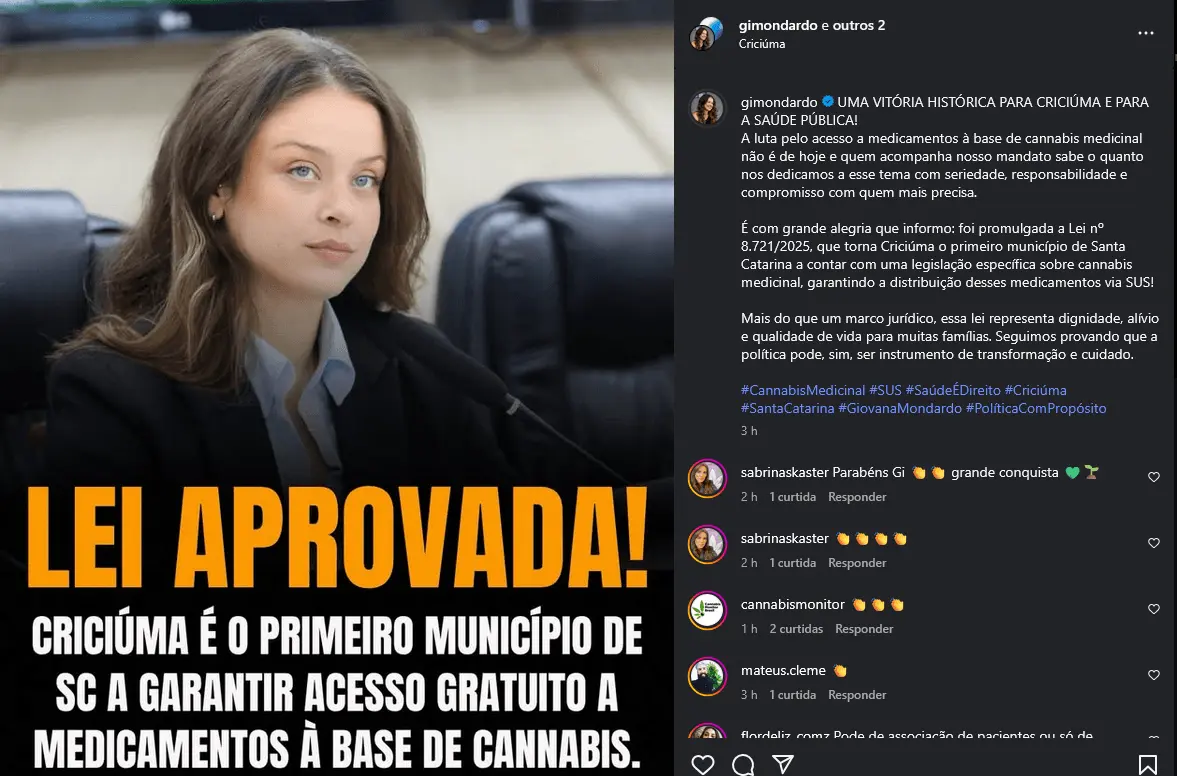
Victory for public health", says councilwoman
For councilwoman Giovana Mondardo, the promulgation of the law represents an important victory for public health in Criciúma.
“Our law that guarantees the free distribution of cannabis-based medicines by SUS will indeed become a reality. This week, I participated in an event in Florianópolis that discussed cannabis as a tool for social transformation, especially in the areas of public health and the economy of our state”, said the parliamentarian in a statement from the Council.
According to the councilwoman, the municipality has already begun discussions with institutions and associations specialized in medicinal cannabis, such as Cura Canábica de Criciúma, which could facilitate the production and distribution of medications, and Santa Cannabis, the oldest association in the state.
“We will bridge the gap between the public sector, the associations, and the patients who use these medications,” she said.
Now, the next step is to make the effective implementation of public policy viable. “We will conduct technical visits and establish the first contracts and partnerships. The goal is for the medications to be accessible to patients as soon as possible”, she concluded.
With information from Câmara de Vereadores de Criciúma