Embrapa, SBPC and 29 universities propose advances in cannabis regulation in Brazil
Working Group brings together experts from across the country to deliver a Technical Note to the Ministry of Health and Anvisa by August

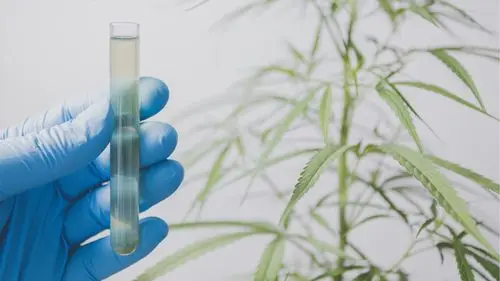
Thinking about strengthening the process of cannabis regulation in Brazil, 31 research institutions, including 29 universities, the Brazilian Agricultural Research Corporation (Embrapa) and the Brazilian Society for the Advancement of Science (SBPC), are preparing a Technical Note to be delivered to the Federal Government by August 15.
The document, which will be addressed to the Ministry of Health and the National Health Surveillance Agency (Anvisa), will provide an overview of the technical and procedural challenges faced by institutions conducting cannabis research in the country.
The proposal arose from a conversation between Letícia da Costa e Silva, a researcher at the Federal Rural University of Pernambuco (UFRPE), and Beatriz Emygdio, a researcher at Embrapa. From this exchange, the Scientific Regulation of Cannabis Working Group (GT) was born, now collectively coordinated by the involved institutions.
“The GT is coordinated jointly by all entities. The note will be crafted by many hands,” explains Emygdio.
Mapping, regional discussion, and note consolidation
The construction of the Technical Note is organized into three main stages. The first phase consisted of drafting and sending a form to the participating universities on July 11. The aim was to identify the main bottlenecks faced by researchers. Among the most common problems highlighted are difficulties in importing inputs, regulatory limits on tetrahydrocannabinol (THC) content, excessive bureaucracy in research processes, and others.
The second stage will take place from July 21 to August 1. During this phase, regional subgroups will be formed - Southeast, North + Northeast, South + Midwest along with Embrapa and SBPC. Each group will focus on a priority theme in their respective region, as agreed upon in the first GT meeting.
Finally, between August 4 and 8, the discussed themes will be validated and organized into up to five points per thematic area, composing the final content of the Technical Note. After this consolidation, the document will be submitted to the Federal Government.
Other scientific entities interested in collaborating can participate in this third stage by contacting via email: beatriz.emygdio@embrapa.br.
In addition to Embrapa, SBPC and UFRPE, the following institutions are part of the GT: University of Brasília (UNB); Federal University of Goiás (UFG); Federal University of Mato Grosso (UFMT); Federal University of Mato Grosso do Sul (UFMS); Federal University of Bahia (UFBA); Federal University of Maranhão (UFMA); Federal University of Paraíba (UFPB); Federal University of Pernambuco (UFPE); Federal University of São Francisco Valley (UNIVASF); Federal University of Piauí (UFPI); Federal University of Rio Grande do Norte (UFRN); Federal University of Amapá (UNIFAP); Federal University of Rondônia (UNIR); Federal University of Juiz de Fora (UFJF); Federal University of Lavras (UFLA); Federal University of Minas Gerais (UFMG); Federal University of São João del-Rei (UFSJ); Federal University of Viçosa (UFV); Federal Rural University of Rio de Janeiro (UFRRJ); State University of Campinas (UNICAMP); São Paulo State University “Júlio de Mesquita Filho” (UNESP); Federal University of São Paulo (UNIFESP); Federal University of ABC (UFABC); Mackenzie Presbyterian University (Mackenzie); State University of Londrina (UEL); Federal University of Santa Maria (UFSM); Federal University of Rio Grande do Sul (UFRGS) and Federal University of Santa Catarina (UFSC).