Event at Unicamp Discussed Revision of RDC 327/2019 by Anvisa
Conclusions from the groups will be sent to Anvisa through the open Public Consultation, with the aim of contributing to the revision of RDC 327

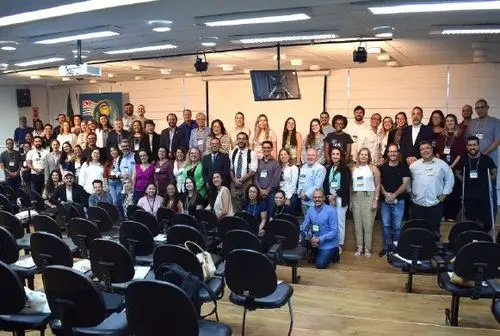
Pharmacists, researchers, institutional representatives, and experts in medicinal cannabis gathered this Thursday, May 8, at the Faculty of Pharmaceutical Sciences of Unicamp to participate in the event "Cannabis and Regulation Brazil: Challenges and Opportunities in the Revision of RDC 327."
The opening panel featured Dr. Jörg Kobarg, director of the Faculty of Pharmaceutical Sciences at Unicamp; Dr. Luiz Gustavo de Freitas Pires, secretary-general of the Federal Pharmacy Council (CFF); Dr. Marcelo Polacow Bisson, president of CRF-SP; and Dr. Priscila Gava Mazzola, faculty member at Unicamp.
Dr. Marcelo Polacow emphasized the importance of institutional participation in the regulatory process and explained the motivation for holding the event.
“When the Agency opens a public consultation, it is important for society and entities to participate to improve the regulation. That’s where the idea of holding an event that united a professional oversight entity, like the Pharmacy Council, and a university, represented by the Faculty of Pharmaceutical Sciences at Unicamp, to promote a qualified technical debate and contribute concrete suggestions for the revision of RDC 327,” he explained.
Dr. Gustavo highlighted that the CFF was one of the first councils to regulate the professional's role in medicinal cannabis. "The Federal Council began discussing the issue in 2018/2019 and issued a resolution in 2020, being one of the first councils to regulate, in our case, the pharmacist's role in this important product that is medicinal cannabis."
Throughout the morning, thematic panels brought in specialists to address the main points proposed for the revision of RDC 327/19, Anvisa's regulation that governs cannabis-based products for medicinal purposes in Brazil. There is an open public consultation to discuss the regulation, CP No. 1.316/2025, and CRF-SP intends to submit a contribution after the debate.
The first panel, titled “Regulatory Vision: updates and critical points of RDC Anvisa 327/19,” was presented by Dr. Priscila Nogueira Camacho Dejuste. She presented the regulatory history of medicinal cannabis in the country and highlighted the main points of Public Consultation No. 1.316/2025, which is open to bring contributions for the update of RDC No. 327/2019.
Among the aspects of the update, Dr. Priscila highlighted the scope of the regulation, which applies to manufacturing, importation, prescription, commercialization, and oversight; includes products with CBD or extract from Cannabis sativa L. and excludes cosmetics, food, medical devices, and smoking products.
The second panel, “Technical and Scientific Aspects: safety and quality of cannabis-derived products,” featured presentations from Dr. Margarete Kishi; Dr. Priscila Mazzola; Dr. José Luiz da Costa; and Dr. José Wilson Vieira.
Dr. Margarete explained that some difficulties in controlling cannabis involve unstable active ingredients, issues with heavy metal concentration, mycotoxins, and other microorganisms. She emphasized the importance of a systematic approach to development, which starts with predefined objectives, emphasizes understanding the product and the process, and adopts control based on solid scientific foundations and quality risk management.
Dr. Priscila Mazzola highlighted that among the most important points of the regulatory update are the expansion of cannabis products in Brazil, the diversification of pharmaceutical forms, and the central role of quality, safety, and efficacy.
Dr. José Luiz presented positive points and challenges of the proposed update to RDC 327/2019, including the expansion of pharmaceutical forms of products and the lack of inclusion of other phytocannabinoids from cannabis besides CBD, which, according to him, would be an important step for the advancement of regulation in the country.
Dr. José Wilson, in turn, presented the medical point of view and emphasized the importance of alignment among the various actors involved with medicinal cannabis. “The Pharmacy Council, the Medical Council, Anvisa, Mapa, associations, all need to speak the same language. This is the way to grow. And, with the market growing, regulation becomes necessary, and we don’t need to fight for it; it will naturally happen.”
In the third panel, “Market and Access Impacts: barriers and opportunities for patients and companies,” Dr. Leonardo Navarro; Dr. Angela Aboin (via videoconference); Dr. Diego Paludetti; and Dr. Vagner Miguel participated.
Dr. Leonardo Navarro, a lawyer, discussed the regulatory evolution of cannabis products in the country and pointed out as objective advances the expansion of administration routes, the inclusion of CBD manipulation, the authorization for prescription by dentists, the implementation of good manufacturing practices, and the regulation of advertising.
Dr. Angela shared her experience as a non-typical mother with judicial authorization for cannabis cultivation for medicinal purposes.
Dr. Diego, representing Sindusfarma, spoke on behalf of the pharmaceutical industry and highlighted the importance of pharmacovigilance and reporting data on adverse effects, which will enhance the safety of treatments.
Dr. Vagner Miguel, from Anfarmag, reinforced the importance of including manipulation in the regulation. “Manipulation allows patients to access individualized treatments, especially when industrialized products have high costs or are not available in the local market.”
After the lunch break, participants were divided into two thematic groups to discuss practical proposals to improve regulation. The topics addressed included safety and quality control, registration and efficacy, prescription and dispensing, and post-market monitoring.
The conclusions from the groups will be organized into an official document and sent to Anvisa through the open Public Consultation, with the aim of contributing to the revision of RDC 327.
Content Originally Published by CRF-SP