Federal Ban on Delta-8 and Other Hemp Derivatives May Occur in October
Measure approved by a key committee in the U.S. Congress could remove products from the market in a few months

A new measure approved by a crucial committee in the U.S. Congress could result in a ban on hemp-derived compounds, such as delta-8 THC, as early as this year. The House Appropriations Committee voted in favor of a proposal aimed at regulating these products, potentially accelerating their removal from the market as soon as October.
The measure is part of a funding bill for 2025, covering agriculture, the Food and Drug Administration (FDA), and other agencies. Among the provisions included is the regulation of psychoactive substances derived from hemp, such as delta-8 THC, delta-10 THC, THC-O-acetate, HHC, and THCP, as well as THCA, a precursor to delta-9 THC.
Similarities to Delta-9-THC and Health Concerns
The psychoactive compounds from hemp produce effects similar to those of delta-9 THC, found in marijuana. These products, often sold in the form of gummies and other treats, are criticized for their child-friendly packaging. Congressman Andy Harris from Maryland, the author of the amendment to the bill, emphasized the need to combat these substances due to public health risks.
The Harris amendment requests that the FDA assess the health risks of hemp-derived products and establish clear regulatory parameters. Among the proposals are labeling requirements, testing standards, adverse event reporting, safe packaging, and age limits for purchase.
If approved, the spending bill would accelerate the crackdown on these products, even before the completion of the next Farm Bill, expected by the end of this year or early next. The new legislation aims to close the 2018 loophole, distinguishing between intoxicating extracts and industrial hemp.
What Do Experts Say?
Renato Filev, a neuroscientist and scientific coordinator at the Brazilian Drug Policy Platform, states: “There are important points related to this discussion. The first is the technical issue regarding the effects of these isomers, that is, these variants of the delta-9-THC-like compound family, such as delta-8, delta-10, among others. I believe the FDA is concerned about factors such as operating machinery, driving cars, unintentional intoxication of children and the elderly, drug interaction issues, metabolism, and especially patients who are on polypharmacy or already show an overloaded hepatic metabolic impact,” says the researcher, who analyzes that since the U.S. health agency already restricts delta-9-THC, delta-8 should follow the same path.
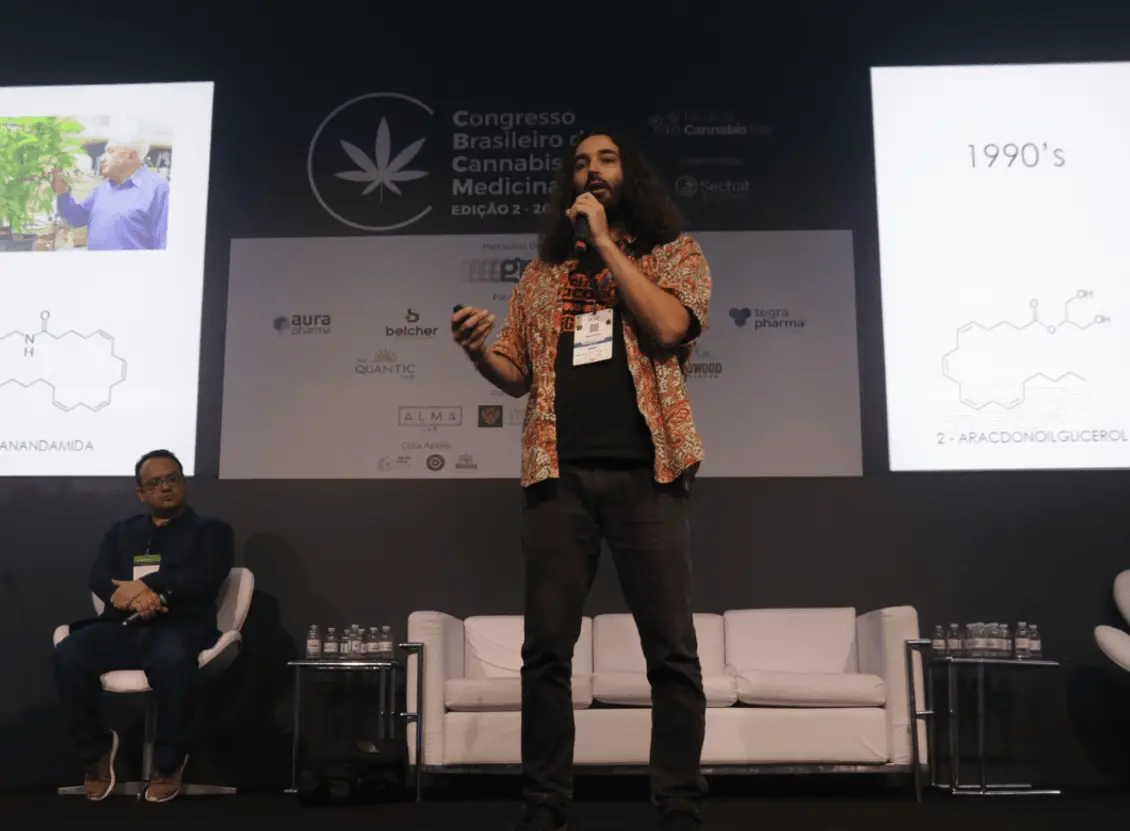
However, it is important to remember that when it comes to delta-8-THC, there is a more subdued action compared to delta-9, as its affinity for the CB1 receptor, which triggers the characteristic effects, is lower, explains Filev:
“As they are semi-synthetic molecules, the effects of these compounds labeled as intoxicating by the FDA are predicted, expected, and not something that goes beyond what is found, unlike the use of natural substances,” he states, noting that he is obviously speaking of an ideal world where the substance is made and purified properly, without the addition of byproducts.
In a second moment, the specialist states, there are also issues to be discussed regarding good manufacturing practices, which also interfere with the federal agency's decision.
"We see that in the United States, in practice, this care with the formulation and production of products based on these compounds has not been occurring. In a quick internet search, it is possible to find news, for example, that there is a discrepancy in the active ingredient content found in products compared to what is presented on their labels, leading to greater repression from the competent authorities.”
For Daiane Zappe, business manager at Revivid Brazil, a company specializing in the manufacture and commercialization of cannabis-based products from the U.S., she states:
“The ban on THC in many American states is a reflection of a complex web of history, politics, and supposed public health concerns. But the truth is that the exploration of the delta-8-THC trade only arises from the absence of more current and comprehensive regulation regarding therapeutic use and adult use. Since there is a ban on delta-9-THC and a legislative omission regarding delta-8, several companies have started to market the compound as a way to not be outside the rules. At the federal level, delta-8-THC was considered legal under the 2018 Agricultural Act (Farm Bill), which legalized the production of hemp and its derivatives, as long as the product contains less than 0.3% THC and, consequently, its byproducts.”
In summary, what Zappe highlights is that what is not prohibited is permitted. “This is a maxim of law,” the businesswoman reminds us.
Meanwhile, U.S. states have taken their own measures to control the unregulated hemp market. Recreational and medicinal marijuana producers argue that the lack of regulation of hemp derivatives creates unfair competition.
The FDA has repeatedly warned about the dangers of these compounds, emphasizing that these products may contain harmful chemicals. Earlier this year, authorities from 20 states and the District of Columbia sent a letter to Congress requesting regulation of these products in the next Farm Bill.
In parallel, the House Appropriations Committee also voted to block the Biden administration's attempt to reclassify cannabis under federal law, preventing the Department of Justice from using funds for this reclassification.
The measure, if implemented, would represent a milestone in the regulation of hemp-derived products in the U.S., reflecting a growing concern for public health and consumer safety.