From Cultivation to Patient: Behind the Scenes of Safety and Quality of Cannabis-Based Products in Brazil
The safety and efficacy of cannabis-based products depend on an integrated chain involving chemists, biomedicals, pharmacists, and doctors — professionals who ensure, at each stage, the quality, stability, and trust in patient treatment

Published on 10/13/2025
Production and Quality
As the medicinal cannabis market matures in Brazil, there is also a growing demand for strict standards of quality, stability, and traceability. Behind each bottle of oil, capsule, or extract, there is a complex chain of scientific and regulatory processes aimed at ensuring that the patient receives a safe, effective, and consistent product.
By October 2025, the National Health Surveillance Agency (Anvisa) had already approved 30 cannabis-based products, distributed among 18 authorized companies operating in the country. The formulations of these products present variations that reflect different therapeutic purposes and usage profiles. The main differences lie in the concentration of cannabinoids, the type of extract, and the administration form.
These products can reach the patient through a medical prescription and are purchased at pharmacies via RDC 327, ensuring that the treatment complies with safety and sanitary control standards. See the complete list:
According to updated data from Anvisa in September 2025, patients who opt for importing cannabis-based products have access to about 600 available options, as per Technical Note No. 58/2025, which regulates the individual process provided for in RDC No. 660/2022. This significant volume reflects the expansion of the international market, which already has over 500 authorized companies. See the complete list: To access RDC 660 products, the patient needs a medical prescription and authorization from Anvisa, either for individual importation or acquisition of registered national products.
Of the 672 thousand medicinal cannabis patients in Brazil in 2024, 315 thousand use products regulated by RDC 660, 208 thousand opt for medications registered in RDC 327, and 147 thousand are served by associations.
From Seed to Extract: The Basis of Safety
The starting point is cultivation. Even though Brazil has not yet regulated national cultivation for medicinal purposes, expectations are set for March 2026 after the Federal Government requested an extension of the deadline to the Superior Tribunal and Justice. Most of the imported products available in the country come from countries like Colombia, Uruguay, Canada, and the United States — places where production is strictly controlled. Each stage, from genetic selection to harvest, follows Good Agricultural and Collection Practices (GACP) standards, ensuring purity and absence of contaminants such as heavy metals, pesticides, and fungi.
According to Wellington Briques, a physician prescribing cannabis-based products, “safety and efficacy start with product quality. In medicinal cannabis, this means having standardization in mg/mL of cannabinoids, with consistent batches. Without standardization and CoA, there is no way to prescribe accurately — and medicine without precision becomes unnecessary and unethical trial and error.”
Handling, Quality Control, and Standardization
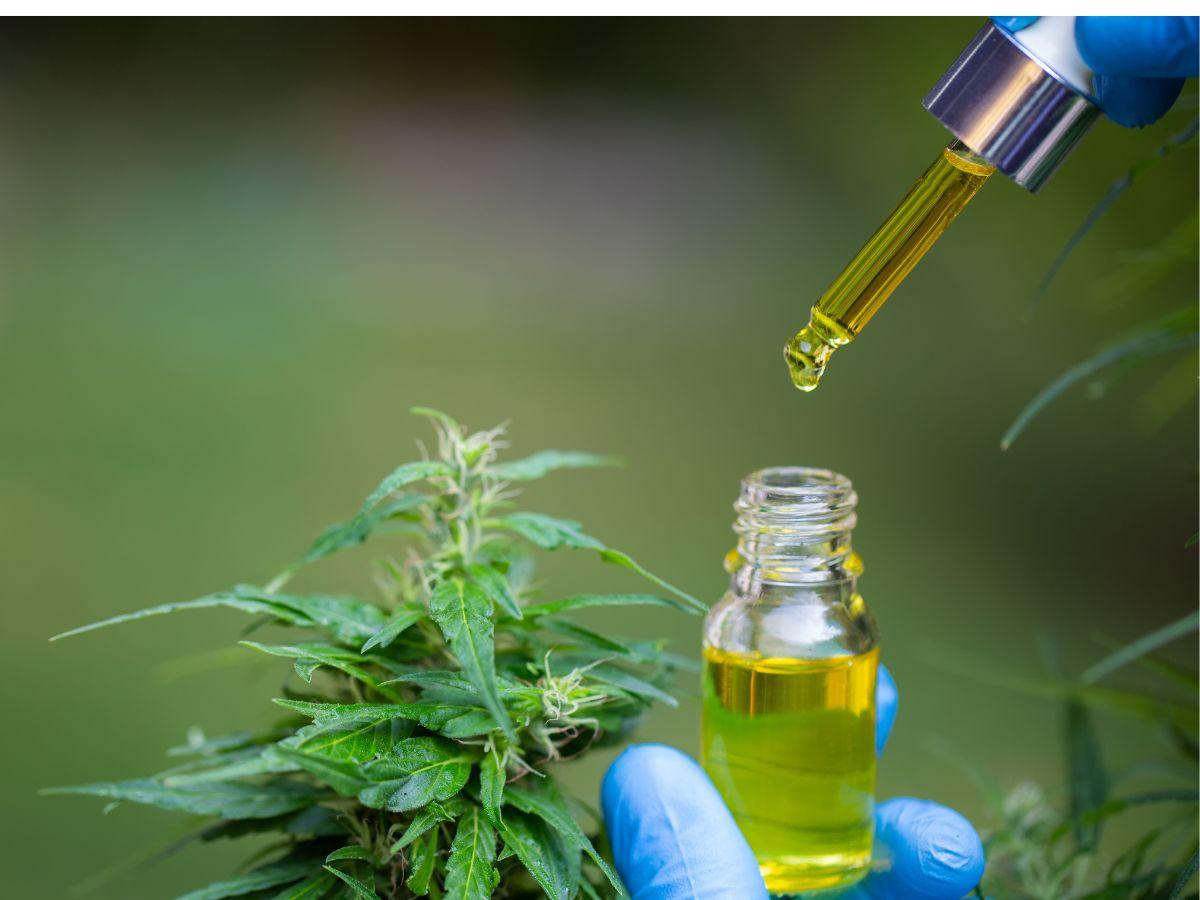
Pharmacist Géssica Miranda explains that handling cannabis-based products requires technical rigor and knowledge of active principles. “For the product to reach the end consumer, those responsible manage the plant until it becomes the finished product. The main steps include raw material preparation, weighing, grinding, extraction of the compounds of interest, and dilution in a carrier oil, such as MCT (medium-chain triglycerides), in addition to adding other ingredients according to the product formulation, such as capsules or creams,” she details.
Géssica emphasizes that quality control is crucial. “It starts even before handling the plant material. From soil analyses to detect contaminants, to cannabinoid, purity, and terpene profile tests in the final product. During preparation, standard operating procedures, double checking, temperature control, and protection against light are fundamental. After packaging, counter-sample tests ensure traceability and safety. The patient needs to trust that each drop from the bottle has the right dose, in the right form.”
Physician Wellington Briques reinforces the importance of standardization: “If the concentration varies from one bottle to another, the same ‘dose’ ceases to be the same — and the patient feels differences in the effect. Traceability by batch number is essential: if a problem arises, I know exactly where it came from and how to act.”
Good Practices and Technical Challenges
According to Géssica Miranda, laboratories follow Anvisa standards, such as RDC 67/07 on Good Handling Practices, complemented by RDC 327/19 and RDC 512/2021, in addition to Ordinance 344/98, which regulates controlled substances such as CBD and THC. “The inclusion of Cannabis in the Brazilian Pharmacopoeia is an important advance, as it establishes official quality criteria for raw materials and final products, standardizing handling processes,” she explains.
She warns, however, of specific challenges: “Unlike synthetic drugs, plant extracts can vary from batch to batch, even when standardized. This requires very careful control and constant updating on interactions, pharmacokinetics, and cannabinoid stability.”
Wellington adds, emphasizing that batch consistency is vital for therapeutic efficacy. “In epilepsy, for example, seizure control depends on stable CBD. Any variation between batches can lead to a relapse. That's why I insist on the same brand, same concentration, and same batch profile, guaranteed by the CoA.”
Stability and Conservation
Cannabinoids can degrade due to oxidation, light, and thermal variations. Long-term and accelerated stability tests assess active ingredient concentration and the presence of contaminants. Temperature, light, oxygen, and humidity are the main factors that affect stability. THC, for example, can convert to CBN, altering therapeutic effects.
According to Miranda, patient education is part of the process: “In addition to laboratory tests, we recommend storing the closed bottle away from light and heat, respecting the indicated validity.”
Packaging and Transport
The pharmacist highlights that packaging is strategic to preserve quality: “Amber glass bottles, with a graduated dropper and seal, protect against light, prevent oxidation, and allow safe dosing. In transport, avoiding excessive heat is essential. The product begins to lose quality when it leaves technical control, reinforcing the need for patient education.”
Patient Assurance and Traceability
For Géssica Miranda, traceability depends on integration between industry, laboratories, and pharmacists. “Standardization depends on good suppliers with extracts that have reliable, traceable CoAs and proven stability. The technical pharmacist checks each batch, compares it with the previous one, and ensures that the phytochemical profile is as expected. The clinical pharmacist acts as a bridge with the patient and prescriber, monitoring therapy.”
She adds that, despite Anvisa requirements (RDC 660/22 and SNGPC), there is still no unified national system, leading laboratories to create internal protocols and controls. “Batch control is traced from raw material to the final product, with documented analytical results. It is this pharmacist's perspective that ensures safety in each drop and makes our presence essential in this developing market,” she states.
Physician Wellington Briques concludes by highlighting the importance of trust: “For the patient, safety goes beyond packaging. It starts with trust — trust that the product has been tested, standardized, and prescribed correctly. Company transparency and medical education are crucial to consolidate the use of medicinal cannabis safely and scientifically grounded.”
The Chemistry of Cannabinoids in the Safety and Quality Process
The safety and quality of cannabis-based products depend largely on an aspect that goes unnoticed by many: the molecular structure of cannabinoids. According to industrial chemist Ubiraci Lima, a doctor in Health Surveillance and postdoctoral in Formulation Technology, it is precisely these differences in the composition of molecules that determine the therapeutic effects and how the body reacts to each compound.
“The slightest variation in the molecular architecture of a cannabinoid is enough to completely alter its biological behavior,” explains the Federal Chemistry Council advisor.
Among the more than 120 cannabinoids identified in the Cannabis sativa plant, Tetrahydrocannabinol (THC) and Cannabidiol (CBD) are the most known and studied. Both share the same molecular formula (C₂₁H₃₀O₂) and the same molecular weight (314.5 g/mol), as well as present three main structural groups: terpenic, phenolic, and alkyl.
The essential difference, according to Lima, lies in a small modification: in THC, one of the phenolic hydroxyls binds to the terpenic portion, forming a cyclic ether — a structure that does not appear in CBD. This apparently simple alteration changes the entire interaction pattern of the molecule with human body receptors.
The Chemistry Behind Therapeutic Effect
Even with similar formulas, THC and CBD produce very distinct therapeutic effects. To understand the reason, it is necessary to resort to Medicinal Chemistry, a field that combines principles of Chemistry, Biology, and Pharmacology to study the interactions between drugs and biological receptors.
The researcher recalls the model proposed by chemist Emil Fischer in 1902, known as the “lock and key” model. In this concept, each active molecule (the key) must have a shape and electronic properties compatible with the specific receptor (the lock), for the interaction to result in a therapeutic response.
“In the case of CBD, there is freedom of rotation in some chemical bonds, allowing the molecule to adopt a more open three-dimensional shape,” details Lima. “This configuration favors binding with receptors of cross shape, associated, for example, with immunological modulation and anti-inflammatory action.”
In the THC molecule, the cyclic ether prevents this rotation, keeping the structure more rigid and linear — a characteristic that favors binding with CB1 receptors, located mainly in the central nervous system, responsible for the psychoactive effects of the compound.
Structure, Effect, and Synergy
The findings of Medicinal Chemistry reinforce what several studies have been demonstrating: the relationship between structure and activity is decisive for the therapeutic effect of cannabinoids. This relationship is known as SAR (Structure-Activity Relationship) — a fundamental concept in drug development.
Moreover, recent research shows that cannabinoids can act in synergy, a phenomenon called “entourage effect”, where compounds like CBD and THC enhance each other's therapeutic actions, balancing their effects and reducing adverse reactions.
“It is at this point that chemistry plays its strategic role: understanding the interaction between molecules is the path to developing safer, more effective, and predictable formulations,” states Lima.
Standardization: The Basis of Safety
Understanding structural differences is essential for the standardization of cannabis-based products. The lack of control over the proportion of each cannabinoid can alter the final effect and compromise patient safety.
“Chemical standardization is what ensures that the patient receives the same therapeutic result with each dose. This is only possible with analytical rigor and laboratory validation,” emphasizes the specialist.
This concern is reinforced by the recent expansion of the Brazilian Network of Analytical Health Laboratories (Reblas), authorized by Anvisa to perform analyses of cannabis-derived products. According to Lima, this is a fundamental step to consolidate quality standards in the Brazilian market.
Reblas Strengthens Quality Control in the Cannabis Industry
The authorization of analytical laboratories by Anvisa to analyze cannabis products strengthens quality control in the sector. The measure was formalized by Resolution No. 3,459, published on September 8, which included the category of cannabis products in the scope of Centro de Qualidade Analítica Ltda., a member of the Brazilian Network of Analytical Health Laboratories (Reblas).
As a result, the laboratory now offers quality control assays (QCA) on plant-derived products, as provided for in Article 5 of RDC No. 928/2024, which determines that only laboratories accredited in Reblas can perform this type of analysis.
Currently, 16 laboratories have valid accreditation for analyzing cannabis products — half of them located in São Paulo.
Sechat's scientific director, Dr. Pedro Pierro, highlighted the relevance of the measure.
“The possibility of ensuring the quality of cannabis-based products through RDC 660, with the support of Reblas laboratories, is essential for doctors and patients.”
Ricardo Pettená, executive director of Carmen's Medicinals, emphasizes the importance of certification: "Having the Reblas certificate conveys credibility and security to the medical community when prescribing,” he states.
He believes that certification also helps differentiate the quality products from the rest, encouraging the market to adapt and offer RDC 660 products with national industry standards.