Hemp beverages remain legal and celebrated in the market
Hemp beverages maintain legality in the US following Senate decision, providing relief for retailers and consumers. Check it out!

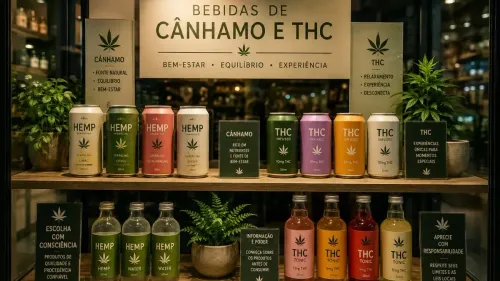
Hemp beverages - There is an invisible sigh that cuts through the air when uncertainty pauses and life is granted permission to continue its natural flow. It was precisely this air of relief, mixed with the fresh scent of renewed hope, that flooded the aisles of small and large beverage stores from coast to coast.
When the Senate decided to maintain, at least for now, the legality of hemp beverages and THC, what was heard was not merely the sound of boxes being opened in stockrooms, but the deep breath of thousands of families and business owners who see in this plant not just a product, but a path toward lighter, more prosperous, and welcoming days.
In this article you will see:
The temporary victory of the hemp beverage sector in the US Senate;
Why traditional beverage retailers are embracing THC;
How current hemp legislation impacts the economy and public health;
The role of dosage limits and regulation in mindful consumption;
Expert perspectives on the future of medical and adult-use cannabis;
Frequently asked questions and official references on the topic.
Relief on store shelves and the embrace of the traditional market
Recent legislative action in the United States brought a breath of stability to a sector that seemed to be walking a tightrope.
According to reporting by Marijuana Moment, the Senate committee opted not to include in the Farm Bill severe restrictions that could almost entirely ban products derived from hemp beverages containing synthesized or naturally extracted THC.
This decision was welcomed as a true cause for celebration by the Wine & Spirits Wholesalers of America (WSWA), an organization representing major distributors of wine and spirits.
The organization publicly stated that the decision preserves jobs and ensures that the transition to a regulated market occurs smoothly, without pushing consumers back into illicit markets.
"Maintaining the current language allows the market to continue operating in the open, ensuring consumer protection and predictability for small retailers," highlighted the official statement from the distributors' association, widely reported by Marijuana Moment.
READ MORE: How CBD works to relieve daily stress and anxiety
Why do retailers support hemp and THC beverages?
For those navigating the day-to-day retail business, the arrival of cannabis-based alternatives did not represent predatory competition, but rather a breath of innovation and diversification.
Every can sold carries the story of consumers seeking restful nights, social gathering without the side effects of alcohol, or simply a more natural way to slow down the frantic pace of daily life.
Traditional beverage retailers realized that the consumer profile has shifted dramatically in recent years. There is a genuine pursuit of wellness, and the introduction of low-dose THC cans gently meets this new desire.
Alcohol alternative: microdosed beverages provide relaxation without the usual hangover the next day;
Predictable effects: liquid onset is typically faster and more controlled than traditional edibles;
Social inclusion: allows non-alcohol drinkers to participate in festive moments without feeling left out;
Strengthening local retail: small businesses found a healthy profit margin in these products to sustain their operations.
The regulation challenge and consumer safety
Although preserving the legal status of hemp beverages is a cause for celebration, the industry agrees on one key point: the urgent need for clear, universal rules.
The lack of strict FDA oversight creates gaps that concern both cannabis advocates and public health agencies.
The goal of responsible distributors and lawmakers is not to turn the market into an unregulated "Wild West," but to establish clear milligram limits per package, require independent laboratory testing, and mandate child-resistant packaging.
| Regulatory Category | Current Situation | Responsible Industry Proposal |
|---|---|---|
| Laboratory Testing | Varies by state | Mandatory (Contaminant and THC testing) |
| Age Limit | 21+ across most retailers | Strict federal 21+ limit |
| Labeling | Inconsistent | Clear, indicating milligrams and onset time |
| Packaging | Conventional | Child-resistant |
Impact on the medical cannabis and wellness ecosystem
It is impossible to separate the rise of wellness beverages from the broader medical cannabis ecosystem.
When society demystifies the plant on supermarket or local grocery shelves, the stigma surrounding health treatments also gradually crumbles.
The plant, in its multiple forms and compounds (whether CBD, CBG, or THC), offers people an opportunity to reconnect with their own health.
By allowing these products to remain accessible through legal and regulated channels, space is created for science to continue researching the therapeutic benefits of cannabinoids without the shackles of stigma.
What to expect for the industry's future in the Senate?
The legislative battle is far from over. The Senate decision represents a crucial victory at the committee stage, but the final text of the US Farm Bill will face heated debates before ultimate approval.
Organizations from the cannabis sector and retail associations remain active in Washington. The goal is to ensure the voices of producers, sellers, and consumers are heard, making sure that the progress achieved so far is not erased by bureaucratic pen strokes.
After all, behind every regulation are real lives seeking health, balance, and the simple right to choose.
Frequently Asked Questions
Do hemp and THC beverages make you intoxicated?
It depends on the THC concentration. Most hemp beverages sold in mainstream retail use microdoses (between 2 mg and 5 mg of THC), designed to provide a gentle sense of relaxation without the strong intoxicating effects of traditional consumption.
What is the difference between hemp and traditional cannabis?
Botanically, hemp and cannabis belong to the same species (Cannabis sativa L.). The main distinction is legal and chemical: hemp is defined as the plant containing 0.3% or less Delta-9 THC by dry weight, being widely used for industrial, food, and medicinal purposes.
References and Sources Consulted
Marijuana Moment: Alcohol Retailers Celebrate Senate’s Move To Keep Hemp THC Drinks Legal For Now. Available at:
marijuanamoment.net.Wine & Spirits Wholesalers of America (WSWA): Official Statements on Hemp-Derived Cannabinoid Regulation.
U.S. Food and Drug Administration (FDA): Regulation of Cannabis and Cannabis-Derived Products, Including Cannabidiol (CBD).
Journal of Cannabis Research: Pharmokinetics and onset time of liquid cannabinoid formulations.