Hemp Foods: The Incredible Nutritional Potential of Hemp | All About Cannabis
The Sechat portal begins this Wednesday (07), with the publication of this material, a partnership with the blog All About Cannabis, a space that proposes "solid content on everything relevant in the universe of cannabis and cannabinoids." TSC has among its collaborators the neuroscientist and entrepreneur Fabricio Pamplona and Antonio Vieira, a lawyer with a strong focus on the development of medicinal cannabis in Brazil. The following text is authored by agronomist Lorenzo Rolim da Silva.
Hemp, as discussed here in other texts (here and here), refers to the cultivars of the species Cannabis sativa that produce a THC (Δ9-Tetrahydrocannabinol) content of less than 0.3%, the compound responsible for the psychoactive effects of the plant. In other words, Hemp has no psychoactive properties by definition and poses no risk to humans.
As I mentioned in my first text, there are various possible uses for Hemp, many of which are not new in other countries that differentiate Hemp from other cannabis cultivars and do not prohibit its cultivation. Today we will explore the nutritional potential of Hemp, mainly in products derived from its seeds, but we will also talk about the trend of haute cuisine cannabis and the consumption of other parts of the plant in natura.
The main focus of hemp-based food is the same as that of most other plant species that serve for our consumption: the seed, also called grain. Hemp seeds have a very interesting nutritional quality compared to other species we are used to consuming in our daily lives (Soy, Corn, Rice, Wheat, Oats, Sunflower, Flaxseed, Chia, etc…).
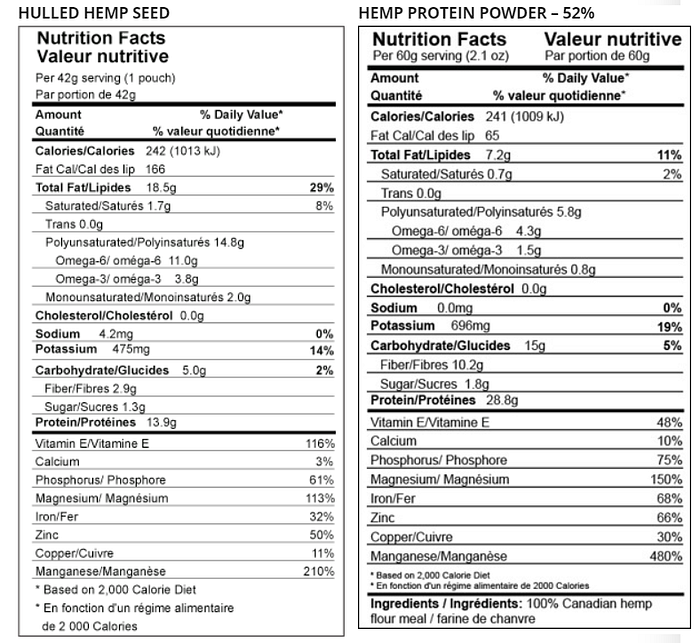
We can note that the in natura seeds have a protein content of almost 31% (Soy, the largest plant protein source in the world, has between 35–45%, after decades of genetic improvement), meaning they are high in protein. It is worth noting that most cultivars used for seed production have not undergone the minimum genetic improvement that most major agricultural species have, such as Soy and Corn, which leaves the true production potential of Hemp to the imagination.
The seeds also offer a high content of Vitamin E, Magnesium, Manganese, Phosphorus, Zinc, Omega 3, and Omega 6, as well as essential amino acids, making them a true “superfood.” On the other hand, we can also make oils through pressing, similar to olive oils, and isolated proteins, similar to the famous “whey protein.”